Claude McKay
Festus Claudius McKay (September 15, 1890 – May 22, 1948) was a Jamaican-American writer and poet, and a central figure in the Harlem Renaissance. Born in Jamaica, McKay first traveled to the United States to attend college, and encountered W.E.B. Du Bois’s The Souls of Black Folk which stimulated McKay’s interest in political involvement. He moved to New York City in 1914 and in 1919 wrote "If We Must Die", one of his best known works, a widely reprinted sonnet responding to the wave of white-on-black race riots and lynchings following the conclusion of the First World War.
Works (21)
![Cover of The United States in Literature [with three long stories] -- Seventh Edition](https://covers.openlibrary.org/b/id/6699609-M.jpg)
The United States in Literature [with three long stories] -- Seventh Edition

Prentice Hall Literature--Timeless Voices, Timeless Themes--The American Experience
Prentice Hall Literature--The American Experience

The United States in Literature -- The Glass Menagerie Edition
Home to Harlem
1928

Romance in Marseille

The United States in Literature -- All My Sons Edition
1973
Banjo
1931
The poetry of the Negro, 1746-1970
1970
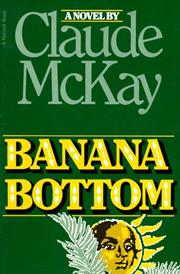
Banana Bottom
1933
A long way from home
1937

Amiable with big teeth
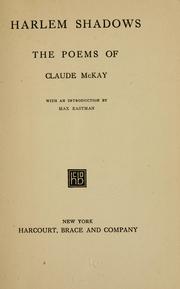
Harlem Shadows

Selected poems of Claude McKay
1953

Poems by Claude McKay
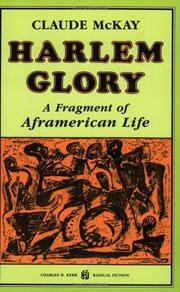
Harlem Glory
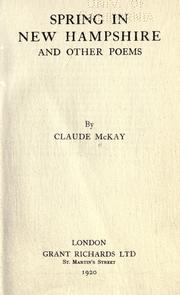
Spring in New Hampshire and other poems
1920
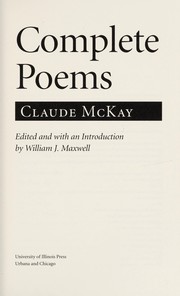
Complete poems
The Negroes in America

Pieces of a man
Dialect Poetry of Claude McKay (2 Volumes in 1)