Category
page 111th-century BC establishments in China

Beijing
Beijing, previously romanized as Peking, is the capital city of China. With more than 22 million residents, it is the world's most populous national capital city, as well as China's second-largest city by urban area, after Shanghai. It is located in Northern China, and is governed as a municipality under the direct administration of the State Council with 16 urban districts. Beijing is mostly surrounded by Hebei Province and neighbors Tianjin to the southeast; together, the three divisions form the Jing-Jin-Ji cluster.

Xi'an
'''Xi'an''' is the capital of the Chinese province of Shaanxi. A sub-provincial city on the Guanzhong plain, the city is the third-most populous city in Western China after Chongqing and Chengdu, as well as the most populous city in Northwestern China. Its total population was 12.95 million in the 2020 census, including an urban population of 9.28 million.
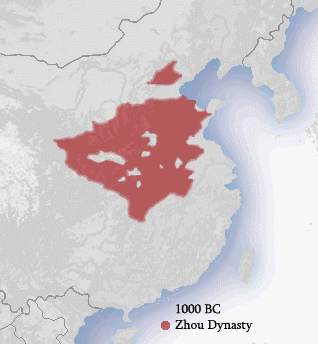
Zhou dynasty
dynasty of Ancient Chinese kings (王) lasting from c. 1046 to 256 BC

Chu
Southern Chinese state (c. 1030–223 BCE) during the Zhou dynasty and Warring States Period
Yan
ancient state in northern China during the Shang, Zhou, and Warring States periods (11th century BC – 222 BC)
Qi
Zhou dynasty Chinese state (1046–221 BCE)
Lu
vassal state during the Zhou Dynasty of ancient China
Wu
ancient Chinese state under the Zhou dynasty centered on Suzhou (then known as Wu)
Jin
ancient Chinese state based in present-day Shanxi Province (11th-century BC to 376 BC)
Song
one of the twelve feudal states of Western Zhou dynasty
Cai
former vassal Chinese state
Cao
ancient Chinese state
Chen
Zhou dynasty Chinese state (c. 1045–479 BC)
Zhu
ancient Chinese state
Dao
historical state during the Zhou Dynasty
Ji
ancient state in northeastern China under the Shang and Zhou
Huo (state)
vassal state in China
Wangcheng
Chinese city (1021 BCE - 25 CE)