Category
page 11st-century BC books in Latin
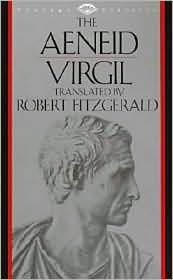
Aeneid
thumb|300px|Aeneas Flees Burning Troy, by Federico Barocci (1598). [[Galleria Borghese, Rome, Italy]]
right|thumb|300px|Map of Aeneas' fictional journey

Commentarii de Bello Gallico
commentary on Gallic wars by Julius Caesar

Georgics
thumb|right|Georgics Book III, shepherd with flocks, Roman Virgil.The Georgics ( ; ) is a poem by Latin poet Virgil, likely published in 29 BCE. As the name suggests (from the Greek word , geōrgiká, i.e. "agricultural [things]"), the subject of the poem is agriculture; but far from being an example of peaceful rural poetry, it is a work characterized by tensions in both theme and purpose.

History of Rome
Livy's history of ancient Rome

De rerum natura
didactic poem by Lucretius

Eclogues
thumb|upright=1.5|The opening lines of the Eclogues in the 5th-century Vergilius Romanus
The Eclogues (; , ), also called the Bucolics, is the first of the three major works of the Latin poet Virgil.

Commentarii de Bello Civili
discussion of the Roman civil war by Julius Caesar

De architectura
treatise on architecture by Vitruvius

Heroides
thumb|Front matter of Boswell's copy of the 1732 edition of the Heroides, edited by Peter Burmann.Note the title Heroides sive Epistolae,The Heroides or the Letters.
Amores
first-century BCE collection of poetry in Latin by Ovid

Ars Poetica
Latin poem by Horace, written ca. 19 BCE, about the art of writing poetry and drama
Odes
literary work by Horace

The Conspiracy of Catiline
essay by Sallust

Epodes
work by Horace

Rhetorica ad Herennium
ancient Latin book on rhetoric
Carmen saeculare
hymn by Horace

Satires
work by Horace
The Jugurthine War
work by Sallust
Epistulae
literary work by Horace
Medicamina Faciei Femineae
literary work

Anticato
thumb|A bust of Julius Caesar|Caesar in the [[Altes Museum, Berlin.]]
The Anticato (sometimes Anti-Cato; Latin: Anticatones) is a lost polemic written by Julius Caesar in hostile reply to Cicero's pamphlet praising Cato the Younger. The text is lost and survives only in fragments. Brutus, dissatisfied with Cicero's work, wrote a second pamphlet in praise of Cato and called, simply, "Cato", which provoked a reply from Octavian. Octavian's work is not known to have been called "Anticato", but must have been modeled on Caesar's reply to Cicero.

Epistulae ad Familiares
letters between Cicero and various people

Epistulae ad Quintum Fratrem
letters from Cicero to his brother Quintus
Epistulae ad Brutum
letters between Cicero and Brutus