Category
page 11st-century BC writers in Latin

Julius Caesar
Gaius Julius Caesar was a Roman general, statesman, and author who was the dictator of the Roman Republic almost continuously from 49 BC until his assassination in 44 BC. A member of the First Triumvirate, he led the Roman armies through the Gallic Wars and defeated his political rival Pompey in Caesar's civil war. He consolidated power and proclaimed himself dictator for life in 44 BC, which contributed to the political conditions that led to the collapse of the Roman Republic and the emergence of the Roman Empire. For his role in these events, he is regarded as one of the most influential historical figures.
.jpg)
Virgil
Publius Vergilius Maro (; 15 October 70 BC21 September 19 BC), usually called Virgil or Vergil ( ) in English, was an ancient Roman poet of the Augustan period. He composed three of the most famous poems in Latin literature: the Eclogues (or Bucolics), the Georgics, and the epic Aeneid. Some minor poems, collected in the Appendix Vergiliana, were attributed to him in ancient times, but modern scholars regard these as spurious, with the possible exception of some short pieces.

Cicero
Marcus Tullius Cicero ( , ; 3 January 106 BC – 7 December 43 BC) was a Roman statesman, lawyer, scholar, philosopher, orator, and writer who tried to uphold principles during the political crises of the Roman Republic that led to the establishment of the Roman Empire. The extensive writings of Cicero include treatises on rhetoric, philosophy, and politics. He is considered one of Rome's greatest orators and prose stylists and the innovator of what became known as "Ciceronian rhetoric". Cicero was educated in Rome and in Greece. He came from a wealthy municipal () family of the Roman
Horace
Quintus Horatius Flaccus (; 8 December 65 BC – 27 November 8 BC), commonly known in the English-speaking world as Horace ( ), was the leading Roman lyric poet during the time of Augustus (also known as Octavian). The rhetorician Quintilian regarded his Odes as the only Latin lyrics worth reading: "He can be lofty sometimes, yet he is also full of charm and grace, versatile in his figures, and felicitously daring in his choice of words."

Vitruvius
Vitruvius ( ; ; –70 BC – after ) was a Roman architect and engineer during the 1st century BC, known for his multi-volume work titled . As the only treatise on architecture to survive from antiquity, it has been regarded since the Renaissance as the first book on architectural theory, as well as a major source on the canon of classical architecture. It is not clear to what extent his contemporaries regarded his book as original or important.
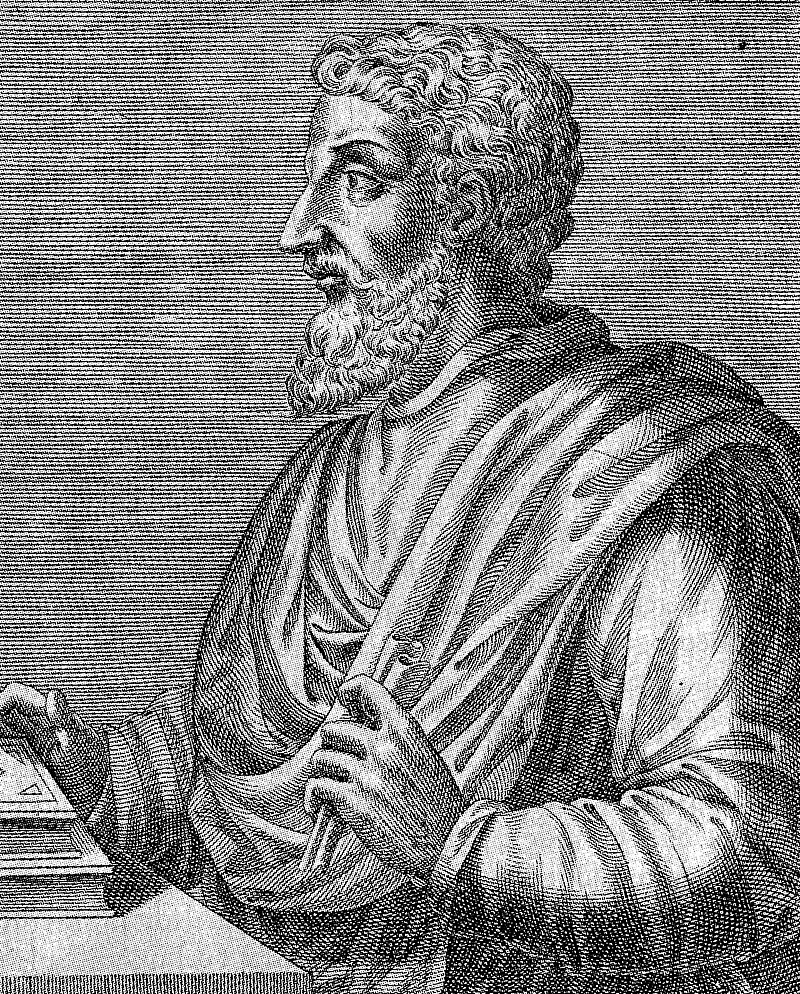
Marcus Terentius Varro
Roman scholar, polymath and author (116–27 BC)

Propertius
thumb|Auguste Vinchon, Propertius and Cynthia at Tivoli
Publilius Syrus
1st century BC Syrian-born Latin writer

Cornelius Nepos
Roman historian and biographer (c.110 BC–c.25 BC)

Gaius Julius Hyginus
Roman freedman and writer (c. 64 BC – AD 17)

Lucius Accius
Roman poet and literary scholar (170–c.86 BC)
Aulus Hirtius
Roman historian, politician and soldier

Quintus Tullius Cicero
brother of Marcus Tullius Cicero
Verrius Flaccus
Roman lexicographer and writer (55 BC-20 AD)

Sempronius Asellio
Roman historian
Gaius Cassius Parmensis
1st century BC Roman politician and writer
Amafinius
Gaius Amafinius (or Amafanius) was one of the earliest Roman writers in favour of the Epicurean philosophy. He probably lived in the late 2nd and early 1st century BC. He wrote several works, which are censured by Cicero as deficient in arrangement and style. He is mentioned by no other ancient writer but Cicero. In the Academica, Cicero reveals that Amafinius translated the Greek concept of atoms as corpusculi ("corpuscles") in Latin.