Category
page 11st-century establishments in Roman Britain

London

Manchester
Manchester is a city in Greater Manchester, England. It had a population of over 589,000 in 2024. It borders the Cheshire Plain to the south, the Pennines to the north and east, and the city of Salford to the west. The two cities and the surrounding towns form one of the United Kingdom's most populous conurbations, the Greater Manchester Built-up Area, which has a population of 2.87million.

York
York is a cathedral city in North Yorkshire, England, with Roman origins, sited at the confluence of the rivers Ouse and Foss. It has many historic buildings and other structures, including the minster, castle and city walls, all of which are Grade I listed. It is the traditional county town of Yorkshire, and the administrative centre of the City of York district. It is located north-east of Leeds, south of Newcastle upon Tyne and north of London. York's built-up area had a recorded population of 141,685 at the 2021 census.

Leicester
Leicester ( ) is a city, unitary authority area, and the county town of Leicestershire in the East Midlands of England. It is the largest city in the East Midlands with a population of in . The greater Leicester urban area had a population of 559,017 in 2021, making it the 11th most populous in England, and the 13th most populous in the United Kingdom. For three years running, the annual Good Growth for Cities Index has ranked Leicester as the best place to live and work in the East Midlands. The latest study, which is based on a range of economic factors, rated Leicester as the best performin
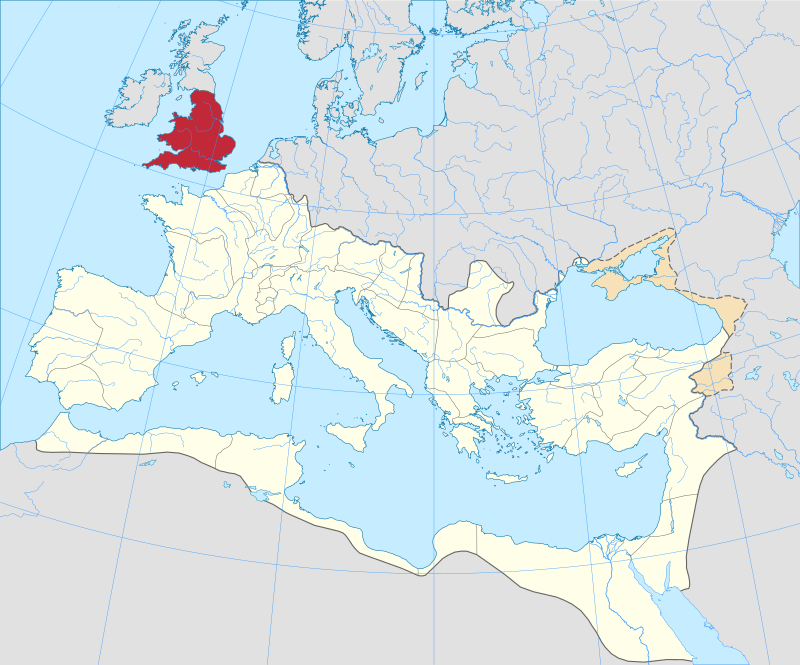
Roman Britain
Britain under Roman rule (43 AD - c.410 AD)

Dorchester
town in Dorset, England, UK

Londinium
Londinium, also known as Roman London, was the capital of Roman Britain during most of the period of Roman rule. Most twenty-first century historians think that it was originally a settlement established shortly after the Claudian invasion of Britain, on the current site of the City of London, around 47–50 AD, but some defend an older view that the city originated in a defensive enclosure constructed during the Claudian invasion in 43 AD. Its earliest securely-dated structure is a timber drain of 47 AD. It sat at a key ford at the River Thames which turned the city into a road nexus and major

Eboracum
Eboracum () was a fort and later a city in the Roman province of Britannia. In its prime it was the largest town in northern Britannia and a provincial capital. The site remained occupied after the decline of the Western Roman Empire and ultimately developed into the present-day city of York, in North Yorkshire, England.

Corbridge
Corbridge is a village in Northumberland, England, west of Newcastle and east of Hexham. Villages nearby include Halton, Acomb, Aydon and Sandhoe.

Caerwent
Caerwent () is a village and community in Monmouthshire, Wales. It is located about west of Chepstow and east of Newport. It was founded by the Romans as the market town of Venta Silurum, an important settlement of the Brythonic tribe of Silures. The modern village is built around the Roman ruins, which are some of the best-preserved in Europe. It remained prominent through the Roman era and Early Middle Ages as the site of a road crossing between several important civic centres. The community includes the small village of Llanvair Discoed. In 2021 Caerwent village had a population of about 1,
Fishbourne Roman Palace
Roman palace and museum near Chichester in Sussex, United Kingdom
Viroconium Cornoviorum
Roman town, near Wroxeter in modern-day Shropshire, England
British Latin
form of Vulgar Latin spoken in Great Britain in the Roman and sub-Roman periods
Castra Deva Victrix
Roman fort
Isca Dumnoniorum
Roman settlement in Devon, England, UK

Venta Silurum
town in the Roman province of Britannia or Britain
Richborough Roman Fort
Roman fort at Richborough, Ash, United Kingdom
Lullingstone Roman Villa
Roman villa in Lullingstone, Kent, United Kingdom
Aquae Sulis
town in Roman Britain on the site of Bath, England
Glevum
thumb|300px|Conquest of Roman Britain campaigns 43-60 AD
Glevum (or, more formally, Colonia Nervia Glevensium, or occasionally Glouvia) was originally a Roman fort in Roman Britain that became a "colonia" of retired legionaries in AD 97. Today, it is known as Gloucester, in the English county of Gloucestershire. The name Glevum is taken by many present-day businesses in the area and also by the 26-mile Glevum Way, a long-distance footpath or recreational walk encircling modern Gloucester.
Binchester Roman Fort
Vinovia or Vinovium was a Roman fort and settlement situated just over to the north of the town of Bishop Auckland on the banks of the River Wear in County Durham, England. The fort was the site of a hamlet until the late Middle Ages, but the modern-day village of Binchester is about to the east, near Spennymoor. The ruins are now known as the Binchester Roman Fort.
Stane Street
Roman road that ran from London Bridge to Chichester
Galava
Roman fort near Ambleside, Cumbria, United Kingdom
Temple of Claudius in Colchester
Roman temple dedicated to deified Claudius in Colchester, United Kingdom
Villa rustica of Folkestone
Roman villa in Kent, England