Category
page 1Ancient peoples of Anatolia

Hittites
right|thumb|Sphinx Gate entrance to the city
thumb|The Great Temple in the inner city of Hattusa

Dorians
Pontic Greeks
ethnic group
.svg)
Pelasgians
The name Pelasgians (, ) was used by Classical Greek writers to refer either to the predecessors of the Greeks, or to all the inhabitants of Greece before the emergence of the Greeks. In general, "Pelasgian" has come to mean more broadly all the indigenous inhabitants of the Aegean Sea region and their cultures, and British historian Peter Green comments on it as "a hold-all term for any ancient, primitive and presumably indigenous people in the Greek world".

Ionians
thumb|Ionian soldier (Old Persian cuneiform 𐎹𐎢𐎴, Yaunā) of the [[Achaemenid army, circa 480 BCE. Relief on the tomb of Xerxes I.]]

Hattians
The Hattians () were an ancient Bronze Age people that inhabited the land of Hatti, in central Anatolia (modern Turkey). They spoke a distinctive Hattian language, which was neither Semitic nor Indo-European. Hattians are attested by archeological records from the Early Bronze Age and by historical references in later Hittite and other sources. Their main centre was the city of Hattush. Faced with Hittite expansion (since 2000 BC), Hattians were gradually absorbed (by 1700 BC) into the new political and social order, imposed by the Hittites, who were one of the Indo-European-speaking Anatolian

Aeolians
The Aeolians (; , Aioleis) were one of the four major tribes into which Greeks divided themselves in the ancient period (along with the Achaeans, Dorians and Ionians). They originated in the eastern parts of the Greek mainland, notably in Thessaly and Boeotia. By BC, the Aeolians began their early settlements on the west coast of Anatolia, known as Aeolis, comprising the territory between Troas and Ionia, as well as on the Aegean islands of Lesbos and Tenedos. A second round of Aeolian settlements took place during the 7th century. They spoke Aeolic, a dialect of Ancient Greek most famously kn
Galatians
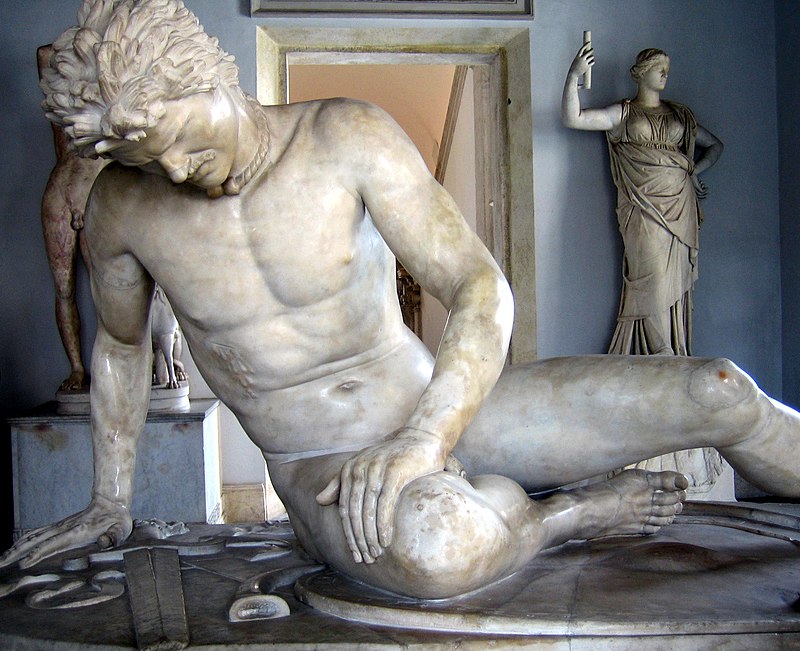
Celtic people of Galatia in Asia Minor

Phrygians
thumb|Phrygians
Kaskians
The Kaska (also Kaška, later Tabalian Kasku and Gasga) were a loosely affiliated Bronze Age non-Indo-European tribal people, who spoke the unclassified Kaskian language and lived in mountainous East Pontic Anatolia, known from Hittite sources. They lived in the mountainous region between the core Hittite region in eastern Anatolia and the Black Sea, and are cited as the reason that the later Hittite Empire never extended northward to that area. They are sometimes identified with the Caucones known from Greek records.

Leleges
The Leleges (; ) were an aboriginal people of the Aegean region, before the Greeks arrived. They were distinct from another pre-Hellenic people of the region, the Pelasgians. The exact areas to which they were native are uncertain, since they were apparently pre-literate and the only references to them are in ancient Greek sources. These references are casual and (it is alleged) sometimes fictitious. Likewise, little is known about the language of the Leleges.

Hayasa-Azzi
Hayasa-Azzi or Azzi-Hayasa (, ) was a Late Bronze Age confederation in the Armenian Highlands and/or Pontic region of Asia Minor. The Hayasa-Azzi confederation was in conflict with the Hittite Empire in the 14th century BCE, leading up to the collapse of Hatti around 1190 BCE. It has long been thought that Hayasa-Azzi may have played a significant role in the ethnogenesis of Armenians.

Chalybes
250px|thumb|Chalybes in a map of the voyage of the Argonauts by [[Abraham Ortelius, 1624]]

Mushki
The Mushki (sometimes transliterated as Muški) were an Iron Age people of Anatolia who appear in sources from Assyria but not from the Hittites. Several authors have connected them with the Moschoi (Μόσχοι) of Greek sources and the Georgian tribe of the Meskhi. Josephus Flavius identified the Moschoi with the Biblical Meshech. Two different groups are called Muški in Assyrian sources (Diakonoff 1984:115), one from the 12th to the 9th centuries BC near the confluence of the Arsanias and the Euphrates ("Eastern Mushki") and the other from the 8th to the 7th centuries BC in Cappadocia and Cilicia

Isuwa
Isuwa (transcribed Išuwa and sometimes rendered Ishuwa, Issuwa), was a kingdom founded by the Hurrians, which came under Hittite sovereignty towards 1600 BC as a result of their struggle with the Hittites.
Anatolians
Indo-European ethnolinguistic group

Macrones
thumb|right|400px|Macrones, occupying area around Trapezos marked as Macronia, next to Tibareni (Thybaraena)
upright=1.2|thumb|Macrones in a map of the voyage of the Argonauts by [[Abraham Ortelius, 1624]]
The Macrones (, ; , Makrōnes) were an ancient Colchian tribe in the east of Pontus, about the Moschian Mountains (mountains approximately south and east of modern Bayburt). The name is allegedly derived from the name of Kromni valley (Κορούμ, located north-east of Gümüşhane) by adding Kartvelian ma- prefix which denotes regional descendant.
Tibareni
thumb|right|380px|Tibareni occupied the country between the Chalybes and the [[Mosynoeci, on the east of the river Iris.]]
Mossynoeci
250px|thumb|Mosinoeci (lower centre) in a map of the voyage of the Argonauts by [[Abraham Ortelius, 1624]]
Mossynoeci (, , , modern Greek '''', "dwellers in wooden towers") is a name that the Greeks of the Euxine Sea (Black Sea) applied to the peoples of Pontus, the northern Anatolian coast west of Trebizond. The Mossynoeci were believed to be of proto-Georgian origin.
Heniochi
250px|thumb|Heniochi in a map of the voyage of the Argonauts by [[Abraham Ortelius, 1624]]
The Heniochi (, Heníochoi "charioteers") were an ancient tribe inhabiting northwest shores of Colchis (present-day Abkhazia, northwestern Georgia) and some say Phasis area. Their country was called Heniocheia ().

Mysians
thumb|200px|Land of the Mysians, who were at the origin of the historic name of the region (Mysia) in northwest [[Anatolia]]
Mysians (; , Mysoí) were the inhabitants of Mysia, a region in northwestern Asia Minor.
Caucones
The Caucones ( Kaukônes) were an autochthonous tribe of Anatolia (modern-day Turkey), who later migrated to parts of the Greek mainland (Arcadia, Triphylian Pylos and Elis).
Dardanians
mythological people mentioned in the Iliad
Bithyni
thumb|305x305px|Bithynia, the region inhabited by the Bithyni
thumb|304x304px|Struma (river)|Strymon river, where the Bithyni are said to have originally lived under the name Strymoni
Phasians
The Phasians ( Pazielebi; Phasianoi; ) were an ancient tribe located in the eastern part of Pontus. The Greek commander Xenophon, who encountered them during his march through Asia Minor to the Black Sea (401–400 BC), places them on the river Phasis. Here, the Phasis of Xenophon is not the common Graeco-Roman designation for the modern day Rioni River in Georgia (called Phasis in Greek), but rather the sources of Araxes in what is now northeastern Turkey. At the time when Xenophon met them, the Phasians were in control of the long valley to the north of Cilligül Dağ, and lived in the neighborh
Mariandyni
The Mariandyni () were an Thracian origin tribe in the north-east of Bithynia. Their country was called Mariandynia (Μαριανδυνία, Stephanus of Byzantium s. v.) and Pliny speaks of a Sinus Mariandynus ("Mariandynian Gulf") on their coast. Greek myths have Mariandynus as their presumed eponymous hero.