Category
page 1Antelopes of Sub-Saharan Africa
impala
The impala or rooibok (Aepyceros melampus, lit. 'black-footed high-horn' in Ancient Greek) is a medium-sized antelope found in eastern and southern Africa. The only extant member of the genus Aepyceros, and tribe Aepycerotini, it was first described to Europeans by German zoologist Hinrich Lichtenstein in 1812. Two subspecies are recognised—the grassland-dwelling common impala (sometimes referred to as the Kenyan impala), and the larger and darker black-faced impala, which lives in slightly more arid, scrubland environments. The impala reaches at the shoulder and weighs . It features a glossy,
springbok
The springbok or springbuck (Antidorcas marsupialis) is an antelope found mainly in south and southwest Africa. The sole living member of the genus Antidorcas, this bovid was first described by the German zoologist Eberhard August Wilhelm von Zimmermann in 1780. Three subspecies are identified. A slender, long-legged antelope, the springbok reaches at the shoulder and weighs between . Both sexes have a pair of black, long horns that curve backwards. The springbok is characterised by a white face, a dark stripe running from the eyes to the mouth, a light brown coat marked by a reddish-brown str
waterbuck
The waterbuck (Kobus ellipsiprymnus) is a large antelope found widely in sub-Saharan Africa. It is in the genus Kobus of the family Bovidae. It was first described by Irish naturalist William Ogilby in 1833. Its 13 subspecies are grouped under two varieties: the common or ellipsiprymnus waterbuck and the defassa waterbuck. Their coat colour varies from brown to grey. The long, spiral horns, present only on males, curve backward, then forward, and are long.

sable antelope
an antelope native to the wooded savanna of East and Southern Africa

roan antelope
species of mammal

Eudorcas thomsonii
species of gazelle

Dibatag
The dibatag (Ammodorcas clarkei), or '''Clarke's gazelle''', is a medium-sized slender antelope native to Ethiopia and Somalia. Though not a true gazelle, it is similarly marked, with long legs and neck. It is often confused with the gerenuk due to their striking resemblance. The typical head-and-body length is about . They stand up to about . Male dibatag weigh between , whereas females range from . The length of the curved horns, present only on males, is typically between . The upper parts are gray to fawn, while the dorsal and lateral areas are cinnamon to rufous (reddish brown). The under

Grey rhebok
species of mammal
Eudorcas rufifrons
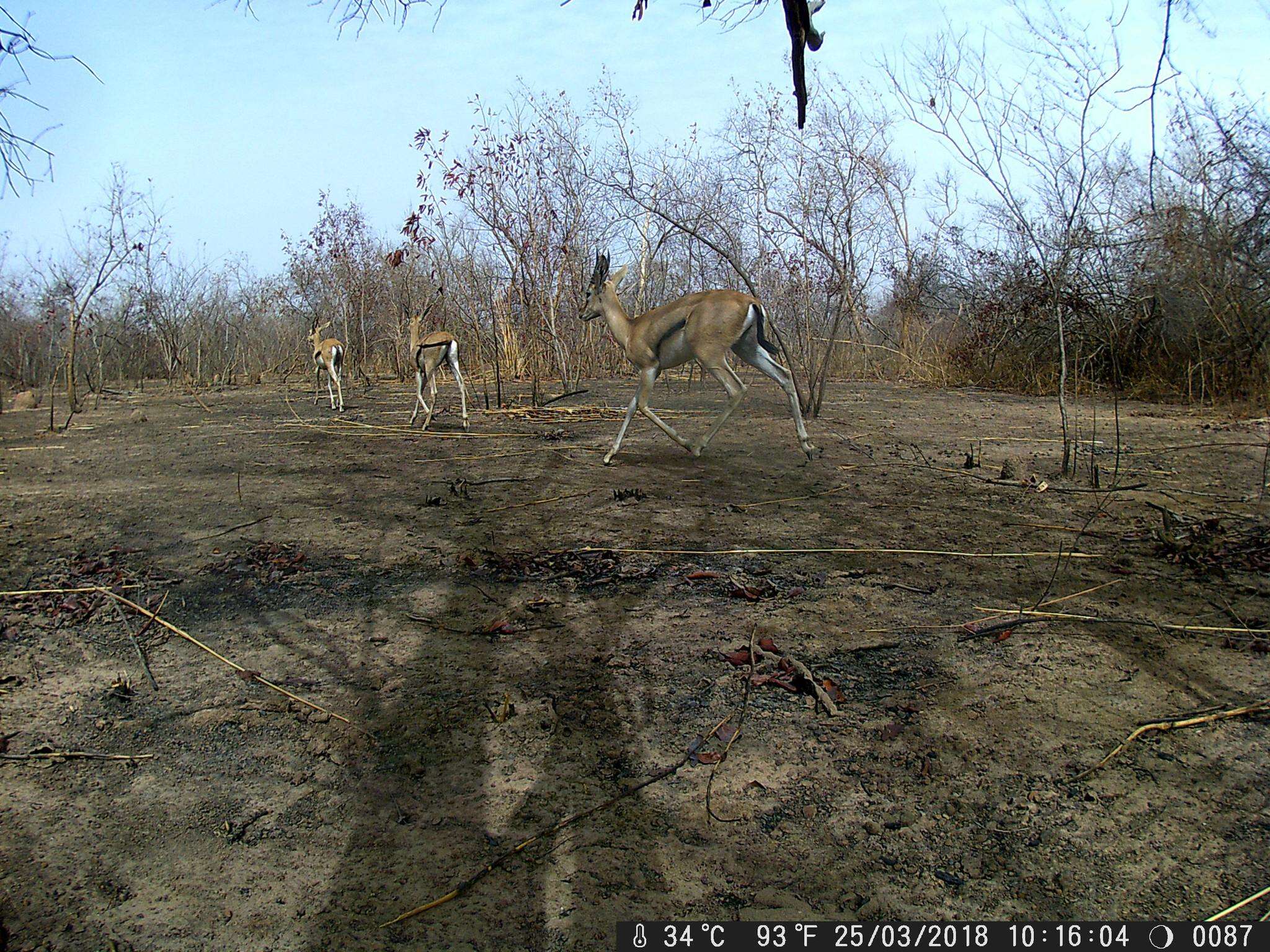
species of mammal