Category
page 1Birds of the Americas
Trochilidae
Hummingbirds are birds native to the Americas and comprise the biological family Trochilidae. With approximately 375 species and 113 genera, they occur from Alaska to Tierra del Fuego, but most species are found in Central and South America. As of 2026, 21 hummingbird species are listed as endangered or critically endangered, with about 255 species declining in population.

Great Egret
species of bird

Western Cattle Egret
species of birds

Short-eared Owl
species of bird

Muscovy Duck
species of bird

Gull-billed Tern
species of seabird

Striated Heron
species of bird
%20(Aepypodius%20bruijnii).jpg)
Cracidae
The chachalacas, guans, and curassows are birds in the family Cracidae. These are species of tropical and subtropical Central and South America. The range of one species, the plain chachalaca, just reaches southernmost parts of Texas in the United States. Two species, the Trinidad piping guan and the rufous-vented chachalaca occur on the islands of Trinidad and Tobago respectively.
.jpg)
Thraupidae
The tanagers (singular ) comprise the bird family Thraupidae, in the order Passeriformes. The family has a Neotropical distribution and is the second-largest family of birds. It represents about 4% of all avian species and 12% of the Neotropical birds.

Fulvous Whistling Duck
species of bird

American Kestrel
species of bird

Tyrannidae
family of birds found in the Americas
.jpg)
Aramus guarauna
thumb|An adult Limpkin walks down the bank of Lake Cecile near Kissimmee, FL
The limpkin (Aramus guarauna), also called carrao, courlan, and crying bird, is a large wading bird related to rails and cranes, and the only extant species in the family Aramidae. It is found mostly in wetlands in warm parts of the Americas, from Florida to northern Argentina, but has been spotted as far north as Wisconsin and Southern Ontario. It feeds on molluscs, with the diet dominated by apple snails of the genus Pomacea. Its name derives from its seeming limp when it walks.

Odontophoridae
family of birds

Cardinalidae
Cardinalidae (sometimes referred to as "cardinal-grosbeaks" or simply "cardinals") is a family of New World-endemic passerine birds that consists of cardinals, grosbeaks, and buntings. It also includes several other genera such as the tanager-like Piranga and the warbler-like Granatellus. Membership of this family is not easily defined by a single or even a set of physical characteristics, but instead by molecular work. Among songbirds, they range from average-sized to relatively large and have stout features. Some species have large, heavy bills.

Wood Stork
species of bird

American White Ibis
species of bird

Snowy Egret
species of Bird

Parulidae
family of birds

Anhinga anhinga
The anhinga (; Anhinga anhinga), sometimes called snakebird, darter, American darter, or water turkey, is a water bird of the warmer parts of the Americas. The word anhinga comes from ''a'ñinga'' in the Brazilian Tupi language and means "devil bird" or "snake bird". The origin of the name is apparent when swimming: only the neck appears above water, so the bird looks like a snake ready to strike. They do not have external nares (nostrils) and breathe solely through their epiglottis.

Pipridae
The manakins are a family, Pipridae, of small suboscine passerine birds. The group contains 55 species distributed through the American tropics. The name is from Middle Dutch "little man" (also the source of the different bird name mannikin).

Icteridae
Icterids () or New World blackbirds make up a family, the Icteridae (), of small to medium-sized, often colorful, New World passerine birds. The family contains 108 species and is divided into 30 genera. Most species have black as a predominant plumage color, often enlivened by yellow, orange, or red. The species in the family vary widely in size, shape, behavior, and coloration.

Mimidae
__NOTOC__

Tricolored Heron
species of bird
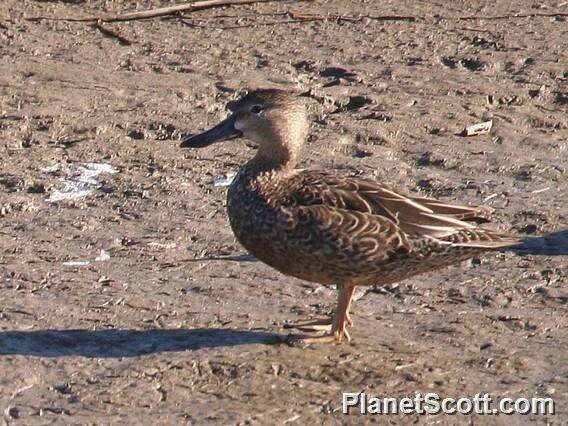
Cinnamon Teal
species of bird

Pied-billed Grebe
species of the grebe family of water birds

Black Skimmer
species of bird

Vireonidae
The vireos make up a family, Vireonidae, of small to medium-sized passerine birds found in the New World (Canada to Argentina, including Bermuda and the West Indies) and Southeast Asia. The family contains 62 species and is divided into eight genera. "Vireo" is a Latin word referring to a green migratory bird, perhaps the female golden oriole, possibly the European greenfinch.

Little Blue Heron
species of bird

White-faced Ibis
species of bird

Capitonidae
family of birds
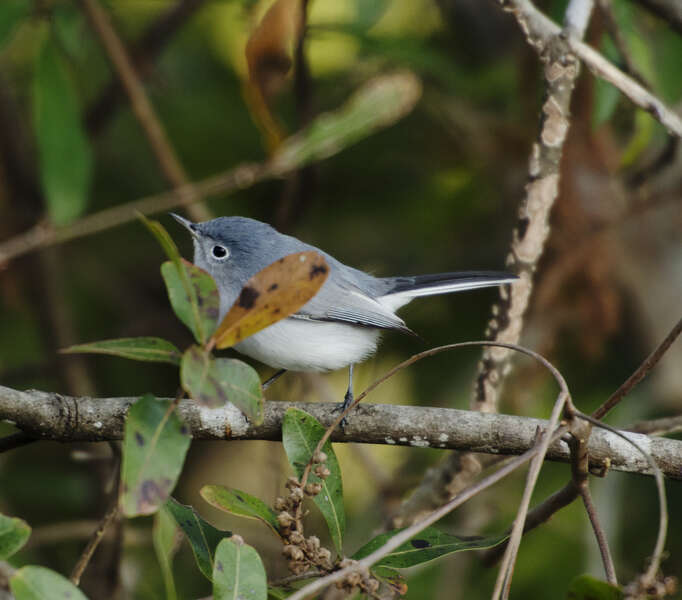
Gnatcatcher
The gnatcatchers are a family of small passerine birds in the family Polioptilidae. The 20 species occur in North and South America (except for the far south and the high Andean regions). Most species of this mainly tropical and subtropical group are resident, but the blue-grey gnatcatcher of the United States and southern Canada migrates south in winter. They are close relatives of the wrens.

Least Bittern
species of bird

Neotropic cormorant
species of bird

Purple Gallinule
species of bird

Tityridae
Tityridae is family of suboscine passerine birds found in forest and woodland in the Neotropics. The 45 species in this family were formerly spread over the families Tyrannidae, Pipridae and Cotingidae (see Taxonomy). As yet, no widely accepted common name exists for the family, although tityras and allies and tityras, mourners and allies have been used. They are small to medium-sized birds. Under current classification, the family ranges in size from the buff-throated purpletuft, at and , to the masked tityra, at up to and . Most have relatively short tails and large heads.

Passerellidae
family of songbirds

American Oystercatcher
species of bird
Geotrygon
Geotrygon is a bird genus in the pigeon and dove family (Columbidae). Its members are called quail-doves, and all live in the Neotropics. The species of this genus have ranges from southern Mexico and Central America to the West Indies and South America, with 2 species recorded as occasional vagrants reported in Texas and Florida in the United States. Quail-doves are ground-dwelling pigeons that live, nest, and feed in dense forests. They are remarkable for their vivid coloration with light-and-dark facial markings.

Zenaida
genus of birds

Leptotila
Leptotila is a genus of birds in the dove and pigeon family Columbidae. These are ground-foraging doves that live in the Americas.
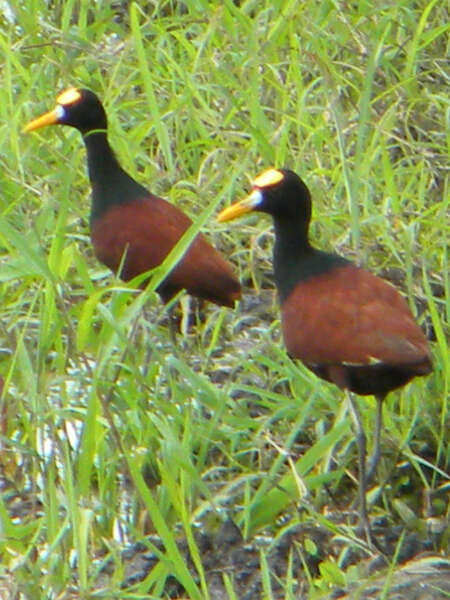
Jacana
genus of birds

Leucophaeus
Leucophaeus is a small genus of medium-sized New World gulls, most of which are dark in plumage, usually with white crescents above and below the eyes. They were placed in the genus Larus until recently. The genus name Leucophaeus is from Ancient Greek leukos, "white", and phaios, "dusky".

Columbina
genus of birds
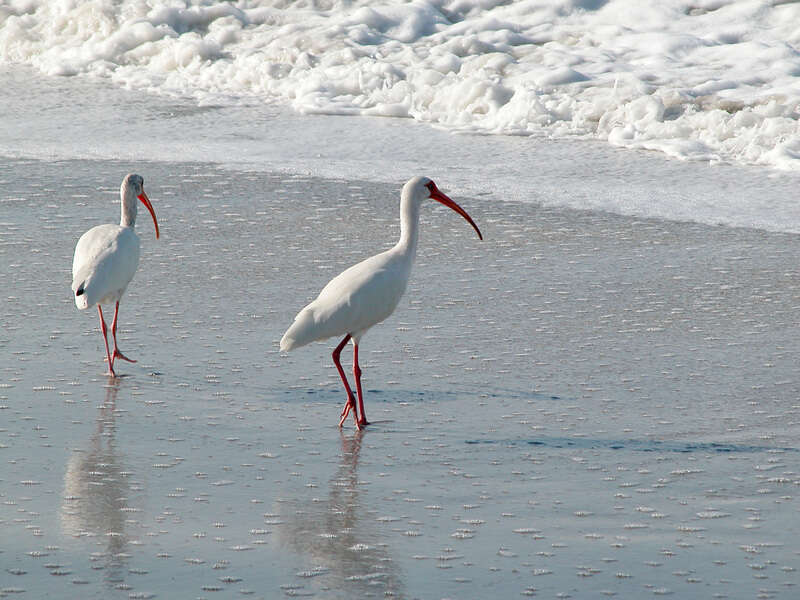
Eudocimus
Eudocimus is a genus of ibises, wading birds of the family Threskiornithidae. They occur in the warmer parts of the New World with representatives from the southern United States south through Central America, the West Indies, and South America.

Common Ground Dove
species of bird
.jpg)
Melanerpes
Melanerpes is a genus of woodpeckers of the family Picidae found in the Americas. The 23 members of the genus are mostly colourful birds, conspicuously barred in black and white, with some red and yellow.
Patagioenas
Patagioenas is a genus of New World pigeons whose distinctness from the genus Columba was long disputed but ultimately confirmed. It is basal to the Columba — Streptopelia radiation with their ancestors diverging from that lineage likely over 8 million years ago. While the biogeographic pattern of this group suggests that the ancestors of typical pigeons and turtle doves settled the Old World from the Americas, Patagioenas may also be the offspring of Old World pigeons that radiated into different genera later, given that the cuckoo-doves (Macropygia) of Southeast Asia also seem to be closely
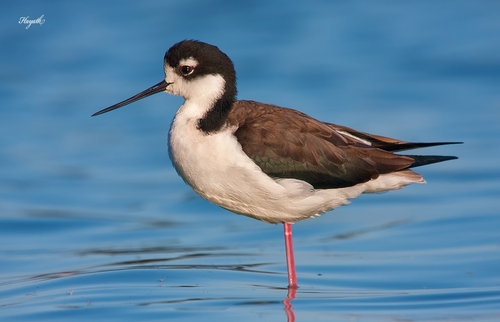
Black-necked Stilt
species of bird

Collared Plover
species of bird

American green kingfishers
genus of birds

Campephilus
Campephilus is a genus of large American woodpeckers in the family Picidae.
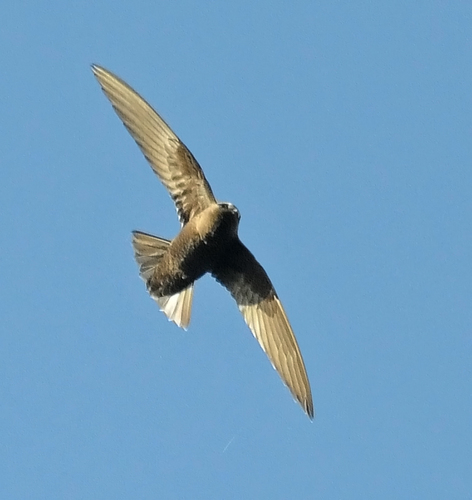
Cypseloides
Cypseloides is a genus of swifts in the family Apodidae. It contains eight described species. They occur mainly in Central and South America. The exception being the American black swift, which has a wide range into North America.

Catharus
The genus Catharus is an evolutionary clade of forest-dwelling passerine birds in the family Turdidae (thrushes), commonly known as nightingale-thrushes. The extant species are widely distributed across the Americas and are descended from a common ancestor that lived 4–6 million years ago. Most of the species are shy of humans, seldom leaving the cover of dense forest vegetation, where their activities are hidden from view. Thus, many fundamental aspects of their biology and life histories are poorly known.

Wilson's Plover
species of bird
%20male.jpg)
Piculus
Piculus is a genus of birds in the woodpecker family Picidae that are found in Central and South America.
Cathartiformes
thumb|thumbtime=82|Turkey vultures coming in to the same roost they use for the season.

Neomorphinae
The Neomorphinae are a subfamily of the cuckoo family, Cuculidae. Members of this subfamily are known as New World ground cuckoos, since most are largely terrestrial and native to the Americas. Only Dromococcyx and Tapera are more arboreal, and these are also the only brood parasitic cuckoos in the Americas, while the remaining all build their own nests.

Tachycineta
Tachycineta is a genus of birds in the swallow family Hirundinidae. There are nine described species all restricted to the Americas.
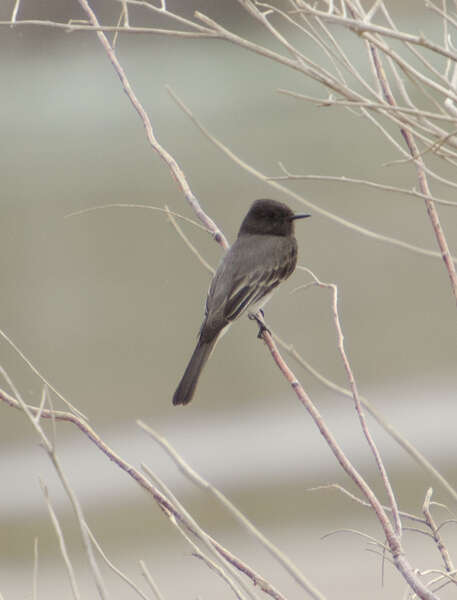
Sayornis
The genus Sayornis is a small group of medium-sized insect-eating birds, known as phoebes, in the tyrant flycatcher family Tyrannidae.