Category
page 1Book of Genesis people
%20%D1%80%D0%B0%D0%B7%D0%B1%D0%BE%D1%98%D0%BD%D0%B8%D0%BA%20%D1%83%20%D1%80%D0%B0%D1%98%D1%83%2C%20%D0%B6%D0%B8%D0%B2%D0%BE%D0%BF%D0%B8%D1%81%20%D1%83%20%D1%81%D0%B2%D0%B5%D1%82%D0%BE%D1%98%20%D0%BE%D0%B1%D0%B8%D1%82%D0%B5%D1%99%D0%B8%20%D0%93%D1%80%D0%B0%D1%87%D0%B0%D0%BD%D0%B8%D1%86%D0%B0%2C%20%D0%A1%D1%80%D0%B1%D0%B8%D1%98%D0%B0.jpg)
Abraham
Abraham (originally Abram) is the common Hebrew patriarch of the Abrahamic religions, including Judaism, Christianity, and Islam. In Judaism, he is the founding father who began the covenantal relationship between the Jewish people and God; in Christianity, he is the spiritual progenitor of all believers, whether Jewish or non-Jewish; and in Islam, he is a link in the chain of Islamic prophets that begins with Adam and culminates in Muhammad. Abraham is also revered in other Abrahamic religions such as the Baháʼí Faith and the Druze faith.

Adam
Adam is the name given in Genesis 1–5 to the first human. Adam is the first human being aware of God, and features as such in various belief systems (including Judaism, Christianity, Gnosticism, Islam, and the Baháʼí Faith).

Eve
Eve is a figure from the Book of Genesis (ספר בראשית) in the Hebrew Bible. According to the origin story of the Abrahamic religions, she was the first woman to be created by God. Eve is known also as Adam's wife.

Noah

Jacob
Jacob, later given the name Israel, is a Hebrew patriarch of the Abrahamic religions. He first appears in the Torah, where he is described in the Book of Genesis as a son of Isaac and Rebecca. Accordingly, alongside his older fraternal twin brother Esau, Jacob's paternal grandparents are Abraham and Sarah and his maternal grandfather is Bethuel, whose wife is not mentioned. He is said to have bought Esau's birthright and, with his mother's help, deceived his aging father to bless him instead of Esau. Then, following a severe drought in his homeland Canaan, Jacob and his descendants migrated to

Adam and Eve
first man and woman in Abrahamic creation myth

Ham
biblical figure, son of Noah

Shem
thumb|Shem, Ham (son of Noah)|Ham and [[Japheth by James Tissot 1900. Shem is on the left with a similar skin color to other Biblical figures painted by Tissot.]]

Abel
Abel ( Hébel, in pausa Hā́ḇel; Hábel; , Hābēl) is a biblical figure in the Book of Genesis within the Abrahamic religions. Born as the second son of Adam and Eve, the first two humans created by God, he was a shepherd who offered his firstborn flock to God as a religious offering (Genesis 4:1–8). God accepted Abel's offering but not that of his older brother Cain, leading Cain to kill Abel out of jealousy; some later interpretations suggest that Cain may have slain him with a stone. This act marked the first death in biblical history, making Abel the first murder victim.

Cain
Cain is a biblical figure in the Book of Genesis within Abrahamic religions. He is the elder brother of Abel, and the firstborn son of Adam and Eve, the first couple within the Bible. He was a farmer who gave an offering of his crops to God. However, God was not pleased and favored Abel's offering over Cain's. Out of jealousy, Cain killed his brother, for which he was punished by God with the curse and mark of Cain. He had several descendants, starting with his son Enoch and including Lamech.

Enoch
Enoch ( ; Henṓkh) is a biblical figure and patriarch prior to Noah's flood. He is the son of Jared and father of Methuselah.
.jpg)
Nimrod
thumb|267px|Nimrod by David Scott (painter)|David Scott, 1832
Nimrod is a biblical figure mentioned in the Book of Genesis and the Books of Chronicles. The son of Cush and thus the great-grandson of Noah, Nimrod was described as a king in the land of Shinar (Lower Mesopotamia). The Bible states that he was "a mighty hunter before the Lᴏʀᴅ [and] ... began to be mighty in the earth". Nimrod became a symbol of defiance against God.

Methuselah
Methuselah (; , in pausa , 'his death shall send' or 'man of the javelin' or 'death of sword'; ) was a biblical patriarch and a figure in Judaism, Christianity, and Islam. He is claimed to have lived the longest life, dying at 969 years of age. According to the Book of Genesis, Methuselah was the son of Enoch, the father of Lamech, and the grandfather of Noah. Elsewhere in the Bible, Methuselah is mentioned in genealogies in 1 Chronicles and the Gospel of Luke.

Rebecca
Biblical character

Esau

Rachel
Rachel () was a Biblical figure, the favorite of Jacob's two wives, and the mother of Joseph and Benjamin, two of the twelve progenitors of the tribes of Israel. Rachel's father was Laban. Her older sister was Leah, Jacob's first wife. Her aunt Rebecca was Jacob's mother.
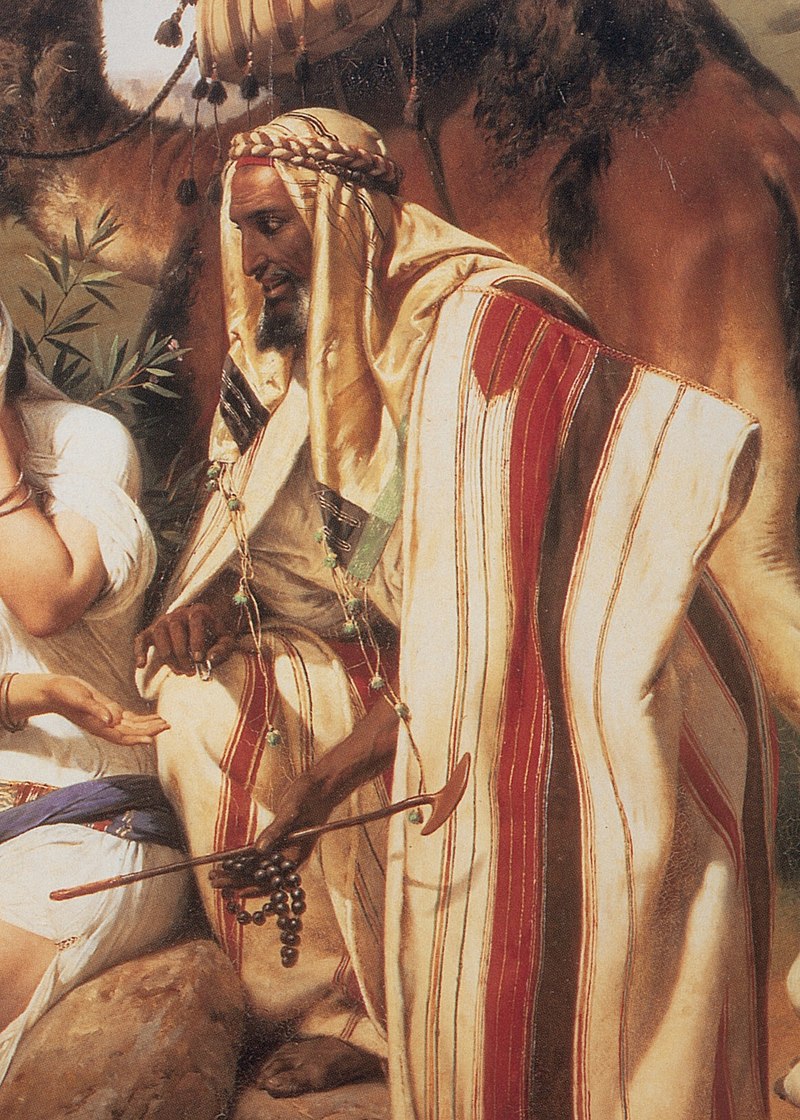
Judah
biblical figure; fourth son of Jacob and Leah; brother of Joseph

Melchizedek
In the Hebrew Bible, Melchizedek was the king of Salem and priest of (often translated as "God Most High"). He is mentioned in Genesis 14:18–20, where he brings out bread and wine and blesses Abram (Abraham), following the Battle of the Vale of Siddim and Abram's subsequent rescue of the captives and plunder taken in the battle, and in Psalm 110:4.

Cain and Abel
persons of the Bible, the first two sons of Adam and Eve
.jpg)
Levi
Levi ( ; ) was, according to the Book of Genesis, the third of the six sons of Jacob and Leah, and the founder of the Israelite Tribe of Levi (the Levites, including the Kohanim) and the great-grandfather of Aaron, Moses and Miriam. Certain religious and political functions were reserved for the Levites.

Leah
Leah () appears in the Hebrew Bible as one of the two wives of the Biblical patriarch Jacob. Leah was Jacob's first wife, and the older sister of his second (and favored) wife Rachel. She is the mother of Jacob's first son Reuben. She has three more sons, namely Simeon, Levi and Judah, but does not bear another son until Rachel offers her a night with Jacob in exchange for some mandrake root (, ''dûdâ'îm''). Leah gives birth to two more sons after this, Issachar and Zebulun, and to Jacob's only daughter, Dinah.

Enos
biblical figure, son of Seth, grandson of Adam and Eve

nephilim
The Nephilim (; ) are mysterious beings or humans mentioned in the Bible, traditionally understood as being of great size and strength, or alternatively as beings of great power and authority. The origins of the Nephilim remain unclear. Some writers, including the author of the Book of Enoch, view them as the offspring of rebellious angels and humans. Others view them as descendants of Seth and Cain.
Eber
Eber (; ; ) is an ancestor of the Ishmaelites and the Israelites according to the Generations of Noah in the Book of Genesis () and the Books of Chronicles ().
Laban
son of Bethuel, brother of Rebekah described in the Book of Genesis

Dan
son of Jacob and founder of the Israelite Tribe of Dan

Simeon
Biblical character; second son of Jacob and Leah
Asher
Asher ( ’Āšēr), in the Book of Genesis, was the younger of the two sons of Jacob and Zilpah, and Jacob's eighth son overall. He was the founder of the Israelite Tribe of Asher.

Onan
thumb|Story of Onan

Dinah
In the Book of Genesis, Dinah (; ) was the seventh child and only named daughter of Leah and Jacob. The episode of her rape by Shechem, son of a Canaanite or Hivite prince, and the subsequent revenge of her brothers Simeon and Levi, commonly referred to as the rape of Dinah, is told in Genesis 34.

Lamech
biblical figure, father of Noah, son of Methuselah

Tamar
figure in the Book of Genesis; daughter-in-law of Judah
Arpachshad
Arpachshad ( – ʾArpaḵšaḏ, in pausa – ʾArpaḵšāḏ; – Arphaxád), alternatively spelled Arphaxad or Arphacsad, was one of the five sons of Shem, the son of Noah (Genesis 10:22, 24; 11:10-13; 1 Chron. 1:17-18). His brothers were Elam, Asshur, Lud and Aram; he is an ancestor of Abraham. He is said by Gen. 11:10 to have been born two years after the Flood, when Shem was 100.
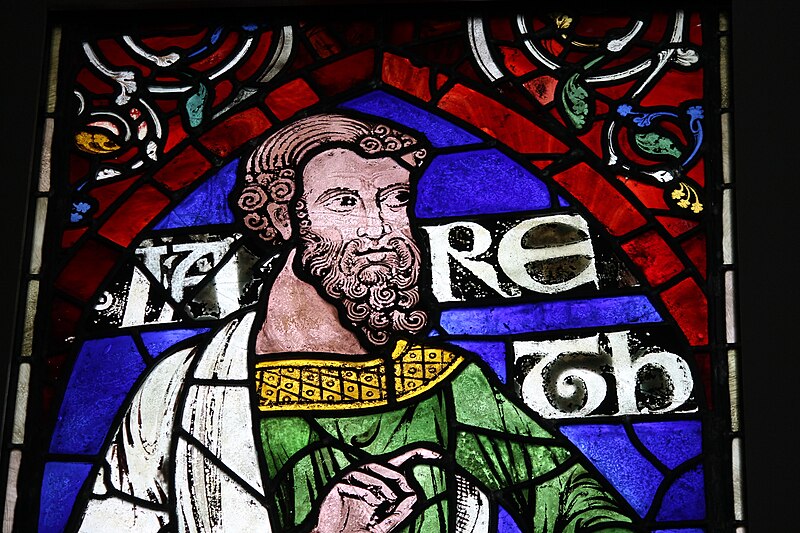
Jared
biblical figure
Mahalalel
Mahalalel (, ) was an Antediluvian patriarch named in the Hebrew Bible. He is mentioned in the Sethite genealogy as the grandfather of Enoch and subsequently the ancestor of Noah.
Kenan
Kenan (also spelled Qenan, Kaynan, Caynam or Cainan) (; ; ) is an Antediluvian patriarch first mentioned in the Book of Genesis in the Hebrew Bible.

Ephraim
Ephraim (; , in pausa: ʾEp̄rāyīm) was, according to the Book of Genesis, the second son of Joseph ben Jacob and Asenath, as well as the adopted son of his biological grandfather Jacob, making him the progenitor of the Tribe of Ephraim.
Manasseh
biblical figure

Bilhah
thumb|Bilhah - detail from c:File:Rachel Giving Bilhah to Jacob from The Story of Jacob series MET AR1420.jpg|Flemish tapestry made around 1550, depicting Rachel giving Bilhah to Jacob.|362x362px
Bilhah ( "unworried", Standard Hebrew: Bilha, Tiberian Hebrew: Bīlhā) is a woman mentioned in the Book of Genesis. describes her as Laban's handmaiden (), who was given to Rachel to be her handmaid on Rachel's marriage to Jacob. When Rachel failed to have children, Rachel gave Bilhah to Jacob like a wife to bear him children. Bilhah gave birth to two sons, whom Rachel claimed as her own and named Dan
Peleg
Peleg (, in pausa , "division"; ) is mentioned in the Hebrew Bible as one of the two sons of Eber, an ancestor of the Ishmaelites and the Israelites, according to the Generations of Noah in and .
Zilpa
In the Book of Genesis, Zilpah ( Zīlpā, meaning uncertain) was Leah's handmaid whom Leah gave to Jacob like a wife to bear him children (). Zilpah gave birth to two sons, whom Leah claimed as her own and named Gad and Asher ().
Salah
ancestor of Abraham according to Genesis in Hebrew Bible, son of Arpachshad or Cainan
Cush
male human biblical figure in Genesis 10 and 1 Chronicles 1, son of Ham, father of Nomrod &c
Reu
Reu or Ragau (; ), according to Genesis in the Hebrew Bible, was the son of Peleg and the father of Serug, thus being Abraham's great-great-grandfather and the ancestor of the Israelites and Ishmaelites.

Potiphar
Potiphar ( ; ; ) is a figure in the Hebrew Bible and the Quran. His name possibly indicates the same figure as Potiphera ().
Zulaikha
character from the Old Testament (Genesis 39)
Canaan
son of Ham and grandson of Noah in the Hebrew Bible (Genesis 10)
Enoch
son of Cain (Biblical figure)
Perez
Son of Judah (with Tamar)
Aram
biblical figure (Genesis 10)
Jubal
Biblical figure (Genesis 4)
Gomer
Gomer ( Gōmer; ) was the eldest son of Japheth (and of the Japhetic line), and father of Ashkenaz, Riphath, and Togarmah, according to the "Table of Nations" in the Hebrew Bible (Genesis 10).
Lamech
Biblical figure, descendant of Cain (Genesis 4)

Tubal-cain
Tubal-cain or Tubalcain ( – Tūḇal Qayīn) is a person mentioned in the Bible, in , named therein as the first blacksmith. He is stated as the "forger of all instruments of bronze and iron". A descendant of Cain, he was the son of Lamech and Zillah. Tubal-cain was the brother of Naamah and half-brother of Jabal and Jubal.

Asenath
thumb|200px|Joseph and Asenath
thumb|Joseph meets Asenath (1490s painting).
Asenath (, ; Koine Greek: Ἀσενέθ, Asenéth) is a minor figure in the Book of Genesis. Asenath was a high-born, aristocratic Egyptian woman. She was the wife of Joseph and the mother of his sons, Manasseh and Ephraim.
Naamah
Biblical figure (Genesis 4)

Meshech
thumb|The World as known to the Hebrews. This 1854 map locates Meshech together with Gog and Magog, roughly in the southern Caucasus.

Javan
thumb|The world as known to the Hebrews
Bethuel
Bethuel ( – Bəṯūʾēl), in the Hebrew Bible, was an Aramean man, the youngest son of Nahor and Milcah, the nephew of Abraham, and the father of Laban and Rebecca.
Togarmah
thumb|340px|Red: Son of Japhet, Yellow: Son of Ham. Blue: Son of Shem