Category
page 1Chadō

Japanese tea ceremony
ritual serving of tea in Japanese culture

matcha
Matcha (; ) is a finely ground powder of green tea specially processed from shade-grown tea leaves. Shade growing gives matcha its characteristic bright green color and strong umami flavor. Matcha is typically consumed suspended in hot water.

wabi-sabi
thumb|alt=Rock garden with aged clay wall in the background|Zen garden of [[Ryōan-ji, built during the Higashiyama period. The clay wall, stained with subtle brown and orange tones, reflects principles, while the rock garden reflects principles.]]
thumb|alt=Traditional tea house in a garden|A Japanese tea house reflecting the aesthetic in Garden
thumb|alt=Black raku ware tea bowl with rough texture| tea bowl, Azuchi–Momoyama period, 16th century

wagashi
is traditional Japanese confectionery, typically made using plant-based ingredients and with an emphasis on seasonality. Wagashi generally makes use of cooking methods that pre-date Western influence in Japan. It is often served with green tea.

kaiseki
thumb|300px| consists of a sequence of dishes, each often small and artistically arranged.

tsukubai
thumb|alt=Refer to caption|The '''' at Ryōan-ji temple in Kyoto
ichi-go ichi-e
Japanese four character idiom

roji
thumb|Roji leading to the Seigetsu chashitsu at [[Ise Jingū; typical features include the stepping stones, moss, bamboo gate, and division into outer and inner gardens]]
, lit. 'dewy ground', is the Japanese term used for the garden through which one passes to the chashitsu for the tea ceremony. The roji acts as a transitional space leading from the entry gate to the teahouse, and generally cultivates an air of simplicity and purification.
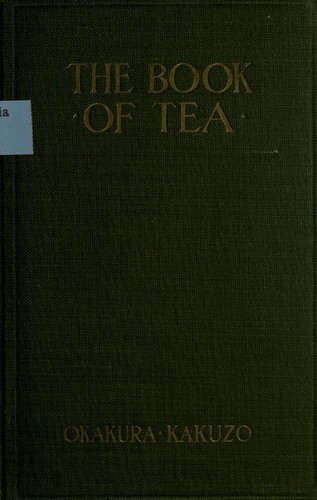
The Book of Tea
long essay

Urasenke
thumb|The gate to the historical estate in Kyoto

chōzubachi
thumb|Chōzubachi at a temple
thumb|Performing temizu from a domestic chōzu-bachi, 1910s.
A , or water bowl, is a vessel used to rinse the hands in Japanese temples, shrines and gardens. Usually made of stone, it plays an important role in the tea ceremony. Guests use it to wash their hands before entering the tearoom, a practice originally adapted from the custom of rinsing one’s mouth and cleansing one’s body in the chōzuya before entering the sacred precincts of a Shinto shrine or a Buddhist temple.
hanabiramochi
is a Japanese sweet (wagashi), usually eaten at the beginning of the year. Hanabiramochi are also served at the first tea ceremony of the new year.
namagashi
are a type of wagashi, which is a general term for traditional Japanese sweets and candies. Namagashi may contain fruit jellies, other gelatines such as Kanten, or sweetened bean paste. Namagashi are often detailed, designed using seasonal and natural motifs such as leaves and flowers to reflect the various objects of nature in Japan's four seasons. Namagashi are usually freshly made and are much more moist than other wagashi, like higashi. It generally contains 30% more water than other types. Like other wagashi, namagashi are made of natural ingredients; additives are rarely used. Namagashi

shibui
Shibui (渋い) (adjective), shibumi (渋み) (subjective noun), or shibusa (渋さ) (objective noun) are Japanese words that refer to a particular aesthetic of simple, subtle, and unobtrusive beauty. Like other Japanese aesthetics terms, such as iki and wabi-sabi, shibui can apply to a wide variety of subjects, not just art or fashion.
iemoto
thumb|Hansō Sōshitsu|Genshitsu Sen, 15th of the [[Urasenke school]]
is a Japanese term used to refer to the founder or current Grand Master of a certain school of traditional Japanese art. It is used synonymously with the term when it refers to the family or house that the iemoto is head of and represents.
Omotesenke
thumb|The front gate to the Omotesenke Fushin'an estate, Kyoto.
Omotesenke (表千家) is one of the schools of Japanese tea ceremony. Along with Urasenke and Mushakōjisenke, it is one of the three lines of the Sen family descending from Sen no Rikyū, which together are known as the san-Senke or "three Sen houses/families" (三千家).
Zenga
thumb|, a famous zenga by Sengai
Tanabe Art Museum
museum in Japan
fukusa
thumb|right|300px|19th-century portraying Jō and Uba in a scene from the Noh play ; embroidered silk and couched gold-wrapped thread on indigo-dyed satin silk
chabana
thumb|Chabana arrangement of the Sōgetsu-ryū school
is a generic term for the arrangement of flowers put together for display at a Japanese tea ceremony, and also for the wide variety of plants conventionally considered as appropriate material for such use, as witnessed by the existence of such encyclopedic publications as the Genshoku Chabana Daijiten [All-color encyclopedia of chabana]. The method of arranging the flowers is according to the nageire, or thrown in, style of flower arranging. In turn, nageire is recognized as a certain stylistic category of Kadō, the Japanese "Way of Flowers"
mizuya
thumb|Preparing the washing area in a tea ceremony room, woodblock by Toshikata Mizuno, 1896
is the term for the preparation area in a Japanese tea house (') or attached to any venue used for the Japanese tea ceremony. For instance, the area used for preparation during outdoor tea ceremonies is also called the . The term can also refer to purificatory fonts at shrines and temples, as well as to storage cupboards for use in kitchens. This article, however, focuses on the tea ceremony '.
Mushakōjisenke
thumb|Set of Japanese tea utensils|tea utensils of the Mushakōjisenke
, sometimes referred to as Mushanokōjisenke, is one of the three schools of Japanese tea ceremony. Along with Urasenke and Omotesenke, the Mushakōjisenke is one of the three lines of the Sen family descending from Sen no Rikyū, which together are known as the san-Senke or "three Sen houses/families" (三千家). The head or iemoto of this line carries the hereditary name Sōshu (宗守).
Ueda Sōko tradition of chanoyu
Nōami
was a dōbōshū (artist and art connoisseur for the shogunate) in the service of the Ashikaga shogunate, an esteemed suiboku (monochrome ink) painter, renga (linked verse) poet and tate-bana flower artist. He was especially closely involved with the 6th shōgun Ashikaga Yoshinori and the 8th shōgun Ashikaga Yoshimasa. Nōami served the Ashikaga shogunate as the curator of the shogunate's collection of artworks known as the ‘Higashiyama Gomotsu’. An astute art connoisseur, Nōami collected and evaluated the imported artworks for the shogunate and developed elaborate guidelines for the display of art
wabi-cha
Wabi-cha (; ; ), is a style of Japanese tea ceremony particularly associated with Sen no Rikyū, Takeno Jōō and its originator Murata Jukō. Wabi-cha emphasizes simplicity. The term came into use in the Edo period, prior to which it was known as wabi-suki (), suki meaning "artistic inclination", and "wabi" meaning 'forlorn'.
jo-ha-kyū
is a concept of modulation and movement applied in a wide variety of traditional Japanese arts. Roughly translated to "beginning, break, rapid", it essentially means that all actions or efforts should begin slowly, speed up, and then end swiftly. This concept is applied to elements of the Japanese tea ceremony, martial arts (kenjutsu, iaido, kendō, karate), dramatic structure in the traditional theatre, and to the traditional collaborative linked verse forms renga and renku (haikai no renga).