Category
page 1Culture of Finland

Kalevala
The Kalevala () is a 19th-century compilation of epic poetry, compiled by Elias Lönnrot from Finnish, Karelian and Ingrian folklore and mythology, telling a story about the Creation of the Earth, describing the controversies and retaliatory voyages between the peoples of the land of Kalevala called Väinölä and the land of Pohjola and their various protagonists and antagonists, as well as the construction and robbery of the mythical wealth-making machine Sampo.

sauna
thumb|A modern Finnish sauna

Angry Birds
media franchise by Rovio Entertainment Corporation

Moomins
The Moomins (, ) are the central characters in a series of novels, short stories, picture books, and a comic strip by the Finnish writer and illustrator Tove Jansson, originally published in Swedish by the Finnish publisher Schildts. They are a family of white, round fairy-tale characters with large snouts that make them resemble the hippopotamus. However, despite this resemblance, the Moomin family are trolls who live in a house in Moominvalley.
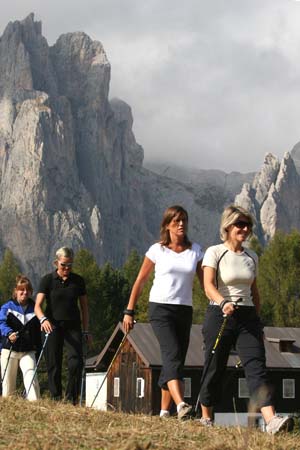
Nordic walking
physical activity or sport involving cross-country walking with specially designed walking poles similar to ski poles
Saint Lucy's Day
Christian feast day dedicated to Lucy of Syracuse and observed on 13 December
Falu red
color

sisu
'''''' is a Finnish word variously translated as stoic determination, tenacity of purpose, grit, bravery, resilience, and hardiness. It is held by Finns to express their national character. It does not necessarily have a single-word literal equivalent in English, although tenacity, grit, resilience, and hardiness share similar meanings but do not necessarily imply stoicism or bravery.
Finnish sauna
traditional Finnish way of bathing
crayfish party
Scandinavian tradition linked to crayfish harvest regulations

puukko
right|thumb|350px|Traditional puukko with birch handle and full-length fuller
A puukko () is a small traditional Finnish general purpose belt knife with a single curved cutting edge, solid hidden tang, and usually, a flat spine.
culture of Finland
pattern of human activity and symbolism associated with Finland and its people
Flying Finn
group of humans
St. Knut's Day
holiday
sauna whisk
besom used for bathing
Finnish Academy of Science and Letters
Finnish scientific society, founded 1908 in Helsinki
public holidays in Finland
Wikimedia list article
Sweden Finns' Day
annual celebration on Finnish people in Sweden
dish drying cabinet
kitchen innovations
music of Finland
overview of musical traditions in Finland
Karelianism
Karelianism was a late 19th-century cultural phenomenon in the Grand Duchy of Finland and involved writers, painters, poets and sculptors. Since the publishing of the Finnish national epic Kalevala in 1835, compiled from Finnish and Karelian folk lore, culture spheres in Finland became increasingly curious about Karelian heritage and landscape. By the end of the 19th century Karelianism had become a major trend for many works of art and literature in Finland. In the movement Karelia was seen as a sort of refuge for the essence of "Finnishness" that had maintained its authenticity across centur
sport in Finland
overview of sports traditions in Finland
World Sauna Championships
former competition in Finnland
Finnish art
history of art in Finland
flag days in Finland
Wikimedia list article
Tursaansydän
250px|right|thumb|Variations of the symbol
The ' or (), also called ' (), is an ancient swastika-like symbol used in Northern Europe. The symbol originates from prehistoric times.
The was believed to bring good luck and protect from curses, and was used as a decorative motif on wooden furniture and buildings in Finland. A brick dating to the 14th or 15th century bearing a tursaansydän motif was found during restorations of the Häme Castle.
Finnish Swedish Heritage Day
flag day in Finland
Finnish Heritage Agency
specialist, service provider, developer and authority in material cultural heritage
Cinnamon Roll Day
Annual secular holiday in Sweden and Finland
Kalevala Day
day
vuorineuvos
'''''' (, 'mining councilor', literally Finnish for 'mountain councilor'; Swedish: '''') is both a Finnish honorary title and a historical Swedish role on the Swedish Board of Mines. The Finnish title is granted by the President of Finland to leading figures in industry and commerce. The title is honorary and has no responsibilities and no privileges. All Finnish titles are non-hereditary. The only title of equal rank is valtioneuvos''.
Finnish studies
Christmas Peace
Finnish tradition
Prometheus camps
Finnish secular coming-of-age camps
Finnish Cultural Foundation
nonprofit foundation dedicated to the promotion of culture and science in Finland
Sirkus Finlandia
one of the best known circuses in Finland
Golden Age of Finnish Art
period (1880–1910) in Finnish art history, during which Kalevala-related themes were popular, whose central figures were A. Gallen-Kallela, P. Halonen, A. Edelfelt, J. Sibelius, E. Leino, H. Schjerfbeck, E. Järnefelt, E. Wikström, E. Saarinen
valtioneuvos
Valtioneuvos (Finnish for “counsellor of state”, ) is a Finnish title of honor awarded by the President of Finland to elder statesmen. It is one of two titles (the other being vuorineuvos) in the highest class of State of Finland honors. A tax on the titles of 48,400 euros or 12,100 euros must be paid by whoever proposes the title to a holder.
Aku Ankka
Finnish Disney comics magazine
pantsdrunk
Pantsdrunk (stylized as Päntsdrunk; , ) is a form of drinking culture, originating in Finland, in which the drinker consumes alcoholic drinks at home dressed in very little clothing, usually underwear, with no intention of going out. To a large extent, it is still considered a way of life in Finland, possibly related to the stereotyped lack of social contacts among Finns. The forced isolation of people in their own homes caused by the COVID-19 pandemic created a global trend for this drinking habit.
teekkari
thumb|right|First-year technical students at a basic mathematics lecture at the Aalto University.
In Finland, "teekkari" (Swedish: teknolog) refers to students of institutes of technology. The term is also used for students of technical subjects in other universities and Bachelors of Science in Technology.
ryijy
thumb|upright|Ryijy from 1960s
Ryijy is a woven Finnish long-tufted tapestry or knotted-pile carpet hanging.
Swedish Finland
Poster stamp|Envelope stamp issued by the Swedish People's party in 1922 featuring the flag of "Swedish Finland" along with a map.|upright=0.6|thumb
Pikkujoulu
Pikkujoulu (Finnish for "little Christmas") is a Finnish traditional party held to anticipate Christmas. The Pikkujoulu party is non-formal, highly festive, and themed after Christmas. Pikkujoulu parties are held by various communities, organisations, companies, or just among friends. Not to be compared with Lilla jul, the latter of which is annually celebrated the Saturday before 1st advent. Lilla jul is celebrated by the Swedish-speaking population of Finland.
Association of Finnish Culture and Identity
organization
raanu rug
right|thumb|Raanu.
Raanu (Finnish) or rátnu (Northern Sámi) is a traditional Finnish and Sámi woven rug used as bed coverings and wall tapestries.
kekri
Finnish autumn festival
Aurora Society
National veterans' day
public holiday in Finland
Hayflower and Quiltshoe
book series by Sinikka and Tiina Nopola