Category
page 1Culture of Indonesia

batik
Batik is a dyeing technique using wax resist. The term is also used to describe patterned textiles created with that technique. Batik is made by drawing or stamping wax on a cloth to prevent colour absorption during the dyeing process. This creates a patterned negative when the wax is removed from the dyed cloth. Artisans may create intricate coloured patterns with multiple cycles of wax application and dyeing. Patterns and motifs vary widely even within countries. Some patterns hold symbolic significance and are used only in certain occasions, while others were created to satisfy market deman

kris
The kris or '''' is a Javanese asymmetrical dagger with a distinctive blade-patterning achieved through alternating laminations of iron and nickelous iron (pamor). The kris is famous for its distinctive wavy blade, although many have straight blades as well, and is one of the weapons commonly used in the pencak silat'' martial art native to Indonesia. Kris have been produced in many regions of Indonesia for centuries, but nowhere—although the island of Bali comes close—is the kris so embedded in a mutually-connected whole of ritual prescriptions and acts, ceremonies, storied backgrounds, and e
Indonesian cuisine
culinary traditions of Indonesia

Pancasila
Indonesian political philosophy
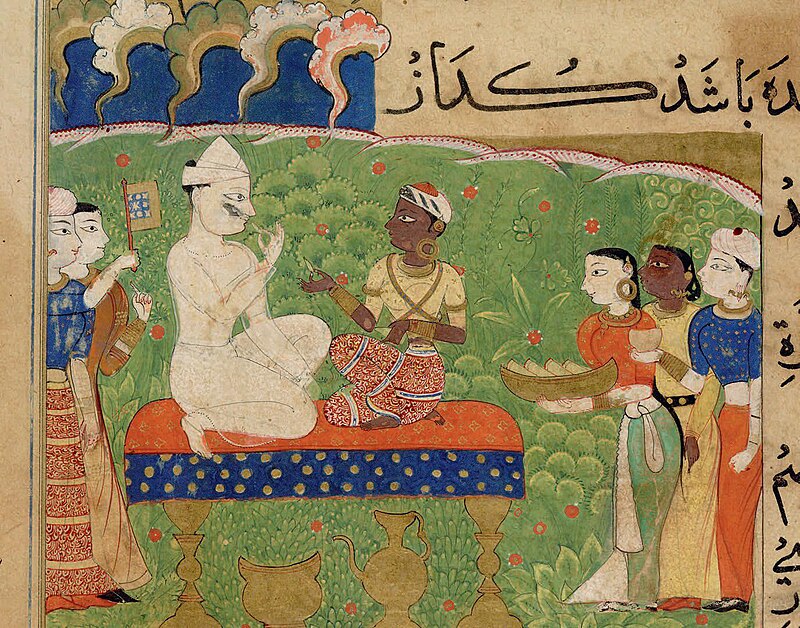
Paan
Hindi word for betel used for a stimulating and psychoactive preparation combined with areca nut and/or cured tobacco

wayang
thumb| performance by the famous Indonesian (puppet master) Manteb Soedharsono, with the story "Gathutkaca Winisuda", in [[Bentara Budaya Jakarta, Indonesia, on 31 July 2010]]
red envelope
monetary gift given in eastern Asia
angklung
The (Sundanese: ) is a musical instrument from the Sundanese in Indonesia that is made of a varying number of bamboo tubes attached to a bamboo frame. The tubes are carved to produce a resonant pitch when struck and are tuned to octaves, similar to Western handbells. The base of the frame is held in one hand, while the other hand shakes the instrument, causing a repeating note to sound. Each performer in an ensemble is typically responsible for just one pitch, sounding their individual at the appropriate times to produce complete melodies (see Kotekan).
pencak silat
Indonesian martial arts
Subak
name of water management (irrigation) system for paddy fields on Bali island, Indonesia

koteka
The koteka (Mee, ), also referred to as a horim or penis gourd, is a penis sheath traditionally worn by native male inhabitants of some (mainly highland) ethnic groups in New Guinea. The koteka is normally made from a dried-out gourd, Lagenaria siceraria, although unrelated species such as pitcher-plant (Nepenthes mirabilis) are also used. The koteka is held in place by a small loop of fiber attached to the base of the koteka and placed around the scrotum. A secondary loop placed around the chest or abdomen is attached to the main body of the koteka.
Bhinneka Tunggal Ika
Unity in Diversity, the official national motto of Indonesia
culture of Indonesia
overview of the culture of Indonesia
Saman
tradition of the Gayo people of Aceh province in Sumatra

Kecak
Kecak (also spelled kécak, ketjak and kechak; ) or (), is a form of Balinese Hindu dance popularized in the 1930s. Since its creation, it has been performed primarily by men, with the first women's kecak group having started in 2006. The dance is based on the story of the Ramayana and is traditionally performed in temples and villages across Bali, Indonesia.

kretek
256px|right|thumb|A Cycle rickshaw#Indonesia|becak driver in [[Yogyakarta, Indonesia, smoking a kretek]]
thumb|right|256px|A pack of Sampoerna A-Mild, a popular Indonesian brand of kretek manufactured by Sampoerna
thumb|right|256px|Tobacco leaves sorting in Java. Tobacco was introduced by the Dutch during the colonial period.
thumb|right|256px|Kreteks from the 1910s, containing resin, [[nutmeg, cumin, clove, and tobacco wrapped in banana leaves]]
wayang kulit
form of Indonesian puppet-shadow play originally from Java island

Warung
thumb|right|300px|A village warung in Garut Regency|Garut
Javanese calendar
calendar used in Java, Indonesia
wayang golek
type of wayang

noken
thumb|260px|Papuan women and her s in Metu Debi island off Youtefa Bay, Jayapura, [[Indonesia, 1899]]
Noken () is a traditional Papuan multifunctional knotted or woven bag native to the Western New Guinea region, Indonesia. Its distinctive usage, which involves being hung from the head, is traditionally used to carry various goods, and also children.

jamu
Jamu (Javanese script: ) is a traditional medicine from Indonesia. It is predominantly a herbal medicine made from natural materials, such as roots, bark, flowers, seeds, leaves and fruits. Materials acquired from animals, such as honey, royal jelly, milk and native chicken eggs are often used as well.
fire piston
mechanical machine for igniting tinder by adiabatic compression
Baju Kurung
Indonesian and Malaysian traditional clothing
parang
Indonesian type of machete
tengkolok
Tengkolok (Jawi: ), also known as Tanjak, Destar (Minangkabau: Deta; Kelantan-Pattani: Semutar; Brunei: Dastar) is a traditional Malay or Indonesian and male headgear. It is made from long songket cloth folded and tied in a particular style (solek). Nowadays, it is usually worn in ceremonial functions, such as royal ceremonies by royalties, and wedding ceremonies by grooms.
wayang beber
Central Javanese type of wayang

mudik
thumb|right|300px|Hundreds of cars and buses queueing at Port of Merak, [[Banten with destination to the Port of Bakauheni in Lampung as (homecoming) season began in before Eid, 2014.]]
' (sometimes also known as ') is an Indonesian phenomenon where migrants or migrant workers all across Indonesia return to their hometown or village during or before major holidays, especially Lebaran (Eid al-Fitr). Although the homecoming travel before Lebaran takes place in most Indonesian urban centers, the highlight is on the nation's largest urban agglomeration; Greater Jakarta, as millions of Jakartans ex

Canting
'''''''''' (, ; ) is a pen-like tool used to apply liquid hot wax () in the traditional native Javan batik-making process in Indonesian island of Java (mainly and originally), more precisely for the (). Traditional consists of copper wax-container with small pipe spout and bamboo handle. It is commonly made of copper, bronze, zinc or iron materials, as well as teflon in modern-days.
pasar malam
night market found in Brunei, Indonesia, Malaysia and Singapore
karaoke box
type of karaoke establishment

Ondel-ondel
Ondel-ondel is a large puppet figure featured in the Betawi folk performance in Jakarta, Indonesia. As an icon of Jakarta, ondel-ondel is often utilized as a pair for livening up festivals or welcoming guests of honor. It is one of a few Indonesian folk performances that has survived modernization and is still being regularly performed.
lenong
Lenong is a traditional theatrical form of the Betawi people in Jakarta, Indonesia.
Sembah
Sembah (, , ) is an Indonesian greeting and gesture of respect and reverence performed by clasping the palms together solemnly in a prayer-like fashion, placing them in front of the chest and, while bowing slightly, moving the pressed palms up to either the chin, or until the thumbs touch the tip of their nose, depending on the status of the person greeted.
Zapin
Zapin (Jawi: زافين) is one of the most popular dance and musical forms in traditional Malay performing arts. Dance movements are choreographed to melodies, which are performed using musical instruments such as the gambus (short-necked lute), accordion, and rebana.
It is believed to have been introduced by Persian and Arab Muslim missionaries from the Middle East to the Malay Archipelago around the fourteenth century, where back then only males were allowed to perform; nowadays, female dancers are included. It used to be performed exclusively for religious ceremonies but through the years it ha
public holidays in Indonesia
Wikimedia list article
Dukun
thumb|260px|A dukun preparing traditional medicine (Dutch East Indies|Dutch colonial period, 1910–1940)
Keling
Keling () or Kling is an exonym to denote a Indian or someone deemed to have originated from South India. Originally a neutral term, since the mid-20th century it has been considered derogatory and an ethnic slur, and it is sometimes euphemistically referred to as the K-word. The term is used in parts of Southeast Asia, particularly the Malay Archipelago where there are a significant Tamil diaspora specifically Malaysia, Indonesia, Singapore and Brunei but cognates exist in neighbouring countries as well.
rentaka
thumb|250px|Two Malay rentaka
bamboo cannon
type of home-made firecracker
Malay folklore
Caci
floresian whip fighting
kemben
Kemben (, Indonesian: kemban) is an Indonesian female torso wrap historically common in Java, Bali, and other parts of the Indonesian archipelago. It is made by wrapping a piece of kain (clothes), either plain, batik printed, velvet, or any type of fabrics, covering the chest wrapped around the woman's torso.
Indonesian art
overview of the art in Indonesia
Poco-poco
Poco-poco or Poco poco is a popular line dance from North Maluku province in Indonesia.

Indonesian dance
dance of Indonesia
Diah Hadaning
Indonesian writer (1940-2021)
Pua Kumbu
traditional Iban ceremonial woven textile originating from Borneo
Rasa Sayang
traditional songs from Maluku
Cetbang
thumb|Bronze hand cannon cetbang, found in the Brantas River|Brantas river, Sumberagung village, Jombang, East Java. The mouth of the cannon is on the right, while the left is where the pole is attached.
Smoking in Indonesia
Kudi
type of Billhook-Axe hybrid
Aji Saka
Story of early Java
Potong gigi
Ritual body modification in Bali
St. Servatius Church
church in Indonesia
Gordang sambilan
Indonesian traditional drum musical instruments
lela
light Nusantaran cannon larger than a rentaka
Silat Harimau
Indonesian martial art
Pandan war
Indonesian martial art
Suriram
Soleram or Suliram (also known as Soreram, or Suriram) is a folk song from Riau, Indonesia. It is also a well-known folk song in Malaysia. This song is melodious and sung in a gentle rhythm, with lyrics that are relatively short and easy to remember. A version popular in Indonesia was written by Muhammad Arief, a musician from Banyuwangi.