Category
page 1Diplostomida

Schistosoma
Schistosoma is a genus of trematodes, commonly known as blood flukes. They are parasitic flatworms responsible for a highly significant group of infections in humans termed schistosomiasis, which is considered by the World Health Organization to be the second-most socioeconomically devastating parasitic disease (after malaria), infecting millions worldwide.

Schistosoma mansoni
species of worm
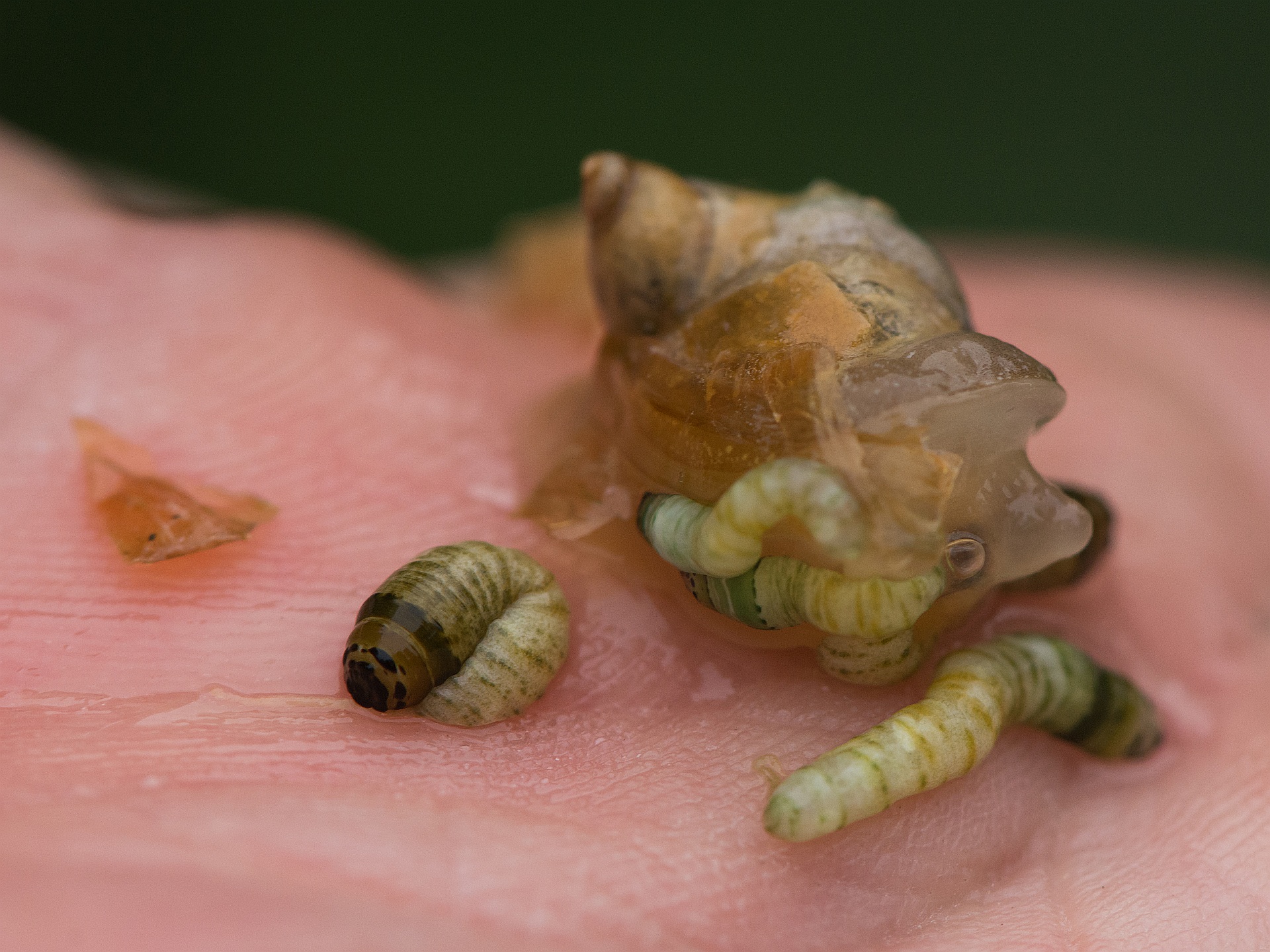
Leucochloridium paradoxum
parasitic flatworm, typically found in land snails.

Schistosoma haematobium
species of worm
Baracktrema obamai
REDIRECT Baracktrema obamai

Schistosoma japonicum
species of worm

Schistosomatidae
Schistosomatidae is a family of digenetic trematodes with complex parasitic life cycles. Immature developmental stages of schistosomes are found in molluscs and adults occur in vertebrates. The best studied group, the blood flukes of the genus Schistosoma, infect and cause disease in humans. Other genera which are infective to non-human vertebrates can cause mild rashes in humans.
Leucochloridium
Leucochloridium is a genus of parasitic trematode worms in the order Diplostomida. It Is the sole genus in the family Leucochloridiidae. Members of this genus cause pulsating swellings in the eye-stalks of snails (a phenomenon colloquially called a zombie snail), so as to attract the attention of predatory birds required in the parasites' lifecycle.
Alaria
genus of worms

Diplostomum
Diplostomum is a genus of flatworms belonging to the family Diplostomidae.

Strigeidae
Strigeidae is a family of trematodes in the order Diplostomida.
Schistosoma mekongi
species of worm
Cotylurus
Cotylurus is a genus of trematodes belonging to the family Strigeidae.

Trichobilharzia
Trichobilharzia is a genus of trematodes in the family Schistosomatidae. They are worldwide distributed parasites of anatid birds and causative agents of human cercarial dermatitis.
Brachylaimidae
Brachylaimidae is a family of parasitic flukes in the sub-class Digenea. Adults are usually found within the digestive tracts and other organs of mammals or birds and have a complex three-stage life cycle.
Diplostomida
Diplostomida is an order of trematodes in the subclass Digenea. It is synonymous with Strigeatida Poche, 1926.
Holostephanus
Holostephanus is a genus of parasitic trematodes in the family Cyathocotylidae.
Cyathocotylidae
Cyathocotylidae is a family of trematodes in the order Diplostomida.

Brachylaima
Brachylaima is a genus of trematodes that can infect the gastrointestinal tract of human beings.
Leucochloridiidae
REDIRECT Leucochloridium

Parastrigea
Parastrigea is a genus of trematodes in the family Strigeidae.

Tylodelphys
Tylodelphys is a genus of parasitic fluke that infects the small water fish. It induces many behavioral changes on its host. Once inside a fish's eye, it can cause partial blindness and several behavioral changes to the intermediate host. Other species of flukes are able to turn into dormant cysts at certain stages of development, but Tylodelphys spp. stays active and roams free inside the fish's eye, giving it an opportunity for it to induce parasite behavior. When Tylodelphys larvae crawl around the inside of the fish's eye, it can get in between the retina and the lens. This can cause parti
Spirorchiidae
Spirorchiidae is a family of digenetic trematodes. Infestation by these trematodes leads to the disease spirorchiidiosis. Spirorchiids are mainly parasites of turtles. It has been synonymised with Proparorchiidae Ward, 1921, Spirorchidae Stunkard, 1921, and Spirorchiidae MacCallum, 1921.

Diplostomidae
Diplostomidae is a family of trematodes in the order Diplostomida.
Aporocotylidae
Aporocotylidae is a family of trematodes within the order Diplostomida, which contains species commonly known as fish blood flukes. It contains more than 40 genera, the largest being Cardicola. Species in this family parasite fish in both fresh and marine water.
Trichobilharzia regenti
species of worm
Schistosoma intercalatum
species of worm
Schistosomatoidea
The Schistosomatoidea are a superfamily of digenetic trematodes.

Clinostomum marginatum
species of worm
Holostephanus dubinini
species of worm
Leucochloridiomorphidae
Leucochloridiomorpha is a genus of parasitic trematode in the order Diplostomida. It is the only member of the family Leucochloridiomorphidae, and is monotypic, containing the sole species Leucochloridiomorpha constantiae.