Category
page 1Female regents in Africa

Hatshepsut
Hatshepsut ( ; BC) was the sixth pharaoh of the Eighteenth Dynasty of Egypt, ruling first as regent, then as queen regnant from until (Low Chronology) and the Great Royal Wife of Pharaoh Thutmose II. She was Egypt's second confirmed woman who ruled in her own right, the first being Sobekneferu/Neferusobek in the Twelfth Dynasty.
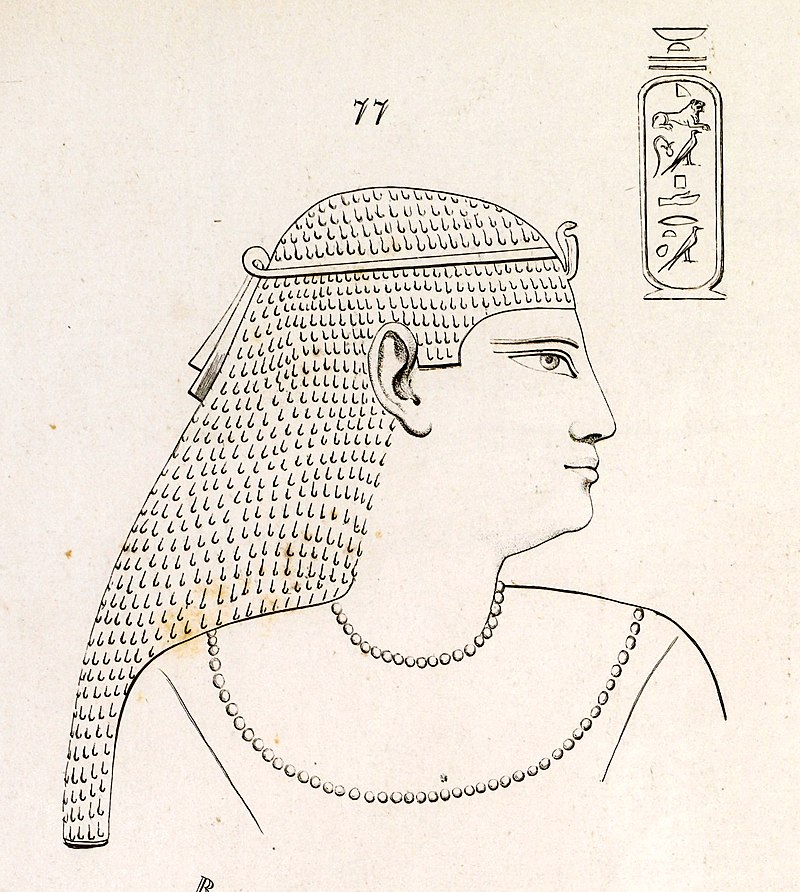
Cleopatra I Syra
queen of Ptolemaic Egypt

Merneith
Merneith (also written Merit-neith and Meryt-Neith; died 2950 BC) was a consort and a regent of Ancient Egypt during the First Dynasty.

Shajar al-Durr
Egyptian Mamluk Sultana d.1257
%20at%20Thebes%2C%20Egypt.%2019th%20Dynasty.%20The%20Petrie%20Museum%20of%20Egyptian%20Archaeology%2C%20London.jpg)
Twosret
Tausret, also spelled Tawosret or Twosret (d. 1188 BC) was the last known ruler and the final pharaoh of the Nineteenth Dynasty of Egypt.
Ahhotep I
Queen consort of Egypt, c. 1560–1530 BCE

Ahmose-Nefertari
Ahmose-Nefertari (Ancient Egyptian: Jꜥḥ ms Nfr trj) was the first Great Royal Wife of the 18th Dynasty of Ancient Egypt. She was a daughter of Seqenenre Tao and Ahhotep I, and royal sister and wife to Ahmose I. Her son Amenhotep I became pharaoh and she may have served as his regent when he was young. Ahmose-Nefertari was deified after her death.

Neithotep
Neithhotep or Neith-hotep () was an ancient Egyptian queen consort who lived and ruled during the early First Dynasty. Archeological evidence may indicate that she may have ruled as pharaoh in her own right, and as such would have been the earliest known female monarch in history. She was subsequently considered to be the wife of unified Egypt's first pharaoh, Narmer, and the mother of Hor-Aha. She was once wrongfully thought to be a male ruler: her outstandingly large mastaba and the royal serekh surrounding her name on several seal impressions previously led Egyptologists and historians to t

Khentkaus I
Queen of Ancient Egypt during the 4th dynasty
Ankhesenpepi II
Egyptian queen consort

Ntombi of Swaziland
Ntfombi Tfwala (also spelled Ntombi, born 27 December 1949) is Ndlovukati (Queen Mother) of Eswatini since 1983, as the mother and co-ruler of King Mswati III. She was also queen regent of Eswatini from 1983 until her son's accession in 1986.
Iput
ancient Egyptian queen consort

Kandake
thumb|Relief depicting Kandake AmanitoreKandake, kadake or kentake (), often Latinised as Candace (), was one Meroitic term for a queen or queen mother of Kingdom of Kush. It is attested for six or seven women. Some were rulers, while others were most likely just wives of a king. In some cases, she may have been sister or close female relative of the king of Kush, she also could be the queen mother. She sometimes had her own court, possibly acted as a landholder and held a secular role as regent until her son came of age. A kandake who ruled in her own right bore in addition the title qore, th

Nimaethap
thumb|Fragment of seal impression on clay citing the "mother of the king's sons", Nymaathap. She was the mother of Djoser and wife of Khasekhemwy. Originally from Abydos, Umm el Qaab, tomb V. (Tomb of Khasekhemwy) and now in the Egyptian Museum, Cairo.
Nimaathap (also read as '''Nima'at-Hapi and Nihap-ma'at''') was an ancient Egyptian queen consort at the transition time from 2nd Dynasty to 3rd Dynasty. Nimaathap may have acted as regent for her son Djoser.
Sitt al-Mulk
Regent of the Fatimid Empire (r. 1021–1023)
Mamohato of Lesotho
Queen regnant of Lesotho (1941–2003)
Eleni of Ethiopia
Ethiopian Empress
Mantsebo Amelia 'Matsaba
Mantšebo (in full: '''Mantšebo Amelia 'Matšaba'''; 1902–1964) was the ruler of Basutoland (present-day Lesotho) from 1941 to 1960, as the regent for her stepson, the future Moshoeshoe II.
Labotsibeni Mdluli
Swazi royal regent
Dzeliwe of Eswatini
Inkhosikati LaShongwe (born Dzeliwe Shongwe; 1927 – 2003) was queen regent of Eswatini between 1982 and 1983. She was a wife of King Sobhuza II of Eswatini, and with him had one child, Prince Khuzulwandle Dlamini.

Mentewab
Mentewab (Ge'ez: ምንትዋብ; c. 1706 – 27 June 1773) was Empress of Ethiopia, consort of Emperor Bakaffa, mother (and regent) of Iyasu II and grandmother of Iyoas I. She was also known officially by her baptismal name of Walatta Giyorgis (Ge'ez: ወለተ ጊዮርጊስ). Mentewab was a major political figure during the reigns of her son the Emperor Iyasu and grandson Iyoas. Empress Mentewab was also known by the honorific of Berhan Mogassa (Ge'ez: ብርሃን ሞገሳ). This was to complement the honorific of her son Iyasu II, who was Berhan Seged.
thumb|Stamp of Mentewab by Afewerk Tekle
Ntebogang Ratshosa
Regent of the BaNgwaketse, one of the eight ethnic groups of present-day Botswana, for four years (1924-1928)
Queen Tibati Nkambule
Queen Regent of Swaziland
Rasad
Rasad (; ) was a slave concubine who, as the queen-mother of the Fatimid caliph al-Mustansir Billah, became the virtual regent of Egypt between 1044 and 1071. The name Rasad literally means "observed".

Tsandzile Ndwandwe of Swaziland
Senior queen of Swaziland
Mmanthatisi
Mmanthatisi (also spelled Manthatisi or MmaNthatisi and erroneously spelled as 'Mantatee’, 'Ma Nthisi, Mantatise; c. 1784 – 1847) was the leader of the Tlokwa people during her son's minority from 1813 until 1824. She came to power as the regent for her son, Sekonyela, (Lentsha) following the death of her husband Kgosi Mokotjo (the previous kgosi). Mmanthatisi was known as a strong, brave and capable leader, both in times of peace and war. She was referred to by her followers as Mosesanyane (the tiny one) because of her slender body.
Gagoangwe
Gagoangwe (c. 1845 – 1924) was the Acting (Regent) King, the Queen Mother or Mohumagadi of the Mmanaana Kgatla and BaNgwaketse in what is now Botswana. Gagoangwe was a member of the Kwena family, a devout Christian, and regent for her grandson, Bathoen II.