Category
page 1Fictional Italian people in literature
Romeo
Romeo Montague ( ) is the male protagonist of William Shakespeare's tragedy Romeo and Juliet. The son of Lord Montague and his wife, Lady Montague, he secretly loves and marries Juliet, a member of the rival House of Capulet, through a priest named Friar Laurence.

Juliet
Juliet Capulet ( ) is the female protagonist in William Shakespeare's romantic tragedy Romeo and Juliet. A 13-year-old girl, Juliet is the only daughter of the patriarch of the House of Capulet. She falls in love with the male protagonist Romeo, a member of the House of Montague, with which the Capulets have a blood feud. The story has a long history that precedes Shakespeare himself.
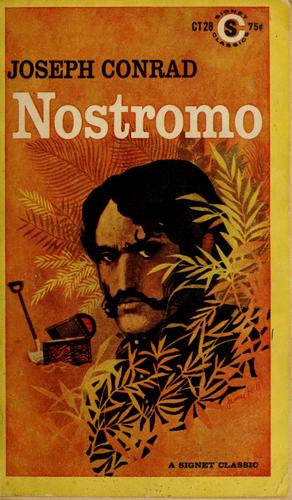
Nostromo
Nostromo: A Tale of the Seaboard (1904) is a novel by Joseph Conrad, set in the fictitious South American republic of "Costaguana". First serialized in monthly installments of ''T.P.'s Weekly'', in 1998 it was ranked 47th on the Modern Library 100 Best Novels in 20th-century English. It is often considered Conrad's best work of long fiction, and F. Scott Fitzgerald famously said, "I'd rather have written Nostromo than any other novel."

Shylock
Shylock ( ; spelled Shylocke in the First Folio) is a fictional character in William Shakespeare's play The Merchant of Venice ( 1600). A Venetian Jewish moneylender, Shylock is the play's principal villain. His defeat and forced conversion to Christianity form the climax of the story.
Don Camillo
fictional character

Iago
Iago () is a fictional character in Shakespeare's Othello (c. 1601–1604). Iago is the play's main antagonist and Othello's standard-bearer. He is the husband of Emilia who is in turn the attendant of Othello's wife Desdemona. Iago hates Othello and devises a pernicious scheme to destroy him by making him believe that Desdemona is having an affair with his lieutenant, Michael Cassio. With 1,097 lines, Iago has more lines in the play than Othello himself.

Desdemona
Desdemona () is a character in William Shakespeare's play Othello (c. 1601–1604). Shakespeare's Desdemona is a Venetian beauty who enrages and disappoints her father, a Venetian senator, when she elopes with Othello, a Moorish Venetian military prodigy. When her husband is deployed to Cyprus in the service of the Republic of Venice, Desdemona accompanies him. There, her husband is manipulated by his ensign Iago into believing she is an adulteress, and, in the last act, she is murdered by her estranged spouse.
.jpg)
Juha
thumb|Juha with his donkey
Giufà, or Giucà as he is referred to in some areas, is a character of Sicilian folklore. His antics have been retold and memorized through centuries of oral tradition. Although the anecdotes from his life mainly revolve around the southern Italian and Sicilian lifestyle, his character traits are visible in the folk characters of many Mediterranean cultures. In fact, scholars suggest that the character Giufà developed from stories of Nasrudin, a Turkish folk character. It is believed that during Islamic rule of the island of Sicily, stories of this manknown in Arabic
Miranda
character in Shakespeare's play The Tempest

Geppetto
Geppetto ( ; ) is a fictional character in the 1883 Italian novel The Adventures of Pinocchio by Carlo Collodi. Geppetto is an elderly, impoverished woodcarver and the creator (and thus 'father') of Pinocchio. He wears a yellow wig resembling cornmeal mush (called polendina), and consequently his neighbours call him "Polendina" to annoy him. The name is a Tuscan diminutive of the name Giuseppe (Italian for Joseph).
Othello
character in Shakespeare's Othello; a Moorish soldier in the service of the Venetian Republic, who elopes with Desdemona, murders her, and kills himself
Prospero
Prospero ( ) is a fictional character and the protagonist of William Shakespeare's play The Tempest.

Mercutio
Mercutio ( ; ) is a fictional character in William Shakespeare's 1597 tragedy, Romeo and Juliet. He is a close friend to Romeo and a blood relative to Prince Escalus and Count Paris. As such, Mercutio is one of the few characters in the play who can mingle with people from both of the feuding Montague and Capulet families. The invitation to Lord Capulet's party states that he has a brother named Valentine.

Salvo Montalbano
fictional character by Andrea Camilleri
Emilio Largo
fictional character
Tybalt
Tybalt ( ; ) is a fictional character and the principal antagonist in William Shakespeare's play Romeo and Juliet. The son of Lady Capulet's brother, he is Juliet's short-tempered first cousin, and Romeo's rival. Tybalt shares the same name as the character Tibert / Tybalt "the prince of cats" in the popular story Reynard the Fox, a point of mockery in the play. Mercutio repeatedly calls Tybalt "prince of cats", in reference to his sleek, yet violent manner.
Benvolio
Benvolio Montague () is a fictional character in William Shakespeare's tragedy Romeo and Juliet. He is Lord Montague's nephew and Romeo's cousin. Benvolio serves as an unsuccessful peacemaker in the play, attempting to prevent violence between the Capulet and Montague families.
Nico di Angelo
fictional character in the Camp Half-Blood Chronicles
Friar Laurence
Shakespeare character
Portia
heroine of William Shakespeare's The Merchant of Venice
Emilia
fictional character from Othello
Candlewick
fictional character who appear in Carlo Collodi's book The Adventures of Pinocchio
Count Paris
Shakespeare character