Category
page 1Health effects of alcohol

liver cirrhosis
Cirrhosis, also known as liver cirrhosis, hepatic cirrhosis, chronic liver failure, chronic hepatic failure, and end-stage liver disease, is a chronic condition of the liver in which the normal functioning tissue, or parenchyma, is replaced with scar tissue (fibrosis) and regenerative nodules as a result of chronic liver disease. Damage to the liver leads to repair of liver tissue and subsequent formation of scar tissue. Over time, scar tissue and nodules of regenerating hepatocytes can replace the parenchyma, causing increased resistance to blood flow in the liver's capillaries—the hepatic si

alcohol intoxication
negative effect(s) induced by the ingestion of ethanol (alcohol)

hangover
A hangover is the experience of various unpleasant physiological and psychological effects usually following the consumption of alcohol, such as wine, beer, and liquor. Hangovers can last for several hours or for more than 24 hours. Typical symptoms of a hangover may include headache, drowsiness, weakness, concentration problems, dry mouth, dizziness, fatigue, muscle ache, gastrointestinal distress (e.g., nausea, vomiting, diarrhea), absence of hunger, light sensitivity, depression, sweating, hyper-excitability, high blood pressure, irritability, and anxiety.
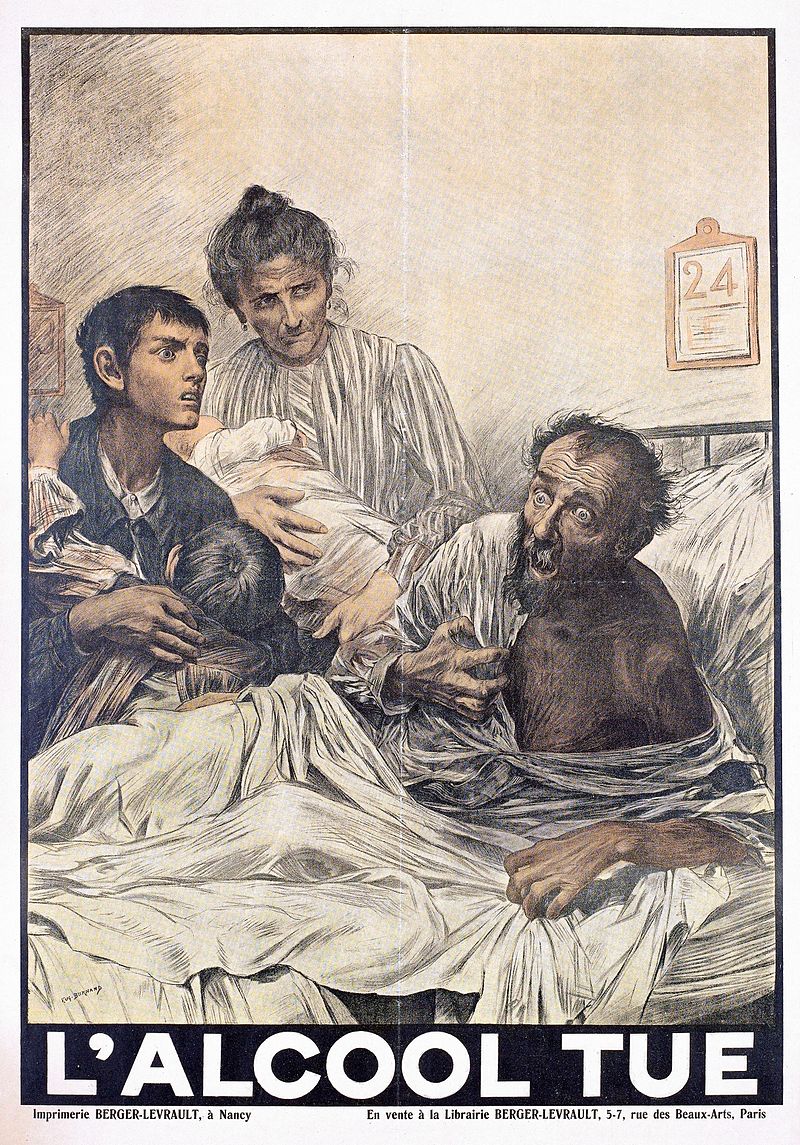
delirium tremens
rapid onset of confusion caused by alcohol withdrawal
fetal alcohol spectrum disorders
group of conditions that can occur in a person whose mother drank alcohol during pregnancy

depressant
Depressants, also known as central nervous system depressants, or colloquially known as "downers", are a class of psychoactive drugs characterised by decreasing neurotransmission levels, decreasing the electrical activity of brain cells, or reducing arousal or stimulation in various areas of the brain. Commonly used depressants include alcohol, opioids, and benzodiazepines. Some specific depressants influence mood, either positively (e.g., opioids) or negatively (e.g., alcohol), but depressants often have no clear impact on mood (e.g., most anticonvulsants). In contrast, stimulants, or "uppers
alcohol withdrawal syndrome
set of symptoms that can occur after a reduction in alcohol use after excessive use
confabulation
Confabulation is a memory error consisting of the production of fabricated, distorted, or misinterpreted memories about oneself or the world. It is generally associated with certain types of brain damage (especially aneurysm in the anterior communicating artery) or a specific subset of dementias. While still an area of ongoing research, the basal forebrain is implicated in the phenomenon of confabulation. People who confabulate present with incorrect memories ranging from subtle inaccuracies to surreal fabrications, and may include confusion or distortion in the temporal framing (timing, seque
Wernicke–Korsakoff syndrome
combined presence of Wernicke's encephalopathy (WE) and Korsakoff's syndrome
alcoholic hepatitis
hepatitis (inflammation of the liver) due to excessive intake of alcohol
gastrointestinal system disease
disease involving the gastrointestinal tract
alcoholic liver disease
medical condition
liver disease
disorder of the human liver
short-term effects of alcohol
the short-term effects of alcohol on human beings
alcoholic hallucinosis
type of hallucinosis (pseudo-hallucination)
alcohol and cancer
relationship between cancer and the consumption of alcohol

long-term effects of alcohol consumption
health effects of drinking alcoholic beverages
Marchiafava-Bignami disease
medical condition
Zieve's syndrome
medical condition
Alcoholic ketoacidosis
acute metabolic acidosis that typically occurs in people who chronically abuse alcohol and have a recent history of binge drinking, little or no food intake and persistent vomiting
alcoholic cardiomyopathy
disease in which the chronic long-term abuse of alcohol (i.e., ethanol) leads to heart failure
Health effects of wine
potential health effects resulting from drinking wine
alcoholic neuropathy
Human disease
alcohol flush reaction
condition in which a person develops flushes or blotches
Alcohol dementia
medical condition
holiday heart syndrome
medical condition
Alcohol and breast cancer
Alcohol packaging warning messages
Warning Messages appearing on alcohol bottles regarding alcohol health issues
Austrian syndrome
medical condition
Aprosodia
Aprosodia is a neurological condition characterized by the inability of a person to properly convey or interpret emotional prosody. Prosody in language refers to the ranges of rhythm, pitch, stress, intonation, etc. These neurological deficits can be the result of damage of some form to the non-dominant hemisphere areas of language production. The prevalence of aprosodias in individuals is currently unknown, as testing for aprosodia secondary to other brain injury is only a recent occurrence.
Long-term impact of alcohol on the brain
effect of alcohol consumption
Impact of alcohol on aging
general health article
alcoholic lung disease
Human disease
effects of alcohol on memory
health effect of alcohol consumption
beer goggles
impact of alcoholic inebriation on interpersonal attraction
blackout
alcohol-related amnesia
recommended maximum intake of alcoholic beverages
advice
list of causes of death by rate
Wikimedia list article