Category
page 1Historiography of India

Herodotus
Herodotus (; BC) was a Greek historian and geographer from the Greek city of Halicarnassus (now Bodrum, Turkey), under Persian control in the 5th century BC, and a later citizen of Thurii in modern Calabria, Italy. He wrote the Histories, a detailed account of the Greco-Persian Wars, among other subjects such as the rise of the Achaemenid dynasty of Cyrus. He has been described as "The Father of History", a title conferred on him by the ancient Roman orator Cicero.

Xuanzang
Xuanzang (; ; 6 April 6025 February 664), born Chen Hui or Chen Yi (), also known by his Sanskrit Dharma name Mokṣadeva, was a 7th-century Chinese Buddhist monk, scholar, traveller, and translator. He is known for the epoch-making contributions to Chinese Buddhism, the travelogue of his journey to the Indian subcontinent in 629–645, his efforts to bring at least 657 Indian texts to China, and his translations of some of these texts. He was only able to translate 75 distinct sections of a total of 1,335 chapters, but his translations included some of the most important Mahayana scriptures.

Faxian
Faxian (337–), formerly romanized as Fa-hien , Fa-hsien, and Hiuen Tsang was a Chinese Buddhist monk and translator who traveled on foot from Jin China to medieval India to acquire Buddhist scriptures. His birth name was Gong Sehi. Starting his journey about age 60, he traveled west along the overland Silk Road, visiting Buddhist sites in Central, South, and Southeast Asia. The journey and return took from 399 to 412, with 10 years spent in India.
Abd al-Razzaq Samarqandi
Persian Timurid islamic scholar, diplomat and historian
two-nation theory
political ideology that, in the Indian subcontinent, Hindus and Muslims comprise separate nations
Zafarnama
panegyric book by Sharaf al-Din Ali Yazdi
Subaltern Studies
group of South Asian scholars of postcolonial and post-imperial underclasses
Tabaqat-i Nasiri
13th century Persian historical text
William Wilson Hunter
Scottish historian and statistician (1840-1900)

The Imperial Gazetteer of India
gazetteer of the British Indian Empire

The Discovery of India
Book by Jawaharlal Nehru, first Prime Minister of India
Out of India theory
view that the Indo-Aryans are indigenous to India
Chach Nama
Persian-language book about the history of Sindh
al-Fatawa al-Alamgiriyya
Islamic edict book
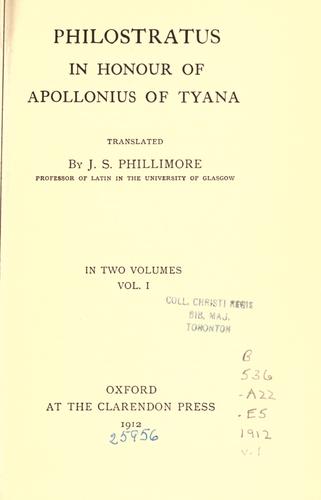
Life of Apollonius of Tyana
work by Philostratus
Saraswathi Mahal Library
library in Thanjavur (Tanjore), Tamil Nadu, India

Rawzat as-Safa
History of the origins of Islam, early Islamic civilisation, and Persian history by Mirkhvand
National Archives of India
Official Archive of the Government of India
Bhandarkar Oriental Research Institute
research institute in Pune, India
Muntakhab-ut-Tawarikh
thumb|Muntakhab-ut-Tawarikh, Persian text, published in Calcutta, 1865
Muntakhab-ut-Tawarikh (منتخب التواریخ) or '''''Tarikh-i-Bada'uni (تاریخ بداؤنی), Selection of Chronicles''''' by `Abd al-Qadir Bada'uni (1540–1605) is a book describing the early Mughal history of India, covering the period from the days of Ghaznavid reign until the fortieth regnal year of Mughal Emperor Akbar.

Indica
lost account of Mauryan India by Greek writer Megasthenes
Four Great Ancient Civilizations
theory which claim human civilization originate from four specific area
Nilamat Puran
ancient text from Kashmir
The Indian Antiquary
Indian journal
Tarikh Yamini
Book written by Utbi
National Mission for Manuscripts
Saffronization
Saffronisation is the right-wing policy approach in India that seeks to implement Hindu nationalist views to counter the mainstream discourse, for example in school textbooks. Critics have used this political neologism.
Tarikh-i-Sher Shahi
book by Abbas Sarwani
Historiography of India
Oriental Research Institute Mysore
research institute in Mysore, India
Deimachus
Deimachus or Daimachus (; ) was a Greek from Plataeae, who lived during the third-century BCE. He became an ambassador to the court of the Mauryan ruler Bindusara "Amitragatha" (son of Chandragupta Maurya) in Pataliputra in India.
Deimachus was sent by Antiochus I Soter.
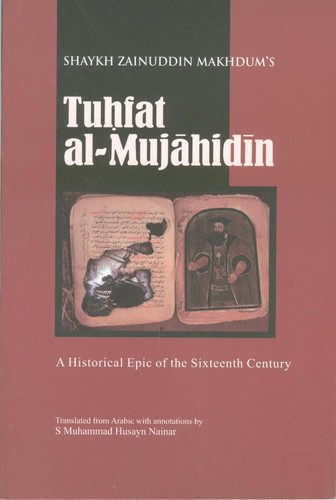
Tuhfat al-Mujahidin
Literally work by Zayn al-Dīn al-Malībarī
Indian Council of Historical Research
Indian historical body
Bharat Itihas Sanshodhak Mandal
Indian institution
Greater Magadha
ancient India
Harbans Mukhia
Indian historian
Bakhar
thumb|right
Bakhar is a form of historical narrative written in Marathi prose. are one of the earliest genres of medieval Marathi literature. More than 200 bakhars were written in the seventeenth to nineteenth centuries, the most important of them chronicling the deeds of the Maratha ruler Shivaji. Bakhars are considered valuable resources depicting the Maratha view of history .
Jawami ul-Hikayat
Wikimedia list article