Category
page 1History of Central Asia

Sasanian Empire
last pre-Islamic Iranian empire (224–651 AD)

Bactria
Bactria (; Bactrian: , ), or Bactriana, was an ancient Iranian civilization in Central Asia, located in the area south of the Oxus River (modern Amu Darya) and north of the Hindu Kush mountains, within modern-day Afghanistan, Tajikistan and Uzbekistan. Bactria was strategically located south of Sogdia and west of the Pamir Mountains. These mountain ranges acted as "walls" protecting Bactria from three sides, with the Pamir mountains to the north and the Hindu Kush to the south forming a junction, and the Karakoram range towards the east.
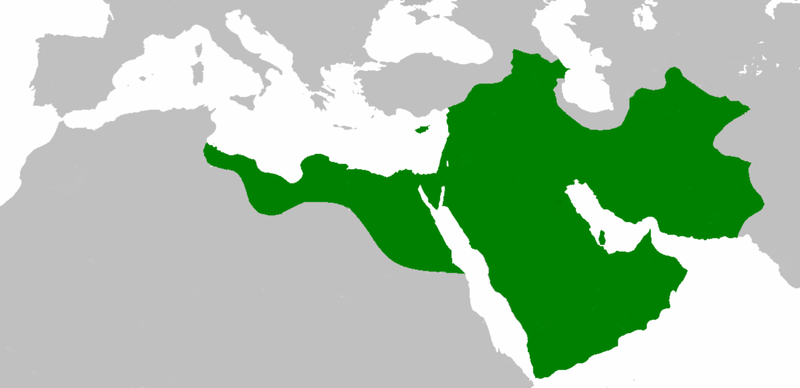
Rashidun Caliphate
first caliphate established after the death of the Islamic prophet Muhammad (632–661)

Sogdia
Sogdia () or Sogdiana was an ancient Iranian civilization between the Amu Darya and the Syr Darya rivers, and in present-day Uzbekistan, Turkmenistan, Tajikistan, Kazakhstan, and Kyrgyzstan. Sogdiana was also a province of the Achaemenid Empire, and listed on the Behistun Inscription of Darius the Great. Sogdiana was first conquered by Cyrus the Great, the founder of the Achaemenid Empire, and then was annexed by the Macedonian ruler Alexander the Great in 328 BC. It would continue to change hands under the Seleucid Empire, the Greco-Bactrian Kingdom, the Kushan Empire, the Sasanian Empire, th

Transoxiana
thumb|right|340px|Watershed of the Amu Darya|Oxus River in the 8th century, showing Transoxiana and its principal localities to the northeast.
thumb|right|340px|Transoxiana and the neighbouring regions of Greater Khorasan and [[Khwarazm in Central Asia]]

history of Afghanistan
Afghanistan history
.jpg)
Saka
thumb|200px|Cataphract-style parade-armour of a Saka royal, also known as "The Golden Warrior", from the [[Issyk kurgan, a historical burial site near Almaty, Kazakhstan, 400–200 BC.]]

Tartary
thumb|300px| Cary's Map of independent Tartary (in yellow) and Chinese Tartary (in violet), in 1808.
Tartary (Latin: Tartaria; ; ; ) or Tatary () was a blanket term used in Western European literature and cartography for a vast part of Asia bounded by the Caspian Sea, the Ural Mountains, the Pacific Ocean, and the northern borders of China, India, and Persia, at a time when this region was largely unknown to European geographers.

Turan
Turan (; ; , , ) is a historical region in Central Asia. The term is of Iranian origin and may refer to a particular prehistoric human settlement, a historic geographical region, or a culture. The original Turanians were an Iranian tribe of the Avestan age.

history of Kazakhstan
aspect of history

Timurid dynasty
Turco-Mongol dynasty (1370–1857)

history of Uzbekistan
aspect of history
history of Tajikistan
aspect of history
history of Kyrgyzstan
aspect of history
history of Turkmenistan
aspect of history
Mongol invasion of Central Asia
series of military campaigns (1209–1236)
history of Central Asia
aspect of history
nomadic empire
non-sedentary polity
Reichskommissariat Turkestan
theoretical political division
Tiele
confederation of Turkic peoples

Dharmaguptaka
thumb|right|250px|Central Asian bhikkhu|Buddhist monk teaching a Chinese monk. [[Bezeklik Caves, 9th–10th century; although Albert von Le Coq (1913) assumed the blue-eyed, red-haired monk was a Tocharian, modern scholarship has identified similar Caucasoid figures of the same cave temple (No. 9) as ethnic Sogdians, an Eastern Iranian people who inhabited Turfan as an ethnic minority community during the phases of Tang Chinese (7th–8th century) and Uyghur rule (9th–13th century).]]
Turkic migration
expansion of the Turkic tribes and Turkic languages, mainly between the 6th and 11th centuries
Orenburg Muslim Spiritual Assembly
Russian state-controlled religious administration
War of the Heavenly Horses
war fought between the Han Empire and the Central Asian state of Dayuan
Turko-Persian tradition
distinctive culture in Central Asia

Iranian Intermezzo
period in history which saw the rise of various Iranian dynasties in the Iranian plateau
The New Great Game
journalistic term for predicted conflict over central Asian resources
Persianate society
a culture massively influenced by Iranian culture
Tartarian Empire
alleged lost empire
2008 Central Asia energy crisis
energy shortage in Central Asia
demographics of Central Asia
overview of the demographics of Central Asia
Ishaq al-Turk
8th-century rebel leader against the Abbasids
Battle of Fetang (1740)
18th c. military conflict
Nader's Central Asian Campaign
1737–1740 Afsharid conquests
Lucien Bouvat
French orientalist (1872–1942)
Turkic history
history of the Turkic and Turkish peoples
Khan of Heaven
Chinese royal title