Category
page 1History of cryptography

Al-Kindi
Abū Yūsuf Yaʻqūb ibn ʼIsḥāq aṣ-Ṣabbāḥ al-Kindī (; ; ; ) was an Arab polymath who was active as a philosopher, mathematician, physician, and music theorist. Al-Kindi was the first of the Islamic peripatetic philosophers, and is hailed as the "father of Arab philosophy".

Voynich manuscript
illustrated codex hand-written in an unknown writing system
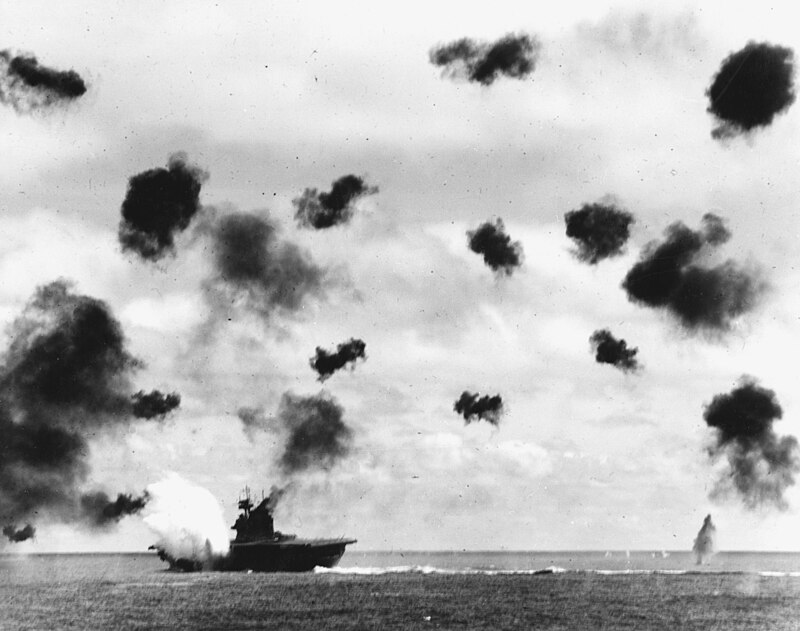
Battle of Midway
1942 World War II naval battle

Pretty Good Privacy
computer program for data encryption, primarily in email (PGP)

Zimmermann telegram
1917 World War I telegram from Germany to Mexico proposing an alliance
Gulf of Tonkin incident
1964 naval confrontation between North Vietnam and the United States
substitution cipher
method of encoding by which units of plaintext are replaced with ciphertext, according to a fixed system; the "units" may be single letters (the most common), pairs of letters, triplets of letters, mixtures of the above, and so forth
Kryptos
Kryptos is a sculpture by the American artist Jim Sanborn located on the grounds of the Central Intelligence Agency (CIA) headquarters, the George Bush Center for Intelligence in Langley, Virginia.
USS Pueblo
1944 Banner-class environmental research ship
history of cryptography
aspect of history
code talker
people in the 20th century who used obscure languages as a means of secret communication during wartime; e.g. United States service members during the world wars who used their knowledge of Native American languages to transmit coded messages
USS Liberty incident
1967 Israeli attack on American navy ship
Venona project
WWII US counterintelligence project
Babington Plot
1586 plot to assassinate Queen Elizabeth
Content Scramble System
DVD video copy-protection system

cryptogram
thumb|Example cryptogram. When decoded it reads: "Style and structure are the essence of a book; great ideas are hogwash." -Vladimir Nabokov
A cryptogram is a type of puzzle that consists of a short piece of encrypted text. Generally the cipher used to encrypt the text is simple enough that the cryptogram can be solved by hand. Substitution ciphers where each letter is replaced by a different letter, number, or symbol are frequently used. To solve the puzzle, one must recover the original lettering. Though once used in more serious applications, they are now mainly printed for entertainment in
U-505
1941 Type IXC submarine
Clipper chip
chipset that was developed and promoted by the NSA
SMS Magdeburg
1911 Magdeburg-class cruiser
Notarikon
Notarikon () is a Talmudic method of interpreting Biblical words as acronyms. The same term may also be used for a Kabbalistic method of using the acronym of a Biblical verse as a name for God. Another variation uses the first and last letters, or the two middle letters of a word, to form another word. The word "notarikon" is borrowed from the Greek language (νοταρικόν), and was derived from the Latin word "notarius" meaning "shorthand writer."
Operation Trojan Shield
international police sting operation between 2018 and 2021
Lavabit
Lavabit is an open-source encrypted webmail service, founded in 2004. The service suspended its operations on August 8, 2013, after the U.S. Federal Government ordered it to turn over its Transport Layer Security (TLS) private keys, in order to allow the government to spy on Edward Snowden's email.
Room 40
cryptanalysis department
Cipher Bureau
interwar Polish-intelligence cryptology agency
Beale ciphers
a set of three ciphertexts
Copiale cipher
historical encrypted manuscript
Room 641A
authorized telecommunications intercept point
Dorabella Cipher
Enciphered letter written by English composer Edward Elgar

Michel de Castelnau
French diplomat
cryptanalysis of the Enigma
decryption of the code of the Enigma-machine
crypto wars
history of U.S. and allied governments' attempts to limit the public's and foreign nations' access to cryptography
Magic
Allied cryptanalysis project during World War II
Operation CHAOS
Central Intelligence Agency domestic espionage project
Attack on Panzer Group West's headquarters at La Caine
1944 air attack on Panzergruppe West's HQ during battle of Normandy
Communication Theory of Secrecy Systems
article
Japanese naval codes
ciphers used by the Imperial Japanese Navy in World War II
Advanced Encryption Standard process
the process used in choosing an algorithm for standardization
Target Intelligence Committee
TICOM (Target Intelligence Committee) was a secret Allied project formed in World War II to find and seize German intelligence assets, particularly in the field of cryptology and signals intelligence.
grill
method in cryptology
World War II cryptography
military code use and breaking during the Second World War
AACS encryption key controversy
attempts by MPAA and AACS-LA to prevent the distribution of a cryptographic key
_NSAKEY
_NSAKEY was a variable name discovered in Windows NT 4 SP5 in 1999 by Andrew D. Fernandes of Cryptonym Corporation. The variable contained a 1024-bit public key; public keys are used in public-key cryptography for encryption and digital signature verification (but not decryption or signing). Because of the name, however, it was speculated that the key would allow the United States National Security Agency (NSA) to subvert any Windows user's security. Microsoft denied the speculation and said that the key's name came from the fact that NSA was the technical review authority for U.S. cryptograph
Shugborough inscription
Sequence of letters – O U O S V A V V, between the letters D M – carved on the 18th-century Shepherd's Monument in the grounds of Shugborough Hall in Staffordshire, England
Code Girls
group of women who served as cryptographers (code makers) and cryptanalysts (code breakers) for the United States Military during World War II
Walter Ernst Fricke
cryptanalyst, mathematician and professor (1915-1988)
Peter Novopashenny
list of ciphertexts
Wikimedia list article
Connecting Humanity
Fundraising collective
Rasterschlüssel 44