Category
page 1History of Dagestan

Sasanian Empire
last pre-Islamic Iranian empire (224–651 AD)
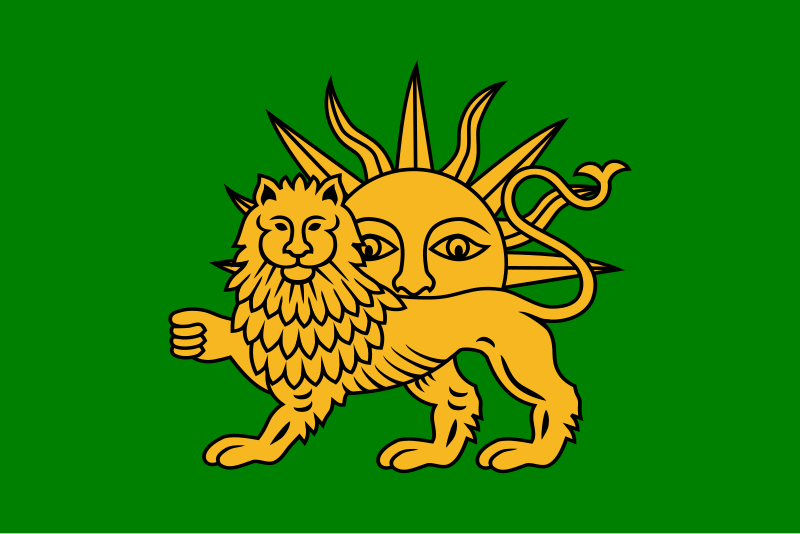
Safavid dynasty
dynasty from Safi-ad-din Ardabili generation and ruler of Safavid Iran (1501–1736)
Safavid Iran
historical empire that existed between 1501 and 1736

Caucasian Albania
historical state in the Caucasus region

Treaty of Gulistan
truce agreement signed on October 24, 1813, between the Russian Empire and the Khajar state
Russo-Persian War of 1804–13
1804–1813 conflict
Qajar Iran
country in Western Asia (1789–1925)
Caucasian Imamate
former state in the Northern Caucasus
Russo-Persian War of 1722–23
conflict between the Russian Empire and Safavid Iran
Peace of Amasya
1555 treaty between Shah Tahmasp of Safavid Iran and Sultan Suleiman the Magnificent of the Ottoman Empire
Treaty of Zuhab
Ottoman-Iran treaty
North Caucasian Emirate
state during the Russian Civil War
Persian Expedition of 1796
war
Avar Khanate
Muslim state 13th to 19th century
Khanates of the Caucasus
Various administrative units in the South Caucasus governed by a hereditary or appointed ruler under the official rule of Iran.

Sarir
Sarir or Serir was a medieval Christian state lasting from the 6th or 7th century to the 12th century in the mountainous regions of modern-day Dagestan in southern Russia. Its name is derived from the Arabic word for "throne" and refers to a golden throne that was viewed as a symbol of royal authority.
Dagestan Oblast
oblast of the Russian Empire and RSFSR
Ottoman–Safavid War
1578–1590 war between Safavid Persia and the Ottoman Empire
Derbent Khanate
historical Azerbaijani khanate
Treaty of Constantinople
1724 Russian-Ottoman peace treaty
Caspian expeditions of the Rus'
Caspian Sea expeditions carried out by the Rus between the 9th and 11th centuries
Shamkhalate of Tarki
Kumyk state in the eastern part of the North Caucasus
Treaty of Saint Petersburg (1723)
Treaty between Iran and Russian Empire
Russo-Persian War of 1651–53
first conflict of the Russo-Persian Wars
Treaty of Ganja
treaty between Russia and Iran
Samandar
capital of Khazaria
history of Dagestan
aspect of history
Elisu Sultanate
sultanate in the 18th and 19th centuries
Kazikumukh Khanate
Feudal formation created as a result of the collapse of the Tarkov Shamkhalate (Kumyk feudal state)
Emirate of Derbend
medieval Islamic state centered on Derbent in the eastern Caucasus
Kaitag Utsmiate
feudal political entity in North Caucasus
Kazikumukh Shamkhalate
a mythical state introduced into circulation in the 20th century

Farrukhzad
Farrukhzad (; New Persian: ) was an Iranian aristocrat from the House of Ispahbudhan and the founder of the Bavand dynasty, ruling from 651 to 665. Originally a powerful servant of the Sasanian king Khosrow II (r. 590–628), he, along with several other powerful aristocrats, made a conspiracy against the latter and ended his tyrannical rule. They thereafter put Khosrow's son Kavadh II (r. 628) on the throne, whose rule lasted only a few months, before he was killed by a plague, being succeeded by his son Ardashir III (r. 628–629), who after only one year was murdered by the rebellious former Sa
Battle of Torches
1583 battle between the Ottoman Empire and Iran
Lekianoba
thumb|300px|King Erekle II fights the Lezgians by [[Valerian Sidamon-Eristavi: the battle against the Avar khan Nursal Bek ]]
thumb|right|Shah Soltan Hoseyn's hukms ("orders") of 1705 on punishing the Dagestanian marauding bands in [[Kakheti]]
Safavid Shirvan
Sadval
lezgin political organization
Nader's Dagestan campaign
persian Empire campaigns (1741–1743)
Gulistan-i Iram
19th-century Persian-language chronicle
Ebrahim Khan
C18th Persian commander
Tabasaran Principality
state in Dagestan that existed from 1642 until the 19th century
Kumykia
Kumykia (), or rarely called Kumykistan, is a historical and geographical region located along the Caspian Sea shores, on the Kumyk plateau, in the foothills of Dagestan and along the river Terek. The term Kumykia encompasses territories which are historically and currently populated by the Turkic-speaking Kumyk people. Kumykia was the main "granary of Dagestan". The important trade routes, such as one of the branches of the Great Silk Road, passed via Kumykia.
Division of the Afsharid Empire
After the death of Nader Shah in 1747
Balasagan
thumb|Map of the eastern part of Transcaucasia under the [[Sasanian Empire]]
Balāsagān (an Iranian toponym meaning "country of Balas"; Armenian: Bałasakan, the inhabitants known as Bałasičkʻ, Arabic: Balāsajān/Balāšajān), also known as Bazgan, was a region located in the area of the Kura and Aras rivers, adjacent to the Caspian Sea. To the south, it bordered Atropatene/Adurbadagan and Gilan. It roughly corresponded to the Armenian province of Paytakaran, albeit extending farther into the north. It has been suggested that under the Sasanians the region extended as far as the stronghold of Derbe
Abbas I's Shirvan campaign
1606 military campaign

Safavid conquest of Shirvan
1500–1501 Safavid military campaign
Maskut
thumb|300px|Map of the Caucasus in the 5th-century. The Maskut lived between [[Derbent and Shaporan]]
The Maskut (also known as Mazkut, Muskur) were a group of Massagetaen-Sarmato-Alanian tribes located in the eastern part of the Caucasus, along the western coast of the Caspian Sea. They lived between Derbent and Shaporan, which corresponds to present-day northeast Azerbaijan and southeast Dagestan (Russia). The name "Maskut" is also sometimes used to refer to a geographic area, rather than an ethnic group. The first wave of these tribes arrived in the 3rd-century from the Volga–Don Canal and
Muhammad IV of Avar Khanate
nutsal of Avars
Russian conquest of Chechnya and Dagestan
1817–1859 conflict in the North Caucasus
Safavid Daghestan
a velayat (province) of the Safavid Empire (1501-1736)
Withdrawal through Andalal
Withdrawal by the Persian army under Nader Shah in 1741

Aukh District
district in Republic of Dagestan, Russia
Kura Khanate
state entity in southern Dagestan (1812–1864)