Category
page 1History of Northumberland

Angles
North Sea Germanic people, from the eponymous area
.jpg)
Lindisfarne
Lindisfarne, also known as Holy Island, is a tidal island off the northeast coast of England, which constitutes the civil parish of Holy Island in Northumberland. Holy Island has a recorded history from the 6th century AD; it was an important centre of Celtic Christianity under Saints Aidan, Cuthbert, Eadfrith, and Eadberht of Lindisfarne. The island was originally home to a monastery, which was destroyed during the Viking invasions but re-established as a priory following the Norman Conquest of England. Other notable sites built on the island are St Mary the Virgin parish church (originally b

Kingdom of Bernicia
Bernicia () was an Anglo-Saxon kingdom established by Anglian settlers of the 6th century in what is now southeastern Scotland and North East England.
Bamburgh Castle
Grade I listed historic house museum in Bamburgh, United Kingdom

Cuthbert
Cuthbert () ( – 20 March 687) was a saint of the early Northumbrian church in the Celtic tradition. He was a monk, bishop and hermit, associated with the monasteries of Melrose and Lindisfarne in the Kingdom of Northumbria, today in north-eastern England and south-eastern Scotland. Both during his life and after his death, he became a popular medieval saint of Northern England, with a cult centred on his tomb at Durham Cathedral. Cuthbert is regarded as the patron saint of Northumbria. His feast days are 20 March (Catholic Church, Church of England, Eastern Orthodox Church, Episcopal Church) a
Edwin of Northumbria
King of Deira and Bernicia
Stephenson's Rocket
early steam locomotive
Alnwick Castle
castle and stately home in Alnwick, Northumberland, England, UK; seat of the Duke of Northumberland, England, UK
Hen Ogledd
area of northern Britain ruled by the Brythonic people in the 5-7th century
William Armstrong, 1st Baron Armstrong
English inventor, scientist, engineer, industrialist (1810-1900)
Ida
King of the Anglian kingdom of Bernicia
Paulinus of York
Bishop of Rochester; Archbishop of York; Saint

Vindolanda
Vindolanda was a Roman auxiliary fort (castrum) just south of Hadrian's Wall in northern England, which it pre-dated. Archaeological excavations of the site show it was under Roman occupation from roughly 85 AD to 370 AD. Located near the modern village of Bardon Mill in Northumberland, it guarded the Stanegate, the Roman road from the River Tyne to the Solway Firth. It is noted for the Vindolanda tablets, a set of wooden leaf-tablets that were, at the time of their discovery, the oldest surviving handwritten documents in Britain.
Vindolanda tablets
Roman writing tablets found in England
Glappa of Bernicia
6th-century English monarch
%20-%20Bernard%20Gilpin%20Making%20Peace%20among%20the%20Borders%2C%20Takes%20Down%20the%20Glove%20in%20Rothbury%20Church%2C%20c.1570%20-%20584370%20-%20National%20Trust.jpg)
Rothbury
Rothbury is a market town and civil parish in Northumberland, England, on the River Coquet. It is north-west of Morpeth and north of Newcastle upon Tyne. At the 2011 census, it had a population of 2,107.
Adda of Bernicia
Bernician monarch
Alchmund of Derby
saint
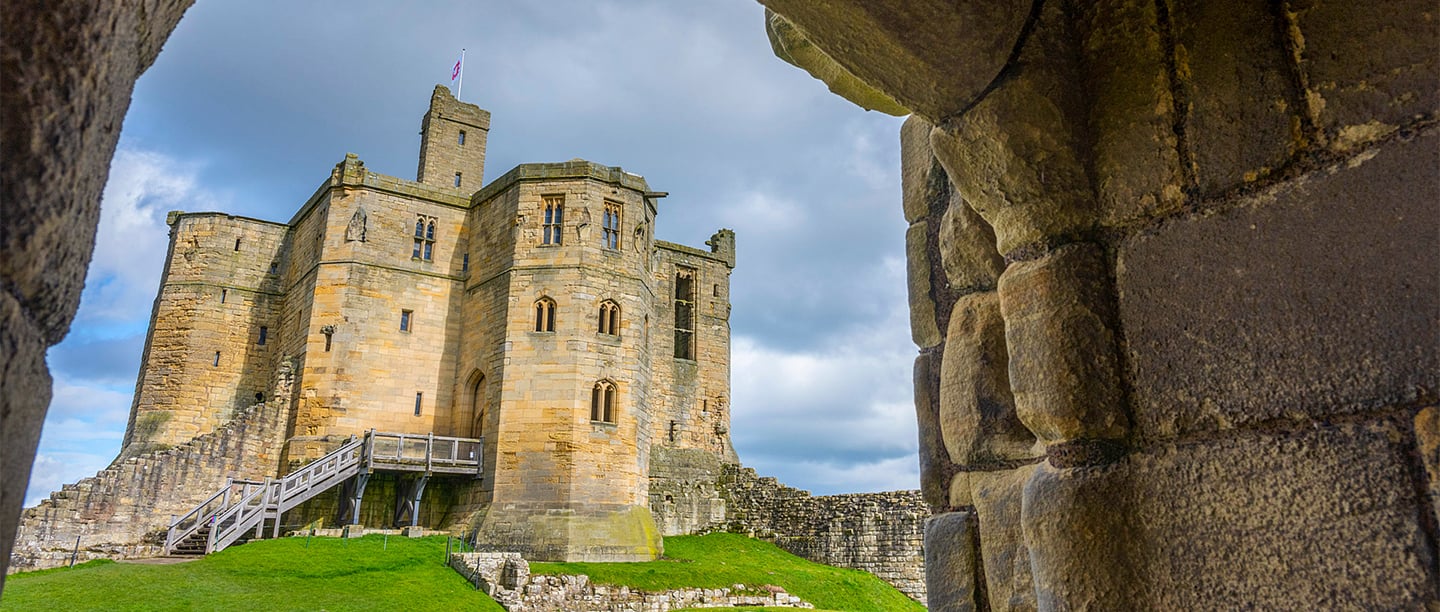
Warkworth Castle
medieval castle in Warkworth, Northumberland, England, UK
Anglo-Scottish border
96-mile long border between England and Scotland
Æthelric
King of Bernicia
Duke of Northumberland
Noble title in the Peerage of England and in the Peerage of Great Britain
Theodric of Bernicia
Ruler of Bernica
Earl of Northumberland
Noble title in the Peerage of England and of Great Britain
Æthelwold of Wessex
monarch

Votadini
right|280px|Peoples of northern Britain according to Ptolemy's 2nd-century Geography
Housesteads Roman Fort
Roman fort in Northumberland, England, UK
cup and ring mark
form of prehistoric art
Berwick Castle
castle, now ruinous, in Berwick-upon-Tweed, Northumberland, England, UK
Æthelburh of Kent
second wife of Edwin of Northumbria
Bishop of Durham
Diocesan bishop in the Church of England
Acca of Hexham
8th-century Bishop of Hexham
peel tower
type of small fortified keep or tower house found on the sides of the English-Scottish border

Stanegate
thumb|350px|Forts on Stanegate and Hadrian's wall

Harbottle
Harbottle is a village and civil parish in Northumberland, England about south-east of the Scottish border, in the southeastern part of the Cheviot Hills and inside Northumberland National Park. The village is the site of Harbottle Castle built by order of Henry II. Now in ruins, the castle was constructed by the Umfraville family to protect against invaders from Scotland.

Union Chain Bridge
suspension bridge over the Anglo-Scottish border
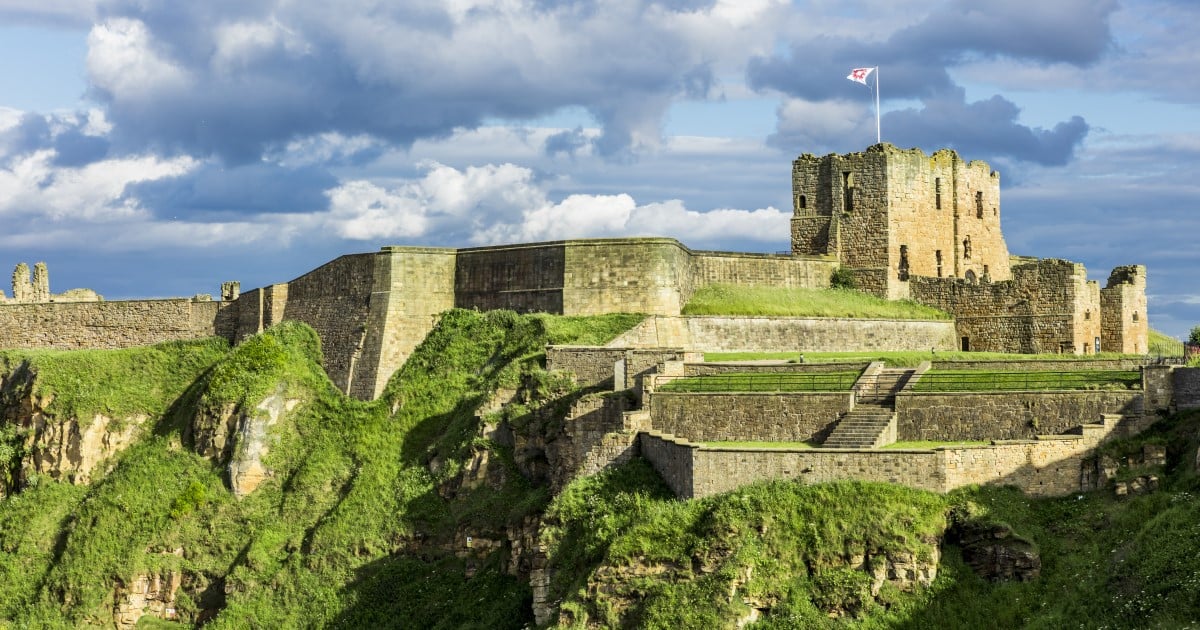
Tynemouth Castle and Priory
historic coastal site in north-eastern England
Coria
archaeological site in Corbridge, Northumberland, England, UK
Edlingham Castle
Grade I listed castle in Edlingham, United Kingdom
Dere Street
Roman road that ran from York to the Antonine Wall
Morpeth Castle
Grade I listed castle in Morpeth, United Kingdom
Magna Roman Fort
Roman fort (castrum) on Stanegate in northern Britain
Mitford Castle
Grade I listed castle in Mitford, Northumberland, England, UK
Thirlwall Castle
Grade I listed castle in Thirlwall, Northumberland, England, UK
Corbridge Lion
ancient Roman sandstone sculpture

Thomas Forster
English politician, landowner and Jacobite
Wark in Tyndale Castle
castle in Wark on Tyne, Northumberland, England, UK
bastle house
fortified house of the Anglo-Scottish border
River Glen
river in Northumberland, United Kingdom
James Radclyffe, 3rd Earl of Derwentwater
English noble
Border reivers
raiders from late 1200s to the beginning of the 1600s along the Anglo-Scottish border
Newminster Abbey
abbey in Morpeth, Northumberland, England, UK
Howick house
historic site in England, UK