Category
page 1History of photography
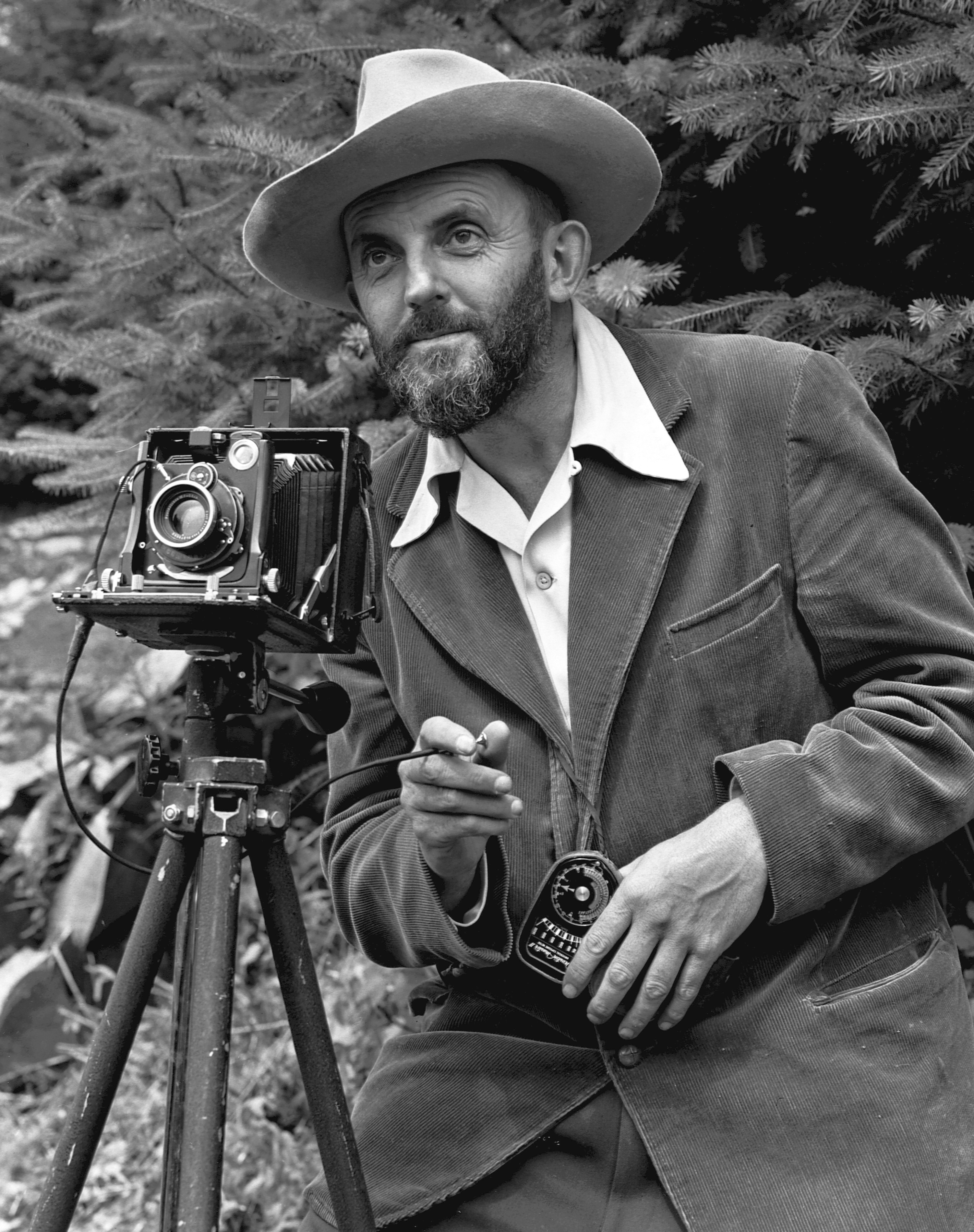
Ansel Adams
Ansel Easton Adams was an American landscape photographer and environmentalist known for his black-and-white images of the American West. He helped found Group f/64, an association of photographers advocating "pure" photography which favored sharp focus and the use of the full tonal range of a photograph. He and Fred Archer developed a system of image-making called the Zone System, a method of achieving a desired final print through a technical understanding of how the tonal range of an image is the result of choices made in exposure, negative development, and printing.

pictorialism
Pictorialism is an international style and aesthetic movement that dominated photography during the later 19th and early 20th centuries. There is no standard definition of the term, but in general it refers to a style in which the photographer has somehow manipulated what would otherwise be a straightforward photograph as a means of creating an image rather than simply recording it. Typically, a pictorial photograph appears to lack a sharp focus (some more so than others), is printed in one or more colors other than black-and-white (ranging from warm brown to deep blue) and may have visible br
View from the Window at Le Gras
the earliest known surviving photograph produced in the camera obscura by Joseph Nicéphore Niépce

photogram
thumb|A photogram of a number of photography-related objects
thumb|Photogram with soil and plants
A photogram is a photographic image made without a camera by placing objects directly onto the surface of a light-sensitive material such as photographic paper and then exposing it to light.
history of photography
the invention and development of the camera and the creation of permanent images

cyanotype
right|thumb|A cyanotype of algae by 19th century botanist Anna Atkins
thumb|Sir John Herschel (1842) Experimental cyanotype of an unidentified engraving of a lady with a harp, Museum of the History of Science
right|thumb|Architectural drawing blueprint, Canada, 1936
thumb|Cyanotype postcard, Racine, Wis.,
The cyanotype (from , and , ) is a slow-reacting, photographic printing formulation sensitive to a limited near-ultraviolet and blue light spectrum, the range of 300 nm to 400 nm, known as UVA radiation. It produces a monochrome, blue-coloured print on a range of supports, and is o
The Family of Man
photography exhibition curated by Edward Steichen
night photography
photography that takes place at night, typically outside
Conrad Heyer
(1749-1856) American soldier and centenarian
Ferdinand Hurter
Swiss chemist (1844–1898)
Armand Sabatier
French MD, zoologist & scholar (1834-1910)
photographic guns
cinematographer
cliché verre
photograph made from a hand-drawn negative
New Vision
1920s photography and art movement
woman photographer
woman working as photographer
Timeline of photography technology
timeline

photoflash bomb
explosive for illumination
Caesar
possibly the earliest-born person ever photographed, also the last slave to be manumitted in New York
Dufaycolor
thumb|A home-processed Dufaycolor 6x6 cm Reversal film|transparency, 1956|alt=An elderly man, wearing a grey coat and holding a black hat sits in a garden in autumn.
history of the camera
camera
Photo Club de París
French photographic club
Aperture
American photography magazine
Gunnar Lönnqvist
Finnish photographer and businessman (1891-1978)