Category
page 1History of Sichuan
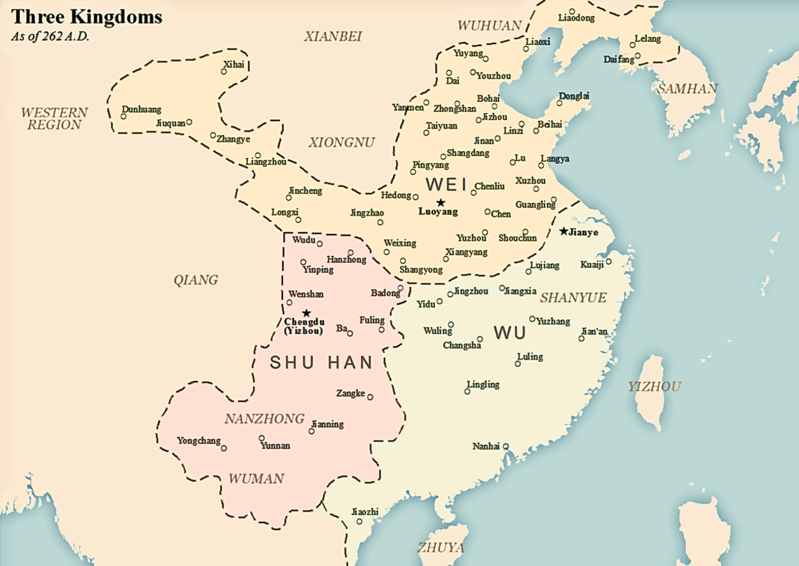
Shu Han
former Chinese state during the Three Kingdoms era
Shu
ancient Sichuanese kingdom
Ba
former country in ancient China
Later Shu
one of the 10 Kingdoms of 10th-century China, centered in Sichuan
Former Shu
one of the 10 Kingdoms of 10th-century China, centered on Sichuan
Baodun culture
archaeological culture in China
Tusi
'''''' (; 'headmen, chieftains') were hereditary tribal leaders recognized as imperial officials by the Yuan, Ming, and Qing dynasties of China, and the Later Lê and Nguyễn dynasties of Vietnam. They ruled certain ethnic minorities in central China, western China, southwestern China, and the Indochinese peninsula nominally on behalf of the central government. As succession to the Tusi position was hereditary, these regimes effectively formed numerous autonomous petty dynasties under the suzerainty of the central court. This arrangement is known as the Tusi System or the Native Chieftain System
Jiaozi
one of the first forms of paper money

Liu Wenhui
Chinese general (1895-1976)
Li Bing
3rd century Chinese engineer
Chronicles of Huayang
gazetteer of a region of China
Nanzhong
Nanzhong () is the ancient name for a region in southwest China that covers parts of present-day Yunnan, Guizhou and southern Sichuan provinces.
Viceroy of Sichuan
Regional viceroy in Qing Empire
Chengjia
Chengjia (; 25–36 AD), also called the Cheng dynasty or Great Cheng, was a self-proclaimed empire established by Gongsun Shu in 25 AD after the collapse of the Xin dynasty of Chinese history, rivalling the Eastern Han dynasty founded by Emperor Guangwu later in the same year. Based in the Sichuan Basin with its capital at Chengdu, Chengjia covered a large area including modern Sichuan, Chongqing, Guizhou, Yunnan, and southern Shaanxi, and comprised about 7% of China's population at the time. Chengjia was the most dangerous rival to the Eastern Han and was the last separatist regime in Chi
Sichuan clique
group of Chinese political factions
Ming Xia
former country
Sichuan
Province of the Yuan Empire, replaced by a largely identical province of the same name under the Ming
Eastern Kingdom of Women
matriarchal society in Southern China in the second half of the first millenium AD
Alcomsat-1
Alcomsat-1 is the first Algerian communications satellite. It was carried by Chinese launcher Long March 3B from the Xichang Satellite Launch Center, located in Sichuan Province, 2,200 km southwest of Beijing.