Category
page 1History of sound recording

phonograph
thumb|A typical modern component turntable, showing the curved tonearm with a headshell at the end, under which lies the magnetic cartridge and its attached stylus touching down on the grooves of a black record placed on the turntable's platter

magnetite
thumb|upright=1.2|Magnetite is one of the very few minerals that is ferrimagnetic; it is attracted by a [[magnet as shown here]]
thumb|Unit cell of magnetite. The gray spheres are oxygen, green are divalent iron, blue are trivalent iron. Also shown are an iron atom in an octahedral space (light blue) and another in a tetrahedral space (gray).
Magnetite is a mineral and one of the main iron ores, with the chemical formula . It is one of the oxides of iron, and is ferrimagnetic; it is attracted to a magnet and can be magnetized to become a permanent magnet itself. With the exception of extremel

phonograph record
analog sound storage medium in the form of a flat disc with an inscribed, modulated spiral groove
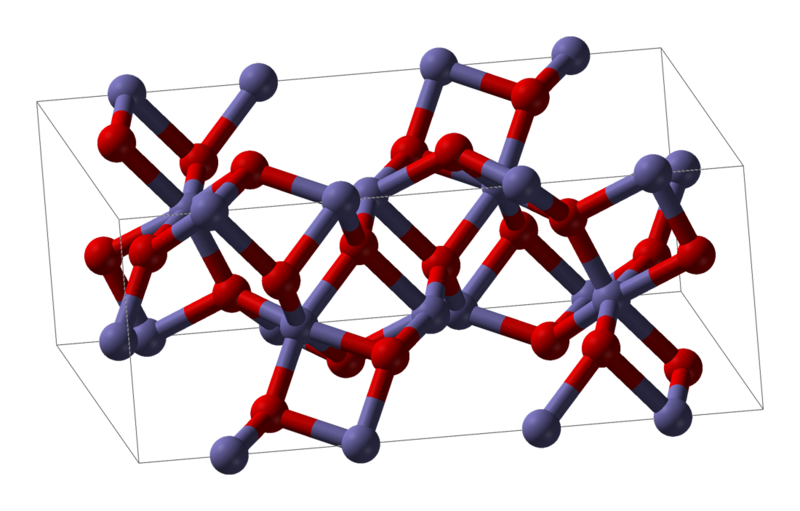
iron(III) oxide
chemical compound

Édouard-Léon Scott de Martinville
French printer (1817–1879)

phonautograph
thumb|250px|right|An early phonautograph (1859). The barrel, for receiving sound, is made of plaster of Paris.

Valdemar Poulsen
Danish engineer (1869-1942)
sound recording and reproduction
recording of sound and playing it back
vinyl record
disc-shaped vinyl analog sound storage medium
London Philharmonic Orchestra
London based symphony orchestra
phonograph cylinder
medium for recording and reproducing sound

Ampex
right|thumb|250px|Former Ampex headquarters on Broadway in Redwood City, California
Recording wire
magnetic recording technology using steel wire as the medium
8-track tape
magnetic tape sound recording technology
Peter Carl Goldmark
American inventor (1906–1977)
Karlheinz Brandenburg
German audio engineer

Elcaset
Elcaset is an analog audio cassette format jointly developed by Sony, Panasonic, and Teac in 1976, building on an idea introduced 20 years earlier in the RCA tape cartridge.
Marvin Camras
American electrical engineer and inventor (1916–1995)
history of sound recording
aspect of history
acetate disc
type of gramophone record
Tefifon
thumb|Tefifon portable radio with cartridge player (the Tefi "Holiday Super II")The Tefifon is an audio playback format, developed and manufactured in Germany, that utilizes cartridges loaded with an endlessly looped reel of plastic tape. It is somewhat similar to the later 4-track and 8-track magnetic audio tape cartridges, but with grooves engraved into the tape, like a phonograph record. The grooves were engraved in a helical fashion across the width of the tape, in a manner similar to Dictaphone's Dictabelt format. The grooves are read with a stylus and amplified pickup in the player's tra
PlayTape
thumb|Model 1604
Fidelipac
The Fidelipac, commonly known as a "NAB cartridge" or simply "cart", is a magnetic tape sound recording format, used for radio broadcasting for playback of material over the air such as radio commercials, jingles, station identifications, and music, and for indoor background music. Fidelipac is the official name of this industry standard audio tape cartridge. It was developed in 1954 by inventor George Eash (although the invention of the Fidelipac cartridge has also been credited to Vern Nolte of the Automatic Tape Company), and commercially introduced in 1959 by Collins Radio Co. at the 1959
Stereo-Pak
right|thumb|Stereo-Pak player close up
thumb|Stereo-Pak player with cartridge
The Muntz Stereo-Pak, commonly known as the 4-track cartridge, is a magnetic tape sound recording cartridge technology.
Fritz Pfleumer
German inventor and engineer (1881–1945)
Hipac
HiPac (stylized as HIPAC) (pronounced as high-pack), is an audio tape cartridge format, introduced in August 1971 on the Japanese consumer market by Pioneer and discontinued in 1973 due to lack of demand. In 1972 it only achieved a market share of 3% in equipping new cars. In the mid 1970s, the format was repurposed as a children's educational toy called and was used in the analog tape delay "Melos Echo Chamber".
Fonopost
right|thumb|200px|A 1939 Fonopost stamp from Argentina.
endless tape cartridges and cassettes
group of magnetic storage formats (cartridges and the endless Compact Cassette)