Category
page 1Journey to the West characters

The Buddha
Indian philosopher and the founder of Buddhism (623 or 563 BCE – 543 or 483 BCE)

Laozi
Laozi (, ; ), formerly Latinized as Laocius, was a legendary Chinese philosopher considered to be the author of the Tao Te Ching (Pinyin: Dào Dé Jīng), one of the foundational texts of Taoism. Modern scholarship generally regards his biographical details as later inventions and his opus a collaboration of various writers, with the name Laozi, literally meaning 'Old Master', likely intended to portray an archaic anonymity that could converse with Confucianism. Traditional accounts addend him as , born in the 6th-centuryBC state of Chu during China's Spring and Autumn period (). Serving as the r
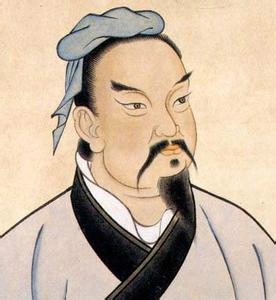
Sun Tzu
6th century BCE Chinese general and military strategist

Maitreya
thumb|Schist Greco-Buddhist art|Greco-Buddhist statue of Maitreya, [[Gandhara, 3rd century]]
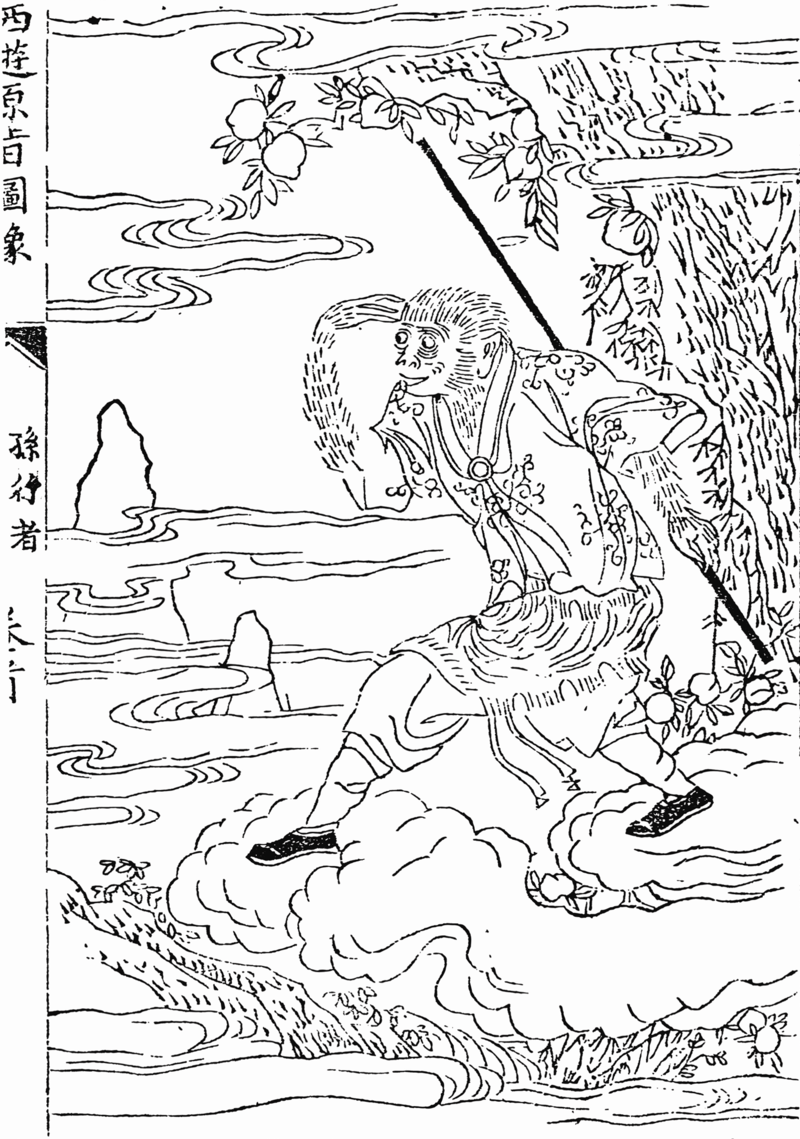
Sun Wukong
mythical character from Journey to the West

Nüwa
Nüwa, also read Nügua, is a mother goddess, culture hero, and/or member of the Three Sovereigns of Chinese mythology. She is a goddess in Chinese folk religion, Chinese Buddhism, Confucianism and Taoism. She is credited with creating humanity and repairing the Pillar of Heaven.
Jade Emperor
the highest god of many Taoist sects, overseeing the universe through administration of a celestial bureaucracy mirroring ancient and medieval China's

Navagraha
thumb|right|The Nine Devas, Khleang style of Angkor.
thumb|200px|Navagraha, Sun at the center
surrounded by the planets, Painting by Raja Ravi Varma
The navagraha (, Nine planets) are nine heavenly bodies and deities that influence human life on Earth according to Hinduism and Hindu mythology. The term is derived from nava ( "nine") and graha ( "planet, seizing, laying hold of, holding"). The nine parts of the navagraha are the Sun, Moon, planets Mercury, Venus, Mars, Jupiter, and Saturn, and the two nodes of the Moon.

Mazu
Mazu or Matsu is a sea goddess in Chinese folk religion, Chinese Buddhism, Confucianism, and Taoism. She is also known by several other names and titles. Mazu is the deified form of Lin Moniang (), a shamaness from Fujian who is said to have lived in the late 10th century. After her death, she became revered as a tutelary deity of Chinese seafarers, including fishermen and sailors.
.jpg)
Guan Yin
Guanyin () is a common Chinese name of the Bodhisattva associated with compassion known as Avalokiteśvara (). Guanyin is short for Guanshiyin, which means "[The One Who] Perceives the Sounds of the World". Originally regarded as male in Indian Buddhism, Guanyin has been more commonly depicted as female in China and most of East Asia since about the 12th century. Due to sociogeographical factors, Guanyin may also be historically depicted as genderless or androgynous. On the 19th day of the sixth lunar month, Guanyin's attainment of Buddhahood is celebrated. Guanyin has been incorporated in othe

Budai
Budai is a nickname given to the historical Chinese monk Qieci () in the Later Liang Dynasty, who is often identified with and venerated as the future Buddha Maitreya in Chan Buddhism and Buddhist scripture. With the spread of Chan Buddhism, he also came to be venerated in Vietnam, Korea, and Japan.
Four Heavenly Kings
Buddhist gods
dragon king
general concept of a king of dragons as appearing in Chinese, Japanese, Hindu and Buddhistic mythology and folklore
Zhu Bajie
character of the novel Journey to the West
Queen Mother of the West
mother goddess in Chinese religion and mythology

Nezha
Nezha (, Nézhā) or sometimes Nezha the Crown Prince (, ), is a protection deity in Taoism, Buddhism, Confucianism, and Chinese folk religion. His official Taoist name is "Marshal of the Central Altar" (). He was then given the title "Third Lotus Prince" () after he became a deity.
Yanluo Wang
Chinese deity of death
Sha Wujing
character of the classic Chinese novel Journey to the West
Xuanzang
central character in the novel Journey to the West by Wu Cheng'en
Old Man of the South Pole
Taoist deification of Canopus, the brightest star of the constellation Carina; symbolizes happiness and longevity

Tudigong
A Tudigong () is a kind of Chinese tutelary deity of a specific location. There are several Tudigongs corresponding to different geographical locations and sometimes multiple ones will be venerated together in certain regions.
Ox-Head and Horse-Face
guardians of the Underworld appearing in Chinese mythology
Daode Tianzun
deification of Laozi in the Taoist pantheon
Erlang Shen
Chinese deity associated with flood control
Princess Iron Fan
character from the Chinese classic novel Journey to the West

Mahāmāyūrī
Mahamayuri ( ("great peacock"), Kǒngquè Míngwáng, , , Gongjak Myeongwang), or Mahāmāyūrī Vidyārājñī is a bodhisattva and female Wisdom King in Mahayana and Vajrayana Buddhism. In the latter tradition, Mahamayuri is a popular practice in both the Chinese and Japanese forms of Vajrayana. She is also the name of one of the five protective goddesses in Buddhism.

Red Boy
Journey to the West character
Dragon King of the East Sea
deity in Chinese folk religion
Bull Demon King
character in the novel Journey to the West
Wufang Shangdi
Traditional Chinese fivefold deity

Baigujing
thumb|250px|Baigujing
Baigujing () is a demon from the 16th-century novel Journey to the West. The name is translated into English as White Bone Spirit in the William John Francis Jenner translation. Baigujing is a shapeshifting demoness, and in her true form she is depicted as a skeleton.
Lishan Laomu
the old mother of Mount Li
Qianliyan
Qianliyan is a Chinese sea and door god. He usually appears with Shunfeng'er as a guardian of the temples of the sea goddess Mazu.
White Dragon Horse
character in the Chinese novel Journey to the West
Li Jing
a figure in Chinese mythology and a god in Chinese folk religion
Taibai Jinxing
deity in Chinese folk religion and Taoism

Seven Fairies
Characters in Chinese folklore
Shunfeng'er
'''Shunfeng'er''' is a Chinese sea and door god. He usually appears with Qianliyan as a guardian of the temples of the sea goddess Mazu.
Muzha
fictional character
Juling Shen
deity
Jinzha
250px|thumbnail|right|Jinzha