Category
page 1Lemurs

ring-tailed lemur
large species of strepsirrhine primate

aye-aye
The aye-aye (, Daubentonia madagascariensis) is a long-fingered lemur, a strepsirrhine primate native to Madagascar with rodent-like teeth that perpetually grow and a special thin middle finger that they can use to catch grubs and larvae out of tree trunks.

Lemuridae
Lemuridae is a family of strepsirrhine primates native to Madagascar and the Comoros. They are represented by the Lemuriformes in Madagascar with one of the highest concentration of the lemurs. One of five families commonly known as lemurs, these animals were once thought to be the evolutionary predecessors of monkeys and apes, but this is no longer considered correct. They are formally referred to as lemurids.
Cheirogaleidae
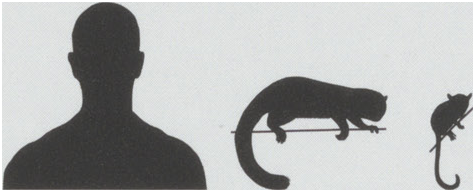
The Cheirogaleidae are the family of strepsirrhine primates containing the various dwarf and mouse lemurs. Like all other lemurs, cheirogaleids live exclusively on the island of Madagascar.

Indriidae
The Indriidae (sometimes incorrectly spelled Indridae) are a family of strepsirrhine primates. They are medium- to large-sized lemurs, with only four teeth in the toothcomb instead of the usual six. Indriids, like all lemurs, live exclusively on the island of Madagascar.

Lemuroidea
Lemurs ( ; ) are wet-nosed primates of the superfamily Lemuroidea ( ), divided into eight families and consisting of 15 genera and around 100 extant species. They are endemic to the island of Madagascar. Most existing lemurs are small, with a pointed snout, large eyes, and a long tail. They usually live in trees and are active at night.

black-and-white ruffed lemur
species of mammal
.jpg)
Lemuria
thumb|upright=1.4|An 1876 map illustrating the supposed location of Lemuria and the hypothetical dispersal routes of the "12 Race (human categorization)|varieties of men" from their alleged Lemurian origin across the globeLemuria (), or Limuria, was a continent proposed in 1864 by zoologist Philip Sclater, theorized to have sunk beneath the Indian Ocean, later appropriated by occultists in supposed accounts of human origins. The theory was discredited with the discovery of plate tectonics and continental drift in the 20th century.

red ruffed lemur
species of mammal

Ruffed lemur
genus of mammals

Hairy-eared dwarf lemur
species of mammal

Giant mouse lemur
genus of mammals (strepsirrhine primates)

Masoala fork-marked lemur
species of mammal
Fork-marked lemur
genus of mammals

Coquerel's giant mouse lemur
species of mammal

Northern giant mouse lemur
species of mammal

Pale fork-marked lemur
species of mammal

Amber Mountain fork-marked lemur
species of mammal

Pariente's fork-marked lemur
species of mammal
Daubentonia
Daubentonia is the sole genus of the Daubentoniidae, a family of lemuroid primate native to much of Madagascar.
Chiromyiformes
Chiromyiformes is an infraorder of strepsirrhine primates that includes the aye-aye from Madagascar and its extinct relatives.
evolutionary history of lemurs
history of primate evolution on Madagascar
taxonomy of lemurs
science of describing species and defining the evolutionary relationships between taxa of lemurs
list of lemur species
Wikimedia list article