Category
page 1Libertarianism in the United States
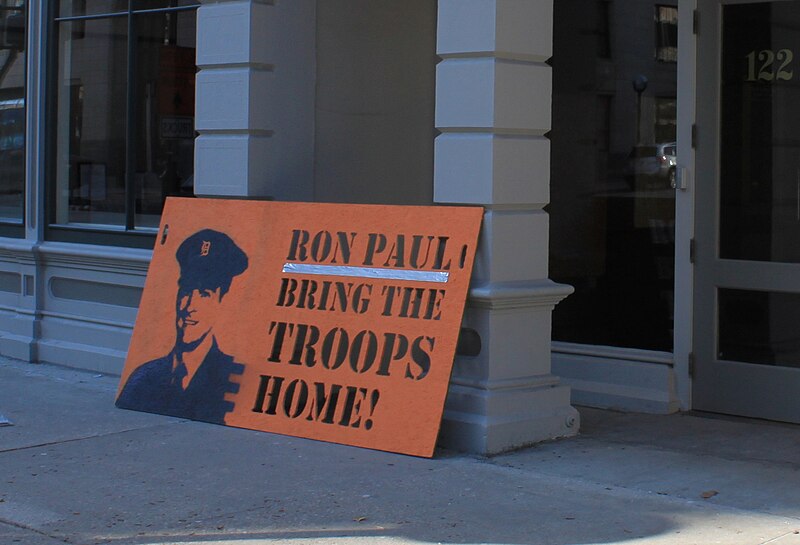
Ron Paul
American politician (born 1935)

Libertarian Party
national political party in the United States

Keene
city in New Hampshire, United States
Chicago school of economics
neoclassical school of economic thought associated with the work of the faculty at the University of Chicago, some of whom have constructed and popularized its principles
Gadsden flag
historical American flag depicting a rattlesnake and the words "Don't Tread on Me"
minarchy
political science concept: what a 'minimal' state hypothetically consists of
Chris Sununu
82nd Governor of New Hampshire since 2017

left-libertarianism
Left-libertarianism, also known as left-wing libertarianism, is a political philosophy and type of libertarianism that stresses both individual freedom and social equality. Left-libertarianism represents several related yet distinct approaches to political and social theory. Its classical usage refers to anti-authoritarian varieties of left-wing politics such as anarchism, especially social anarchism.
non-aggression principle
concept used by right-libertarians
Great Barrington Declaration
proposal to end most COVID-19 restrictions for those at low risk; "Focused Protection" is advocated
libertarian conservatism
ideology combining conservatism with libertarianism
paleolibertarianism
Paleolibertarianism (also known as the "Paleo strategy") is a right-libertarian political activism strategy aimed at uniting libertarians and paleoconservatives. It was developed by American anarcho-capitalist theorists Murray Rothbard and Lew Rockwell in the American political context after the end of the Cold War. From 1989 to 1995, they sought to communicate libertarian notions of opposition to government intervention by using messages accessible to the working class and middle class people of the time. They combined libertarian free market views with the cultural conservatism of paleoconse
Reason
American libertarian monthly magazine
Freedom Caucus
American congressional caucus
Free State Project
liberty-oriented political migration
Zero Hedge
far-right libertarian financial blog
Patriot movement
American conservative political movement
The Daily Caller
newspaper in Washington, D.C.
technolibertarianism
Technolibertarianism, sometimes referred to as cyberlibertarianism, is a political ideology with roots in the Internet's early hacker cypherpunk culture in Silicon Valley in the early 1990s and in American libertarianism. The ideology focuses on minimizing government regulation, censorship, or anything else in the way of a "free" World Wide Web. In this case, the word "free" is referring to the meaning of libre (no restrictions), not gratis (no cost). Cyber-libertarians embrace fluid, meritocratic hierarchies, which are believed to be best served by markets. The most widely known cyberlibertar
Antiwar.com
Antiwar.com is an American political website founded in 1995 that describes itself as devoted to non-interventionism and as opposing imperialism and war. It has a right-wing libertarian perspective and is a project of the Randolph Bourne Institute. The website states that it is "fighting the next information war”.
Counter-economics
Counter-economics is an economic theory and revolutionary method consisting of direct action carried out through the black market or the gray market. As a term, it was originally used by American libertarian activists and theorists Samuel Edward Konkin III and J. Neil Schulman. The former defined it as the study or practice "of all peaceful human action which is forbidden by the State".
private defense agency
conceptualized agency that provides personal protection and military defense services voluntarily through the free market
Jocko Willink
American author

The Ethics of Liberty
essay by Murray Rothbard

Nudge
2008 non-fiction book by Richard Thaler and Cass Sunstein

For a New Liberty
book by Murray Rothbard
libertarianism in the United States
origin, history and development of libertarianism in the United States
Warren H. Carroll
American historian, Roman Catholic journalist and founding college president (1932-2011)
fusionism
In American politics, fusionism is the philosophical and political combination or "fusion" of traditionalist and social conservatism with political and economic right-libertarianism. Fusionism combines "free markets, social conservatism, and a hawkish foreign policy". The philosophy is most closely associated with Frank Meyer.
The Libertarian Forum
defunct anarcho-capitalist magazine
Neoclassical liberalism
political stance
neo-libertarianism
Neo-libertarianism or Neolibertarianism is a political and social philosophy that combines "the libertarian's moral commitment to negative liberty with a procedure that selects principles for restricting liberty on the basis of a unanimous agreement in which everyone's particular interests receive a fair hearing."
Libertarian Democrat
US Democratic Party member who has advocated libertarian policies

Taxpayer March on Washington
Tea Party protest march on September 12, 2009
Libertarian Republican
US Republican Party member who has advocated libertarian policies
Koch network
Charles G. and David H. Koch and their activities in US politics
The Freeman
American magazine