Category
page 1Literature of the German Renaissance
Sebastian Franck
German Renaissance humanist
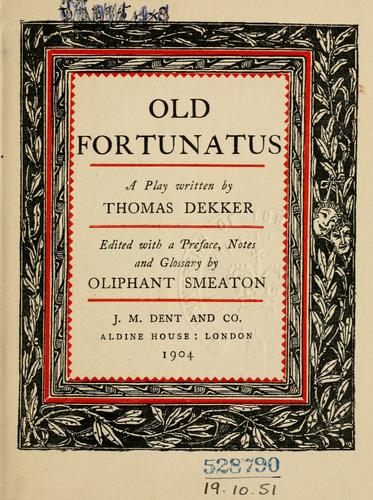
Fortunatus
German proto-novel, chapbook about a legendary hero; unknown author
Der Ackermann aus Böhmen
1400 or 1401 literary debate in prose by Johannes von Tepl
Fastnachtsspiel
Fastnachtspiel (plural fastnachtspiele, English "shrovetide play") was a type of play performed on Shrove Tuesday or fastnacht during the sixteenth century as a part of pre-lenten carnivals. Extant examples mostly originated from the city of Nuremberg (although they were performed widely) and Hans Sachs was considered the most prolific in this form. Though sometimes performed on stage, fastnachtspiele were most often performed on the street or town square as a part of the carnival celebration. Productions usually lacked props and only had simply scenery. Fastnachtspiele typically used preexist
Freydal
thumb|A scene from the Kunsthistorisches Museum’s Freydal Illuminated manuscript: Freydal jousts with Veit von Wolkenstein (fol.133}
Freydal is an uncompleted illustrated prose narrative commissioned by the Holy Roman Emperor Maximilian I in the early 16th century. It was intended to be a romantic allegorical account of Maximilian's own participation in a series of jousting tournaments in the guise of the tale's eponymous hero, Freydal. In the story, Freydal takes part in the tournaments to prove that he is worthy to marry a princess, who is a fictionalised representation of Maximilian's late
Weisskunig
thumb|The White King Learning to Conduct a Kitchen, woodcut by Hans Burgkmair
Theuerdank
thumb|Titlepage of the 1553 edition
thumb|Woodcut illustration by [[Leonhard Beck]]
Theuerdank (Teuerdank, Tewerdanck, Teuerdannckh) is a poetic work the composition of which is attributed to the Holy Roman Emperor, Maximilian I (1486-1519). Written in German, it tells the fictionalised and romanticised story of Maximilian's journey to marry Mary of Burgundy in 1477. The published poem was accompanied by 118 woodcuts designed by the artists Leonhard Beck, Hans Burgkmair, Hans Schäufelein and others.
Its newly designed blackletter typeface was influential.