Category
page 1Medieval history of Spain
.jpg)
al-Andalus
Al-Andalus () was the Muslim-ruled area of the Iberian Peninsula. The name refers to the different Muslim states that controlled these territories at various times between 711 and 1492. At its greatest geographical extent, it occupied most of the peninsula as well as Septimania under Umayyad rule. These boundaries changed through a series of conquests that Western historiography has traditionally characterised as the Reconquista, eventually shrinking to the south and finally to the Emirate of Granada.

Umayyad Caliphate
second Islamic caliphate (661–750 CE)

Kingdom of Aragon
medieval and early modern kingdom in the Iberian Peninsula (1035-1707)

Visigothic Kingdom
Period of Germanic rule on the Iberian Peninsula (418–720) as a successor state to the Western Roman Empire.
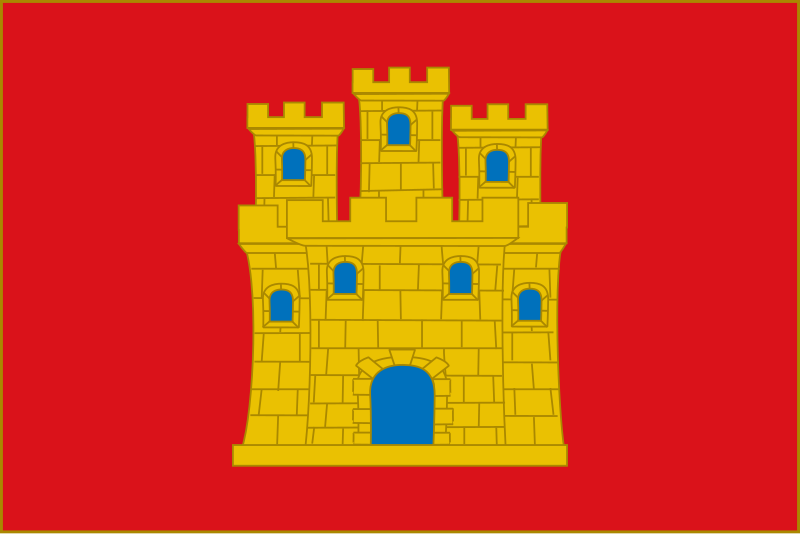
Kingdom of Castile
European sovereign state (1065–1230)

Crown of Aragon
composite monarchy which existed between 1162–1716

Kingdom of Asturias
former kingdom on the Iberian Peninsula

Kingdom of Leon
independent medieval kingdom in the northwest of the Iberian Peninsula (910–1230), capital León

Kingdom of Navarre
Basque medieval kingdom that occupied lands on either side of the western Pyrenees, alongside the Atlantic Ocean (1162–1512)
Kingdom of Valencia
kingdom at the Iberian Peninsula existing between 1238-1707

Principality of Catalonia
state in the northeastern Iberian Peninsula (1173-1714)

Spania
Spania () was a province of the Eastern Roman Empire from 552 until 624 in the south of the Iberian Peninsula and the Balearic Islands. It was established by the Emperor Justinian I in an effort to restore the western provinces of the Empire.
Jiménez dynasty
noble family
County of Aragon
countship (802-1035)
Santa Hermandad
Spanish law enforcement association
Golden age of Jewish culture in Spain
aspect of Jewish history
Spain in the Middle Ages
history of Spain during the Middle Ages
Spanish era
Calendar era of Iberian peninsula
Visigothic script
medieval minuscule script of Spain
Counts of Urgell
Wikimedia list article
Autos sacramentales
form of dramatic literature unique to Spain
Megorashim
term used to refer to Jews from the Iberian Peninsula who arrived in North Africa as a result of the anti-Jewish persecutions
History of Asturias
Justicia of Aragon
Institución de autogobierno de la Comunidad de Aragón
Cartularios de Valpuesta
set of medieval Spanish cartularies
War of the Remences
Two 15th century peasant revolts in Catalonia
Lordship of Valencia
(1094-1102)
lonja
thumb|The Llotja de Mar
thumb|The Llotja de Sant Jordi
thumb|The Llotja de la Seda, Valencia
thumb|The Llotja de Castelló d'Empúries
Llotja (, plural ); in ; in ; is a Catalan term for important buildings used for commercial purposes during the Middle Ages and Early Modern Ages.
and lodge are cognates.
Knight-villein
A knight-villein (Cavaleiro-vilão in Portuguese, caballero villano in Spanish) was a free plebeian horsemen who owned land, weapons and a horse, despite not being part of the nobility, being prominent in medieval Portugal, Castile and Leon.
Sabaria
thumb|400px|Iberia in 560.
Old Catalonia
Sentencia de Guadalupe
1486 decree by King Ferdinand setting aside medieval constraints on serfs.
Sharq al-Andalus
historical region
Alfoz
Remensa
thumb|Plaque commemorating the 500th anniversary of the remences' acceptance of King Ferdinand II of Aragon|Ferdinand II's mediation between the remences and the feudal lords. (Located in Amer monastery, where the arbitration occurred.)