Category
page 1Medieval history of Syria

Umayyad Caliphate
second Islamic caliphate (661–750 CE)

Seljuk Empire
Turco-Persian Sunni Muslim empire (1037–1194)

Timurid Empire
Central Asian Persianate Turco-Mongol empire (1370–1507)
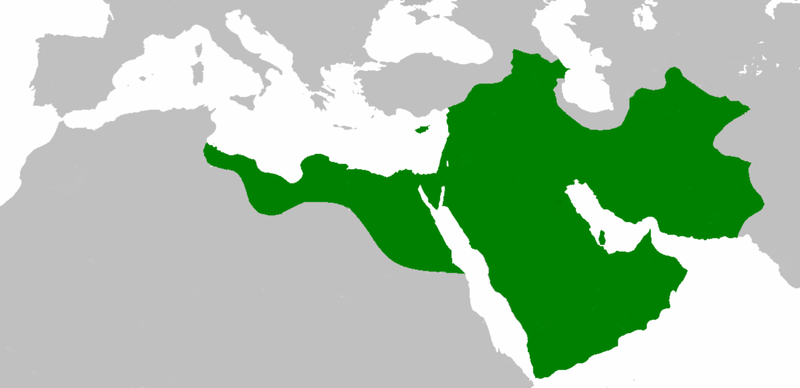
Rashidun Caliphate
first caliphate established after the death of the Islamic prophet Muhammad (632–661)

Ilkhanate
The Ilkhanate or Il-khanate was a Mongol khanate founded in the southwestern territories of the Mongol Empire. It was ruled by the Il-Khans or Ilkhanids (), and known to the Mongols as Hülegü Ulus (). The Ilkhanid realm was officially known as the Land of Iran (Irānzamin) or simply Iran. It was established after Hülegü, the son of Tolui and grandson of Genghis Khan, inherited the West Asian and Central Asian part of the Mongol Empire after his brother Möngke Khan died in 1259.
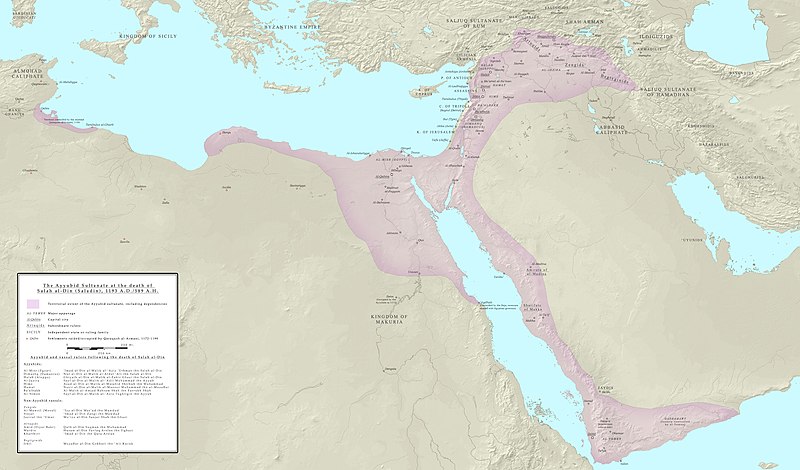
Ayyubid dynasty
Kurdish dynasty from 1171 to 1341

Mamluk Sultanate of Egypt
state in Egypt, Hejaz and the Levant (1250–1517)

Order of Assassins
Nizari Isma'ili sect

County of Edessa
crusader state in the 12th century

Zengid dynasty
Oghuz Turk dynasty 1127-1250, founded by Imad ad-Din Zengi
Siege of Aleppo
637 siege during the Byzantine-Arab wars
.png)
Mardaites
The Mardaites (; ) or al-Jarajima (; /ALA-LC: Jarājimah) were early Christians following Chalcedonian Christianity in the Nur Mountains. Little is known about their ethnicity, but it has been speculated that they might have been Persians (see, for a purely linguistic hypothesis, the Amardi, located south of the Caspian Sea in classical times) with other theories placing them as Armenians or even Greeks native to the Levant. Their other Arabic name, al-Jarājimah, suggests that some were natives of the town Jurjum in Cilicia; the word marada in Arabic is the plural of mared, which could mean a g
Plague of Amwas
epidemic in 7th century Syria

Arab Jund
Under the early Caliphates, a jund (; plural ajnad, أجناد) was a military division, which became applied to the military territory in the conquered lands of the Arabs and, most notably, to the provinces into which Greater Syria (i.e., the Levant) was divided.
Nizari Ismaili state
Nizari Ismaili government with the center of Alamut Castle (1090–1273)
%20Unlisted%20(Irbil)%20mint.%20Struck%20circa%20AD%201187-1191.jpg)
Gökböri
Gökböri (13 April 115428 June 1233) or Muzaffar ad-Din Gökböri, was a leading emir and general of Sultan Saladin (Ṣalāḥ ad-Dīn Yūsuf ibn Ayyūb), and ruler of Erbil. He served both the Zengid and Ayyubid rulers of Syria and Egypt. He played a pivotal role in Saladin's conquest of Northern Syria and the Jazira (Upper Mesopotamia) and later held major commands in a number of battles against the Crusader states and the forces of the Third Crusade. He was known as Manafaradin, a corruption of his principal praise name, to the Franks of the Crusader states.
Nur al-Din Bimaristan
ancient hospital(museum currently) in Damascus, Syria
Banu Judham
arabian Tribe
Bali (tribe)
Banu Munqidh
Syrian Arab family
Al Fadl
Historical Arab tribe in Syria
Ahdath
The ahdath () were local militias of irregular police in Syria in the 10th to 12th centuries. They maintained order and protected cities from outside domination. Some later writers ascribed them proletarian values, as outlets of the popular will. Most fulfilled a more formal police function and in many cases worked with the urban bourgeoisie. They helped the Fatimid Caliphate in Syria defend against the Crusaders.
Artah
Artah (; modern-day Reyhanlı) was a medieval town and castle located 25 miles east-northeast of Antioch, to the east of the Iron Bridge on the Roman road from Antioch to Aleppo.