Category
page 1Mysida

Mysida
Mysida is an order of small, shrimp-like crustaceans in the malacostracan superorder Peracarida. Their common name opossum shrimps stems from the presence of a brood pouch or "marsupium" in females. The fact that the larvae are reared in this pouch and are not free-swimming characterises the order. The mysid's head bears a pair of stalked eyes and two pairs of antennae. The thorax consists of eight segments each bearing branching limbs, the whole concealed beneath a protective carapace and the abdomen has six segments and usually further small limbs.
Mysidae
Mysidae is the largest family of crustaceans in the order Mysida, with over 1000 species in around 170 genera.
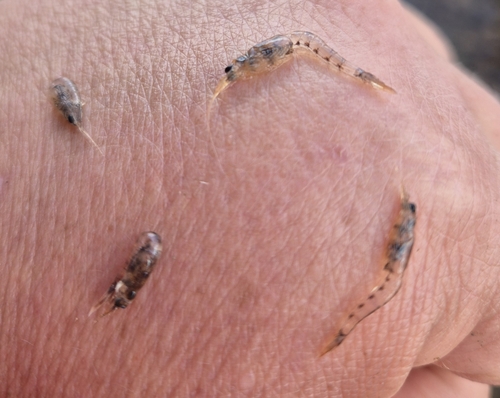
Mysis relicta
species of crustacean

Hemimysis anomala
species of crustacean

Neomysis integer
species of mysid

Mysis
Mysis is a genus of mysid crustaceans in the family Mysidae, distributed mainly in the coastal zone of the Arctic and high boreal seas. Several species also inhabit northern freshwater lakes and the brackish Caspian Sea. Fifteen species are recognized. Body lengths range from .
Petalophthalmidae
Petalophthalmidae is a family of marine crustaceans in the order Mysida, the opossum shrimps.
Heteromysis
Heteromysis (from Greek heteros meaning ‘different’, and mysis, a genus name Mysis) is a genus of marine mysid crustaceans (opossum shrimps) from the family Mysidae, associated with various shallow-water invertebrates. The name describes differentiation of its pereiopods (thoracic appendages) as possible adaptation to commensal life-style. Heteromysis is one of the largest mysid genera, containing more than 100 species. The genus is distributed globally, but predominantly in tropical and subtropical waters.

Neomysis
Neomysis (from the Greek affix neo-, "new", and the genus name Mysis) is a genus of opossum shrimp (mysid crustacean) from the family Mysidae, distributed in the coastal zone of temperate seas of the Northern Hemisphere and South America. Several species, particularly from the West Pacific, are also found in fresh and brackish waters. The genus contains the following 18 species:
Paramysis
Paramysis (from the Greek affix '', "near", "beside", and the genus name Mysis'') is a genus of mysid crustaceans (Mysidacea) in family Mysidae, distributed in coastal zone of low boreal East Atlantic Ocean, Mediterranean Sea and the basins of Black Sea, Sea of Azov and Caspian Sea (Ponto-Caspian Basin).

Mysidopsis
Mysidopsis is a genus of mysid shrimps in the family Mysidae. The sensitivity of these shrimps to water quality makes them suitable for bioassays. Mysidopsis bahia and Mysidopsis almyra, which are used frequently to test for pesticides and other toxic substances, are now classified as Americamysis bahia and Americamysis almyra.

Siriella
Siriella is a genus of mysid crustaceans form the family Mysidae, consisting of approximately 90 species. Found in all seas except cold Arctic and Antarctic waters, the genus is most diverse in tropics.
Praunus
Praunus is a genus of mysid shrimp, comprising three species:
Praunus flexuosus (Müller, 1776)
Praunus inermis (Rathke, 1843)
Praunus neglectus (G. O. Sars, 1869)
When originally named in 1814 by William Elford Leach, the genus contained P. flexuosus (the type species), and a second species, "P. integer", which is now known as Neomysis integer.
Neomysis awatschensis
species of crustacean
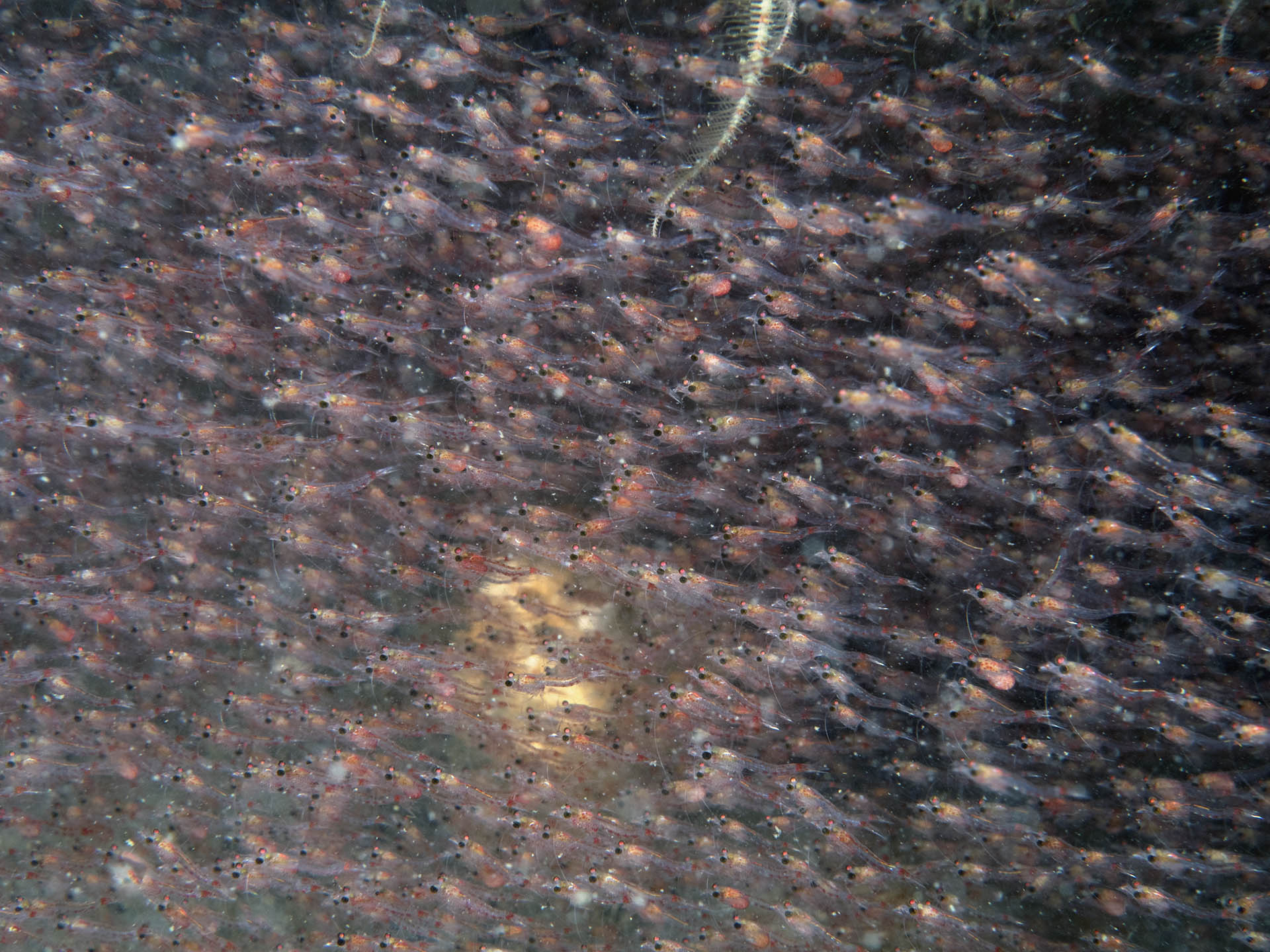
Hemimysis lamornae
species of crustacean
Idiomysis
thumb|Idiomysis in Lembeh Strait, Indonesia
thumb|Idiomysis usually have a curled up abdomen.

Anisomysis
Anisomysis is a genus of mysids, first described in 1910 by Hans Jacob Hansen.
==Species==
Species and subgenera accepted by WoRMS are:

Acanthomysis
Acanthomysis is a genus of mysids, containing 28 species.

Tenagomysis
Tenagomysis is a genus of mysid shrimps in the family Mysidae, containing the following species:
Acanthomysis longispina
species of mysid
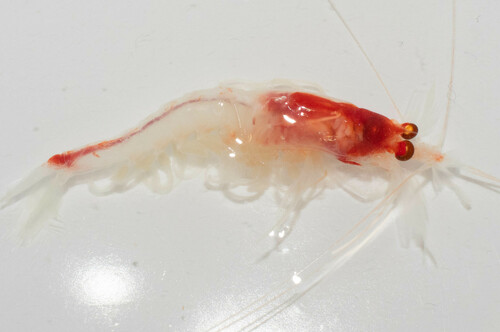
Boreomysis
Boreomysis (from Greek Boreas, the god of the northern winds, and the genus name Mysis) is a mysid crustacean genus, the type of the subfamily Boreomysinae of the family Mysidae. Majority of the species are found in the ocean deep water. Cosmopolitan. 38 species.
Anisomysis aikawai
species of crustacean

Boreomysis sibogae
species of crustacean
Boreomysis sphaerops
species of crustacean

Gastrosaccus spinifer
species of crustacean
Paramysis intermedia
species of crustacean
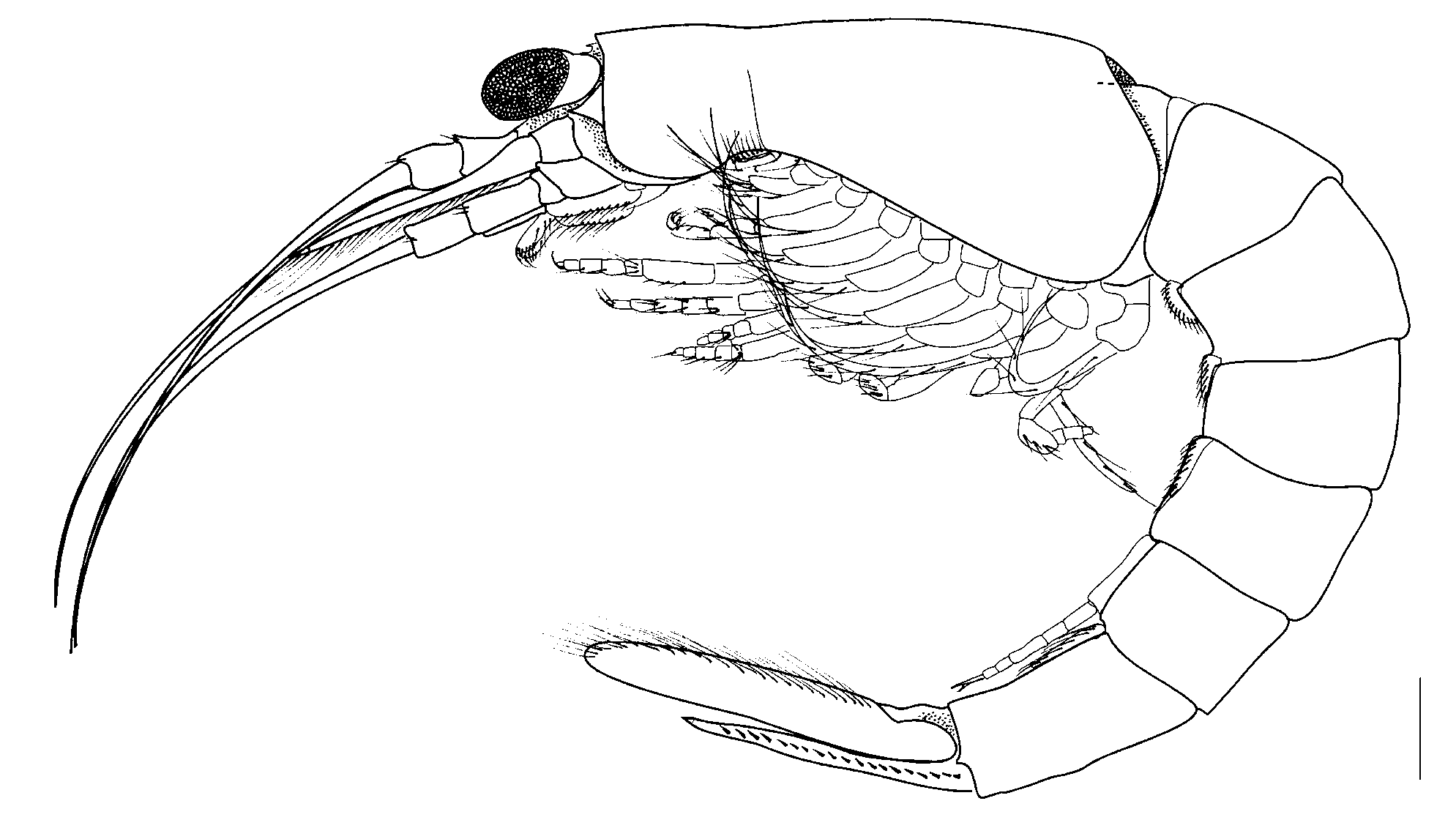
Paramysis baeri
species of crustacean
Erythrops
Erythrops is a genus of marine crustaceans in the family Mysidae.
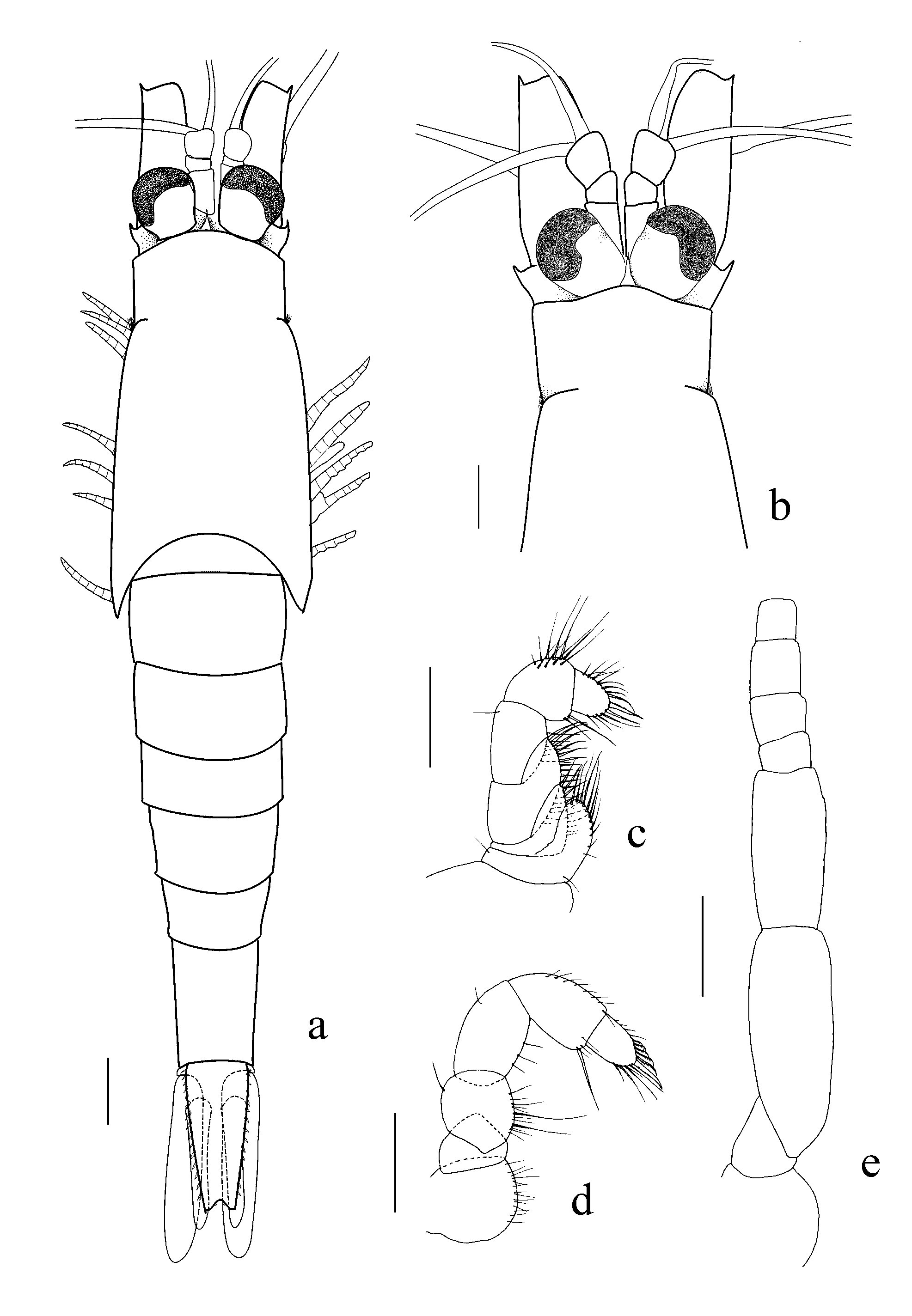
Paramysis bakuensis
species of crustacean
Acanthomysis brucei
species of crustacean
Americamysis
Americamysis is a genus of mysid shrimps in the family Mysidae. The sensitivity of these shrimps to water quality makes them suitable for bioassays. Americamysis bahia and Americamysis almyra, which are used frequently to test for pesticides and other toxic substances, are often referred to as Mysidopsis bahia and Mysidopsis almyra in the literature.