Category
page 1Oil campaign of World War II

Dortmund
Dortmund (; ; ) is a city in the German state of North Rhine-Westphalia. It is the third-largest city in the state, after Cologne and Düsseldorf, and the ninth-largest city in the country. With a population of 614,495 inhabitants, it is the largest city (by area and population) of the Ruhr as well as the largest city of Westphalia. It lies on the Emscher and Ruhr rivers (tributaries of the Rhine) in the Rhine-Ruhr Metropolitan Region, the second biggest metropolitan region by GDP in the European Union, and is considered the administrative, commercial, and cultural centre of the eastern Ruhr. D
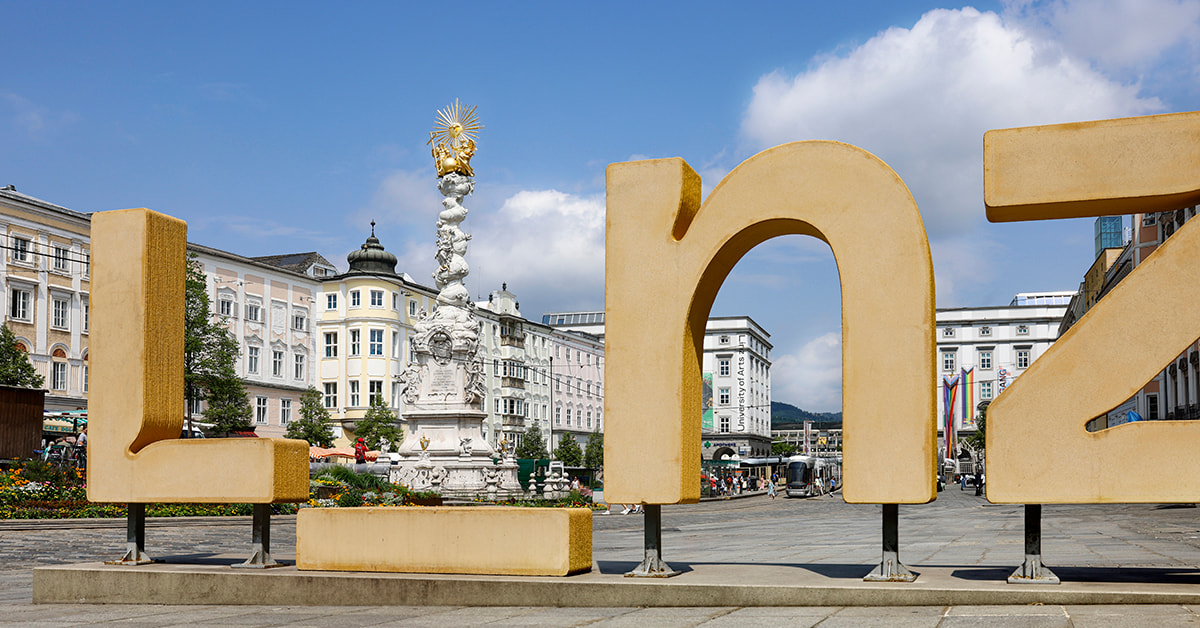
Linz
Linz ( ; ; ) is the capital of Upper Austria and third-largest city in Austria. Located on the river Danube, the city is in the far north of Austria, south of the border with the Czech Republic. As of 1 January 2024, the city has a population of 214,064. It is the seventh-largest of all cities on the river Danube.

Münster
Münster (; ) is an independent city (Kreisfreie Stadt) in North Rhine-Westphalia, Germany. It is in the northern part of the state and the historic capital of the Westphalia region, as well being the centre of a state district. During the Protestant Reformation, Münster was the location of the Anabaptist rebellion. Münster and Osnabrück were the sites of the signing of the Treaties of Westphalia which ended the Thirty Years' War in 1648. Today, it is known as the bicycle capital of Germany.

Chemnitz
Chemnitz (; from 1953 to 1990: Karl-Marx-Stadt () is the third-largest city in the German state of Saxony after Leipzig and Dresden, and the fourth-largest city in the area of the former East Germany after (East) Berlin, Leipzig, and Dresden.

Gelsenkirchen
thumb|Municipal forest of Buer (Buerscher Stadtwald)
thumb|A former mining settlement

Rijeka
Rijeka is the principal seaport and the third-largest city in Croatia. It is located in Primorje-Gorski Kotar County on Kvarner Bay, an inlet of the Adriatic Sea and in 2021 had a population of 107,964 inhabitants. Historically, because of its strategic position and its excellent deep-water port, the city was fiercely contested, especially between the Holy Roman Empire, the Republic of Venice, the Kingdom of Italy and Yugoslavia, changing rulers and demographics many times over centuries. According to the 2021 census data, 85% of its citizens are Croats, along with small numbers of Serbs, Bosn

Oberhausen
Oberhausen (, ) is a city on the river Emscher in the Ruhr Area, Germany, located between Duisburg and Essen ( ). The city hosts the International Short Film Festival Oberhausen and The Static Roots Festival. Its Gasometer Oberhausen is an anchor point of the European Route of Industrial Heritage.

Osijek
Osijek () is the largest city and the economic and cultural hub of the eastern Croatian region of Slavonia, as well as the administrative seat of Osijek-Baranja County. It is the fourth-largest city in Croatia, with a population of 96,313 recorded in the 2021 census. The city is situated on the southern bank of the Drava River, 25 km (16 mi) upstream from its confluence with the Danube, at an elevation of . Osijek is located 16 km (10 mi) west of the Croatia–Serbia border.

Recklinghausen
Recklinghausen (; ) is the northernmost city in the Ruhr-Area and the capital of the Recklinghausen district. It borders the rural Münsterland and is characterized by large fields and farms in the north and industry in the south. Recklinghausen is the 60th-largest city in Germany and the 22nd-largest city in North Rhine-Westphalia.

Moers
Moers (; older form: Mörs; Dutch: Murse, Murs or Meurs) is a German city on the western bank of the Rhine, close to Duisburg. Moers belongs to the district of Wesel.

Ploiești
Ploiești ( , , ), formerly spelled Ploești, is a city and county seat in Prahova County, Romania. Part of the historical region of Muntenia, it is located north of Bucharest.

Pardubice
Pardubice (; ) is a city in the Czech Republic. It has about 92,000 inhabitants. It is the capital city of the Pardubice Region and lies on the Elbe River. The historic centre is well preserved and is protected as an urban monument reservation.

Sindelfingen
Sindelfingen (; Swabian: Sendlfenga) is a city in Baden-Württemberg in south Germany. It lies near Stuttgart at the headwaters of the Schwippe (a tributary of the river Würm), and is home to a Mercedes-Benz assembly plant. The current mayor of the city of Sindelfingen is Dr. Bernd Vöhringer.

Most
statutory city in Ústí nad Labem Region, Czech Republic

Zeitz
Zeitz (; , ) is a town in the Burgenlandkreis district, in Saxony-Anhalt, Germany. It is situated on the river White Elster, in the triangle of the federal states Saxony-Anhalt, Thuringia, and Saxony.

Castrop-Rauxel
Castrop-Rauxel (), often simply referred to as Castrop by locals, is a former coal mining city in the eastern part of the Ruhr Area within the state of North Rhine-Westphalia in Germany.

Schwechat
Schwechat () is a city southeast of Vienna known for the Vienna International Airport and Schwechater beer. The city is home to the refineries of the Austrian national oil company OMV.

Kolín
Kolín (; ) is a town in the Central Bohemian Region of the Czech Republic. It has about 33,000 inhabitants. The town is situated in a lowland on the Elbe River.
.JPG)
Korneuburg
thumb|150px|Korneuburg - Catholic Church of Saint Egidius

Wesseling
Wesseling () is an industrial German city on the Rhine bordering Cologne city on the south. With three chemical plants and a petroleum refinery within its city limits, it has an important place in the international petrochemical industry.

Leuna
Leuna () is a town in Saxony-Anhalt, eastern Germany, south of Merseburg and Halle, on the river Saale.

Schwarzheide
Schwarzheide (; ) is a town in the Oberspreewald-Lausitz district, in Lower Lusatia, Brandenburg, Germany. It is situated on the river Schwarze Elster, 11 km southwest of Senftenberg, 110 km south of Berlin and 40 km north of Dresden. The little river Pössnitz runs through the eastern part of Schwarzheide.
Bad Berka
town in Thuringia, Germany
Hemmingstedt
Hemmingstedt () is a German municipality in the district of Dithmarschen in the state of Schleswig-Holstein.
%20(cropped).jpg)
Czechowice-Dziedzice
Czechowice-Dziedzice (), known until 1958 as Czechowice, is a town in Bielsko County, Silesian Voivodeship, southern Poland. The town has 35,684 inhabitants, as of December 2021. It lies on the northeastern edge of the historical region of Cieszyn Silesia. It is a large rail junction with four stations, located at the intersection of two major lines – east-west (Trzebinia – Zebrzydowice), and north–south (Katowice – Bielsko-Biala).
Rositz
Rositz () is a municipality in the district Altenburger Land, in Thuringia, Germany.

Weilmünster
Weilmünster is a municipality in Limburg-Weilburg district in Hesse, Germany.
Bombing of Hamburg in World War II
allied aerial bombing raids in Germany
Zdzieszowice
Zdzieszowice (; , 1936–1945: Odertal O.S.; ) is a town in Krapkowice County, Opole Voivodeship, in southern Poland, with 11,445 inhabitants (2019).
Wettin
human settlement, quarter of Wettin-Löbejün, Saalekreis, Saxony-Anhalt, Germany
Carl Andrew Spaatz
United States Air Force general (1891-1974)

Almásfüzitő
Almásfüzitő is a village in Komárom-Esztergom county, Hungary. During the Oil Campaign of World War II, the Almásfüzitő oil refinery was bombed by the United States Army Air Forces.
Operation Tidal Wave
1943 military operation

Lobau
The Lobau () is a floodplain in Vienna, Austria. Located in the south-east of the city, on the northern bank of the Danube, it is a part of the Danube-Auen National Park.

Mittelwerk
Mittelwerk (; German for "Central Works") was a German World War II factory built underground in the Kohnstein to avoid Allied bombing. It used slave labor from the Mittelbau-Dora concentration camp to produce V-2 ballistic missiles, V-1 flying bombs, and other weapons.
Buer
quarter of Gelsenkirchen, Germany
bombing of Bucharest in World War II
1944 aerial bombing of a city
Szőny
thumb | right | alt=South Komárom/Szőny | South Komárom/Szőny
Blachownia Śląska
The Blechhammer ('') (nowadays Blachownia Śląska, district of the City of Kędzierzyn-Koźle) area was the location of Greater German Reich chemical plants, prisoner of war camps, and forced labor camps (). Labor camp prisoners began arriving as early as June 17, 1942, and in July 1944, 400–500 men were transferred from the Terezin family camp to Blechhammer. The mobile "pocket furnace" () crematorium was at Sławięcice.) and Bau und Arbeits Battalion (BAB, ) 21 was a mile from the Blechhammer oil plants and was not far from Kattowitz and Breslau. Blechhammer synthetic oil (aka synthetic fuel) pr
Oil Campaign of World War II
Allied military operations to prevent supply of Nazi Germany with petroleum products
Leuna works
chemical industrial complex in Germany
history of Silesia
aspect of history