Category
page 1Parasites of fungi

myco-heterotrophy
thumb|230px|Monotropa uniflora, an obligate myco-heterotroph known to parasitize fungi belonging to the [[Russulaceae.]]
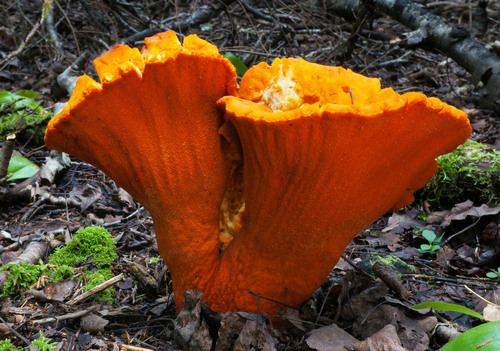
Hypomyces lactifluorum
species of fungus

Corsia
Corsia is a little-studied plant genus from the monocotyledon family Corsiaceae. It was first described in 1877 by Italian naturalist Odoardo Beccari and contains 25 species, all of which lack chlorophyll and parasitize fungi for nutrition. All 25 species are distributed through New Guinea, the Bismarck Archipelago, the Solomon Islands and Queensland, Australia.
mycotroph
A mycotroph is a plant that gets all or part of its carbon, water, or nutrient supply through symbiotic association with fungi. A holomycotroph gets all its nutrition solely from a mycorrhizal symbiosis. The term can refer to plants that engage in either of two distinct symbioses with fungi:
Many mycotrophs have a mutualistic association with fungi in any of several forms of mycorrhiza. The majority of plant species are mycotrophic in this sense. Examples include Burmanniaceae.
Some mycotrophs are parasitic upon fungi in an association known as myco-heterotrophy.
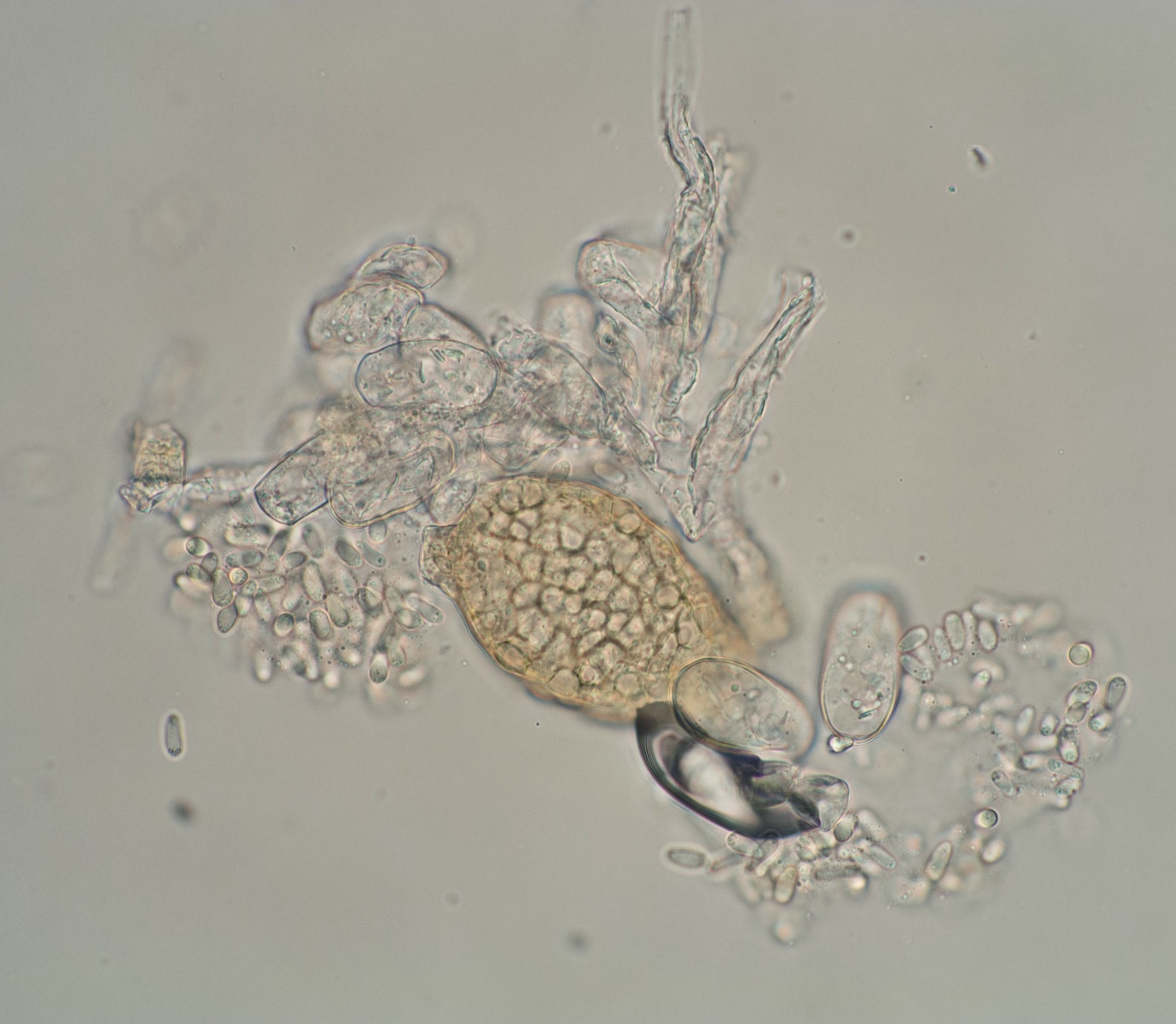
Ampelomyces quisqualis
species of fungus

Corsia ornata
species of plant
Piptocephalidaceae
thumb|left|Piptocephalis
The Piptocephalidaceae are a family of fungi in the Zoopagales order. The family contains 3 genera, and 70 species.
Sigmoideomycetaceae
The Sigmoideomycetaceae are a family of fungi in the order Zoopagales. The family contains three genera, and four species. The family was circumscribed in 1992.