Category
page 1Parasitic animals of mammals
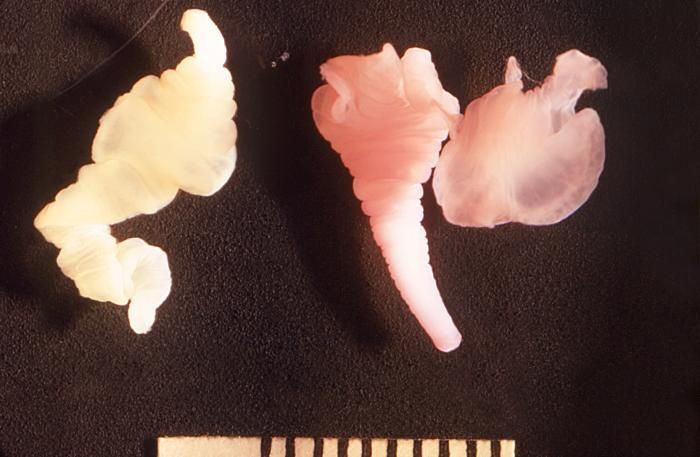
Taenia solium
species of Cestoda
Taenia saginata
species of Cestoda

Echinococcus
thumb|400px|right|schematic representation of the life cycle of Echinococcus
thumb|General description of the egg and oncosphere of Echinococcus spp.
Cyclophyllidea
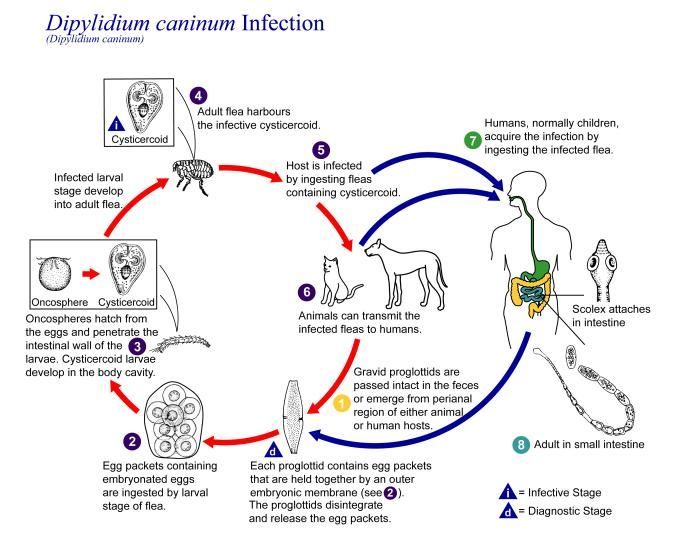
Cyclophyllidea (the cyclophyllid cestodes) is an order of Cestoda (tapeworm). It is the largest and most diverse order of Cestoda (tapeworm), encompassing species that infect all classes of terrestrial tetrapods including humans and domesticated animals, and includes species with some of the most severe health impact on wildlife, livestock, and humans.
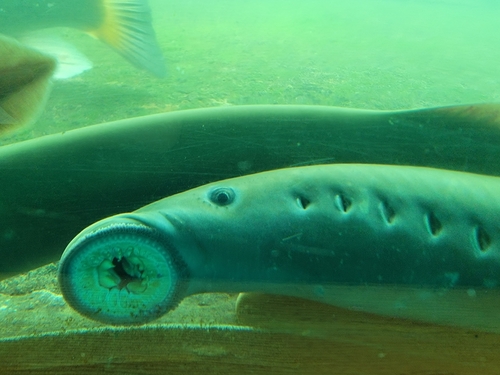
Entosphenus tridentatus
species of lamprey

Schistosoma japonicum
species of worm
Taenia pisiformis
endoparasitic tapeworm

Cysticercus
thumb|right| Drawing of Cysticerus cellulosae: Left one from the pig showing an invaginated scolex. Right one from human intestine showing the evaginated scolex.
Cysticercus (pl. cysticerci) is a scientific name given to the young tapeworms (larvae) belonging to the genus Taenia. It is a small, sac-like vesicle resembling a bladder; hence, it is also known as bladder worm. It is filled with fluid, in which the main body of the larva, called scolex (which will eventually form the head of the tapeworm), resides. It normally develops from the eggs, which are ingested by the intermediate hosts, su
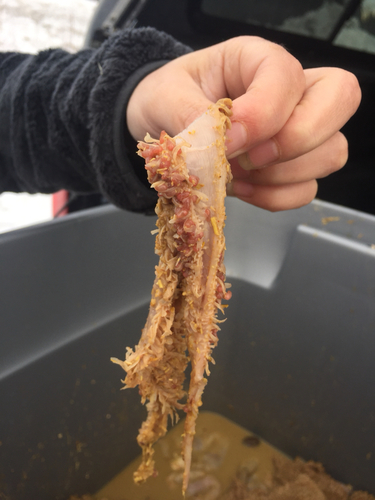
Paramphistomum cervi
taxon in the invertebrate family Paramphistomatidae
Taenia crassiceps
species of Cestoda
Spirometra
Spirometra is a genus of pseudophyllid cestodes that reproduce in canines and felines, but can also cause pathology in humans if infected. As an adult, this tapeworm lives in the small intestine of its definitive host and produces eggs that pass with the animal's feces. When the eggs reach water, the eggs hatch into coracidia which are eaten by copepods. The copepods are eaten by a second intermediate host to continue the life cycle. Humans can become infected if they accidentally eat frog legs or fish with the plerocercoid stage encysted in the muscle. In humans, an infection of Spirometra is
Golvanacanthus
Golvanacanthus is a monotypic genus of acanthocephalans (thorny-headed or spiny-headed parasitic worms) containing a single species, Golvanacanthus blennii, that infests animals.
Taenia asiatica
species of Cestoda
Moniezia
Moniezia a genus of tapeworms that are parasitic in mammals, including sheep, goat and cattle. It comprises four known species such as M. expansa, M. benedeni, M. autumnalis and M. baeri. M. expansa is the most well known species within the genus because of its high prevalence. Members of the genus are among the largest cestodes reaching up to 10 m in length. They inhabit the small intestine of mammalian host. Their life cycle is indirect requiring intermediate host, which are oribatid mites. They are characterized by the presence of interproglottid glands.
Taenia hydatigena
species of Cestoda
Australiformis
Australiformis is a monotypic genus of acanthocephalans (thorny-headed or spiny-headed parasitic worms) containing a single species, Australiformis semoni, that infests marsupials in Australia and New Guinea. Its body consists of a proboscis armed with hooks which it uses to pierce and hold the gut wall of its host, and a long trunk. This genus resembles species in the genus Moniliformis but is characterized by a lack of spiral muscles in the outer wall of the proboscis receptacle. The proboscis is armed with 12 rows of 13 to 15 hooks which are used to attach themselves to the small or large i