Category
page 1Politics of the Soviet Union
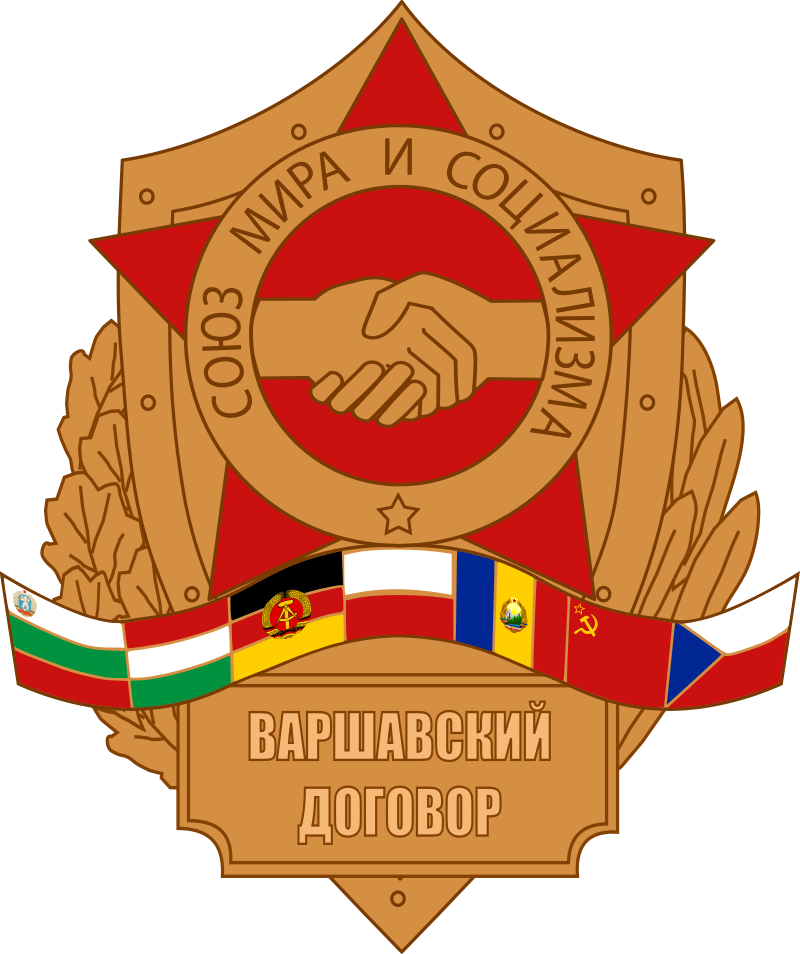
Warsaw Pact
European Eastern Military Alliance (1954 – 1991)

Gulag
thumb|A punishment cell block in one of the subcamps of Vorkutlag, 1945
The Gulag was a system of forced labor camps in the Soviet Union. The word Gulag originally referred only to the division of the Soviet secret police that was in charge of running the forced labor camps from the 1930s to the early 1950s during Joseph Stalin's rule, but in English literature the term is popularly used for the system of forced labor throughout the Soviet era. The abbreviation GULAG (ГУЛАГ) stands for "Glávnoye upravléniye ispravítel'no-trudovýkh lageréy " (Гла́вное управле́ние исправи́тельно-трудовы́х лагере

Stalinism
thumb|Official portrait of Joseph Stalin from 1945

Communist International
political organization (1919–1943)

Mensheviks
The Mensheviks () were a faction of the Marxist Russian Social Democratic Labour Party (RSDLP) which split with Vladimir Lenin's Bolshevik faction at the Second Party Congress in 1903. Mensheviks held more moderate and reformist views as compared to the Bolsheviks, and were led by figures including Julius Martov and Pavel Axelrod.
satellite state

Soviet
political organizations and governmental bodies, primarily associated with the Russian Revolutions and the history of the Soviet Union, and which gave the name to the latter state

de-Stalinization
De-Stalinization () comprised a series of political reforms in the Soviet Union after the death of long-time leader Joseph Stalin in 1953, and the thaw brought about by ascension of Nikita Khrushchev to power, and his 1956 secret speech "On the Cult of Personality and Its Consequences", which denounced Stalin's cult of personality and the Stalinist political system.

Organization of Ukrainian Nationalists
Ukrainian ultranationalist political organization
Khrushchev thaw
period from the early 1950s to the early 1960s when repression and censorship in the Soviet Union were relaxed

nomenklatura
thumb|Moscow Kremlin, where the highest of the elite Soviet nomenklatura lived
The nomenklatura (; from , system of names) were a category of people within the Soviet Union and other Eastern Bloc countries who held various key administrative positions in the bureaucracy, running all spheres of those countries' activity: government, industry, agriculture, education, etc., whose positions were granted only with approval by the communist party of each country or region. While in the Russian language the term номенклатура has the same generic meaning as "nomenclature", in the context of the politi

Lysenkoism
thumb|upright=1.35 |Trofim Lysenko speaking at the Kremlin in 1935; behind him are (left to right) [[Stanislav Kosior, Anastas Mikoyan, Andrei Andreev and Joseph Stalin]]
Lysenkoism was a pseudoscientific political campaign led by the Soviet biologist Trofim Lysenko against genetics and science-based agriculture in the mid-20th century, rejecting natural selection in favour of a form of Lamarckism, as well as expanding upon the techniques of vernalization and grafting.
kremlinology
Kremlinology is the study and analysis of the Soviet government, and subsequently the Russian government, and their policies. The term emerged during the Cold War to describe a method of inference developed in response to the opacity and secrecy of the Soviet political system. Named after the Kremlin, the seat of the former Soviet government, the discipline was pioneered by the works of Boris Nicolaevsky and Franz Borkenau, among other scholars. By extension, Kremlinology is sometimes used to denote attempts to understand the inner workings of any secretive organization or decision-making proc
Soviet empire
informal political term used to describe the actions and power of the Soviet Union before 1991
Congress of People's Deputies of the Soviet Union
government body in the Soviet Union

Korenizatsiya
thumb|The 1921 Soviet recruitment to the Military Education poster with the Ukrainization theme. The text reads: "Son! Enroll in the , and the defence of Soviet Ukraine will be ensured." The poster uses traditional Ukrainian imagery with Ukrainian-language text to reach a wider appeal. The School of Red Commanders in [[Kharkiv was organized to promote the careers of the Ukrainian national cadre in the army.]]
Kommunarka shooting ground
place of mass executions during Stalinism near Moscow

Sovietization
thumb|300px|Latvian National Theatre decorated with Soviet symbols ([[hammer and sickle, red star, red flags and a double portrait of Vladimir Lenin and Joseph Stalin) after the Soviet occupation in 1940. The text on top reads "Long live the USSR!"]]
Sovietization ( ) is the adoption of a political system based on the model of soviets (workers' councils) or the adoption of a way of life, mentality, and culture modeled after the Soviet Union.
presidium
A presidium or praesidium is a council of executive officers in some countries' political assemblies that collectively administers its business, either alongside an individual president or in place of one. In Romance-speaking countries such as Spain, France, and Italy, this council is typically called the bureau. The term is also sometimes used for the governing body of European non-state organisations.
Prison of the peoples
phrase first used by Vladimir Lenin on 1914
Butovo firing range
execution site
Congress of Soviets of the Soviet Union
supreme governing body of the USSR (1922–1936)
politics of the Soviet Union
politics in the USSR, including internal politics of the ruling Communist Party
Soviet democracy
political system; emphasizes directly elected soviets or councils
Supreme Soviet
highest council in Soviet Union
New political thinking
late 1980s foreign policy philosophy of the Soviet Union

Anti-Bolshevik Bloc of Nations
international anti-communist organization
authoritarian socialism
type of socialism
Declaration of the Creation of the Union of Soviet Socialist Republics
Formative document of the Union of Soviet Socialist Republics
American Committee for the Liberation of the Peoples of Russia
Government of the Democratic Republic of Georgia in Exile
Exile of the Georgian Government
Fascist Union of Youth
organization
Chronology of Soviet secret police agencies
Wikimedia list article
Great Break
radical change in the economic policy of the Soviet Union in 1928/1929
Committee for the Independence of Georgia
anti-Soviet organization active in the Georgian Soviet Socialist Republic in the early 1920s
Collective leadership in the Soviet Union
form of governance in the Union of Soviet Socialist Republics
Procurator General of the Soviet Union
highest prosecutor office in the Soviet Union
Baltic–Soviet relations
international relations between Baltic states and Soviet Union
demokratizatsiya
1987 political slogan from Mikhail Gorbachev
commissar
Commissar (or sometimes Kommissar) is an English transliteration of the Russian (komissar), which means 'commissary'. In English, the transliteration commissar often refers specifically to the political commissars of Soviet and Eastern-bloc armies or to the people's commissars (effectively government ministers), while administrative officers are called commissaries.
International Liaison Department
Socialist-leaning countries
Third World countries which the USSR recognized as adhering to the ideas of socialism
Union of Fascist Little Ones
organization
Ministry of Justice
justice ministry of the USSR
Political Red Cross
Bratislava Declaration (1968)
political document
International Movement of Donbass
political movement in the Soviet Union and Ukraine
Union of Young Fascists – Vanguard
organization