Category
page 1Regions of Europe

Balkans
The Balkans ( , ), corresponding partially with the Balkan Peninsula, is a geographical area in southeastern Europe with various geographical and historical definitions. The region takes its name from the Balkan Mountains that stretch throughout the whole of Bulgaria. The Balkan Peninsula is bordered by the Adriatic Sea in the northwest, the Ionian Sea in the southwest, the Aegean Sea in the south, the Turkish straits in the east, and the Black Sea in the northeast. The northern border of the peninsula is variously defined. The highest point of the Balkans is Musala, , in the Rila mountain ran

Scandinavia
Scandinavia is a subregion of northern Europe that most commonly comprises Denmark, Norway, and Sweden, which share strong historical, cultural, and linguistic ties. It may also refer to the Scandinavian Peninsula (which excludes Denmark but includes part of northern Finland). In English usage, the term is also used as a synonym for the Nordic countries. Iceland and the Faroe Islands are sometimes included, due to their ethnolinguistic ties to Sweden, Norway, and Denmark. Although Finland differs from the other Nordic countries in this respect, some authors consider it Scandinavian because of

Caucasus
The Caucasus ( ) ( ) is a region spanning Eastern Europe and Western Asia. It is situated between the Black Sea and the Caspian Sea, comprising parts of Southern Russia, Georgia, Armenia, and Azerbaijan. The Caucasus Mountains, including the Greater Caucasus range, have conventionally been considered as a natural barrier between Europe and Asia, bisecting the Eurasian landmass. Mount Elbrus, Europe's highest mountain, is situated in the Western Caucasus area near the Russian-Georgian border. On the southern side, the Lesser Caucasus includes the Javakheti Plateau and the Armenian highlands.

Iberian Peninsula
peninsula located in the extreme southwest of Europe

Central Europe
region of Europe

Eastern Europe
eastern part of Europe

Western Europe
western part of the European continent

Southern Europe
southern region of the European continent

Baltic states
three countries east of the Baltic Sea: Estonia, Latvia, Lithuania

British Isles
group of islands in northwest Europe

Benelux
The Benelux Union (; ; ; ) or Benelux is a politico-economic union, alliance and formal international intergovernmental cooperation of three neighbouring states in Western Europe: Belgium, the Netherlands, and Luxembourg. The name is a syllabic abbreviation formed from the initial syllable of each country's name and was first used to name the customs agreement that initiated the union (signed in 1944). It is now used more generally to refer to the geographic, economic, and cultural grouping of the three countries.

Italian Peninsula
peninsula of southern Europe
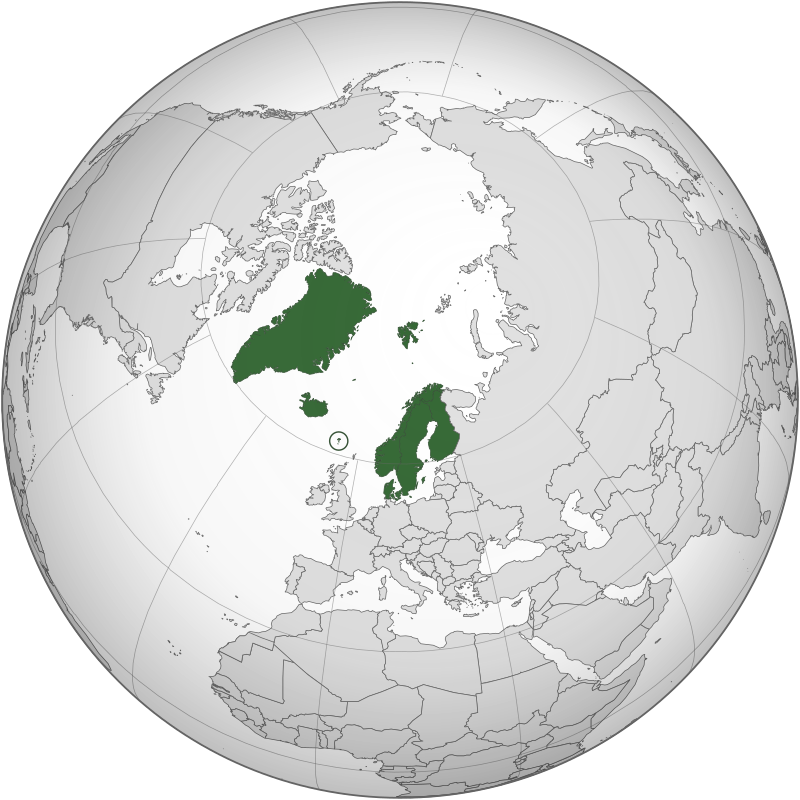
Nordic countries
geographical and cultural region in Northern Europe and the North Atlantic

South Caucasus
geographical region in the vicinity of the southern Caucasus region of Europe

East Prussia
province of Prussia

Mediterranean Basin
loosely defined region of lands around the Mediterranean Sea

Galicia
historical and geographic region in western Ukraine and southern Poland

Southeast Europe
geographic region

Boeotia Regional Unit
Boeotia ( ; , ; ) is one of the regional units of Greece. It is part of the region of Central Greece. Its capital is Livadeia, and its largest city is Thebes.

Sudetenland
thumb|upright=1.2|The native German-speaking regions in 1930, within the borders of the current Czech Republic, which in the [[interwar period were referred to as the Sudetenland:

continental Europe
continent of Europe, excluding European islands
Baltic region
geographic region in Northern Europe
Central and Eastern Europe
geographic and cultural region of Europe
Europe, the Middle East and Africa
collective term referring to Europe, the Middle East and Africa
Northwestern Europe
geographical region
Alpine states
the countries associated with the region of Alps

Vogtland
Vogtland (; ) is a region spanning the German states of Bavaria, Saxony and Thuringia and north-western Bohemia in the Czech Republic. It overlaps with and is largely contained within Euroregio Egrensis. The name alludes to the former leadership by the Vögte ("advocates" or "lords protector") of Weida, Gera and Plauen.

Röstigraben
thumb|upright=1.7|French (green) and German (orange) language areas of Switzerland
thumb|upright=1.2|French and Local Germanic dialect in the contact zone at the so-called "Röstigraben"
' (; , also transcribed to reflect the Swiss German pronunciation ) is a term used to refer to the cultural boundary between German-speaking Switzerland and Romandy, the French-speaking parts. There is also the term ', referring to the boundary between German-speaking cantons and the Italian-speaking canton of Ticino.

Baltoscandia
thumb|Location of the Baltic states and the [[Nordic countries:

Mitteleuropa
' (), meaning Middle Europe', is one of the German terms for Central Europe. The term has acquired diverse cultural, political and historical connotations.
Assembly of European Regions
independent network of European Regions
Alpine Foreland
geographic region south of Danube and north of the Bavarian Alps in Germany
Habsburg Hereditary Lands
The '''''' ("Hereditary Lands") of the House of Habsburg formed the Alpine heartland of the Habsburg monarchy. They were the hereditary possessions of the Habsburgs within the Holy Roman Empire from before 1526. The were not all unified under the head of the dynasty prior to the 17th century. They were divided into several groupings: the Archduchy of Austria, Inner Austria, the County of Tyrol, and Further Austria.
Alcohol belts of Europe
regions of Europe designating traditionally preferred types of alcohol consumption
Barents Region
Empty diagonal
band of low-density population in France
Bremen/Oldenburg Metropolitan Region
metropolitan region in Germany
East-Central Europe
region of Europe
Geographical region of Italy
geographical region
regions of Europe
overview of European regions

Wasgau
The Wasgau (, ) is a Franco-German hill range in the German state of Rhineland-Palatinate and the French departments of Bas-Rhin and Moselle. It is formed from the southern part of the Palatine Forest and the northern part of the Vosges mountains, and extends from the River Queich in the north over the French border to the Col de Saverne in the south.
Suwalszczyzna
historical and cultural region of Poland

divisions of the Carpathians
overview about the divisions of the Carpathians
Region of Europe
layer of EU government administration directly below the nation-state level
Elbe-Weser Triangle
region in Germany
Germanic Basin
Permo-Triassic sedimentary basin in Central Europe and the North Sea realm
Latin Arch