Category
page 1Science and technology in the San Francisco Bay Area
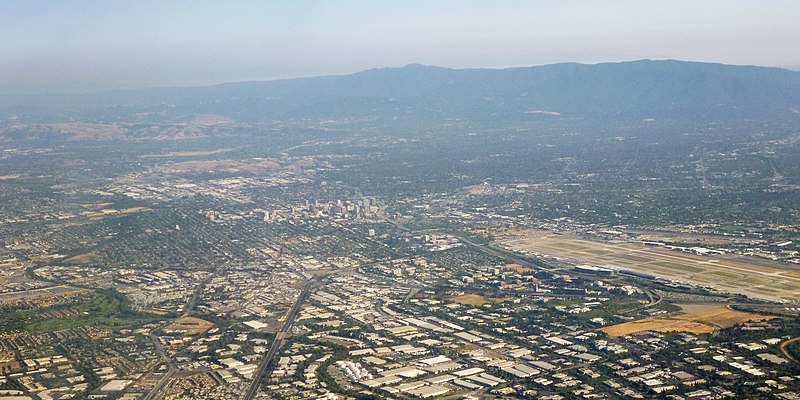
Silicon Valley
region in northern of U.S. state of California

William Shockley
American physicist and inventor (1910–1989)

Berkeley Software Distribution
free, open-source reimplementation of the AT&T UNIX operating system
PARC
company
Lawrence Berkeley National Laboratory
United States national laboratory located near Berkeley, California
X Development
semi-secret research and development company by Alphabet Inc.

Public Library of Science
PLOS (for Public Library of Science; PLoS until 2012) is a nonprofit publisher of open-access journals in science, technology, and medicine and other scientific literature, under an open-content license. It was founded in 2000 and launched its first journal, PLOS Biology, in October 2003.
SRI International
American scientific research institute (founded 1946)
California Academy of Sciences
natural history museum in San Francisco
GNOME Foundation
nonprofit organization
The Mother of All Demos
1968 computer demonstration by Douglas Engelbart

Exploratorium
The Exploratorium is a museum of science, technology, and arts in San Francisco, California. Founded by physicist and educator Frank Oppenheimer in 1969, the museum was originally located in the Palace of Fine Arts and was relocated in 2013 to Piers 15 and 17 on San Francisco's waterfront.
Bevatron
The Bevatron ( ) was a particle accelerator – specifically, a weak-focusing proton synchrotron – located at Lawrence Berkeley National Laboratory, U.S., which began operations in 1954. The antiproton was discovered there in 1955, resulting in the 1959 Nobel Prize in physics for Emilio Segrè and Owen Chamberlain. It accelerated protons into a fixed target, and was named for its ability to impart energies of billions of eV ("billions of eV synchrotron").
Verily Life Sciences
Verily Life Sciences LLC also known as Verily (formerly Google Life Sciences), is Alphabet Inc.'s research organization devoted to the study of life sciences. The organization was formerly a division of Google X, and as of December 2024, is operating as a standalone company under Alphabet.
B612 Foundation
nonprofit organization
National Center for Science Education
non-profit organization in the USA
PeerJ
PeerJ is both a for profit, open access, and peer-reviewed scientific mega journal covering research in the biological and medical sciences and the publisher of the journal itself (PeerJ Inc.). The journal officially launched in June 2012, started accepting submissions on December 3, 2012, and published its first articles on February 12, 2013.
Open Compute Project
organization
Computer Systems Research Group
former American research group at University of California, Berkeley
San Francisco Declaration on Research Assessment
2012 manifesto against using the journal impact factor to assess a scientist's work
Space Sciences Laboratory
research facility at the University of California, Berkeley
FrameNet
FrameNet is a group of online lexical databases based upon the theory of meaning known as Frame semantics, developed by linguist Charles J. Fillmore. The project's fundamental notion is simple: most words' meanings may be best understood in terms of a semantic frame, which is a description of a certain kind of event, connection, or item and its actors.
University of California Museum of Paleontology
natural history museum
Gordon and Betty Moore Foundation
private foundation
Vallecitos Nuclear Center
nuclear power plant

Museum of Vertebrate Zoology
natural history museum at the University of California, Berkeley, USA
Sentinel (space telescope)
killer asteroid detector canceled as of 2017