Category
page 1Systemic atrophies primarily affecting the central nervous system

ALS
Amyotrophic lateral sclerosis (ALS), also known as motor neuron disease (MND) or '''Lou Gehrig's disease''', is a rare terminal neurodegenerative disease defined by the progressive loss of both upper and lower motor neurons that normally control voluntary muscle contraction. ALS is the most common of the motor neuron diseases. ALS often presents in its early stages with gradual muscle stiffness, twitches, weakness, and wasting. Motor neuron loss typically continues until the ability to eat, speak, move, and breathe without mechanical support is lost. It is estimated that at least 50% of people

Huntington's disease
rare neurodegenerative disorder of the central nervous system characterized by unwanted choreatic movements, behavioral and psychiatric disturbances and dementia
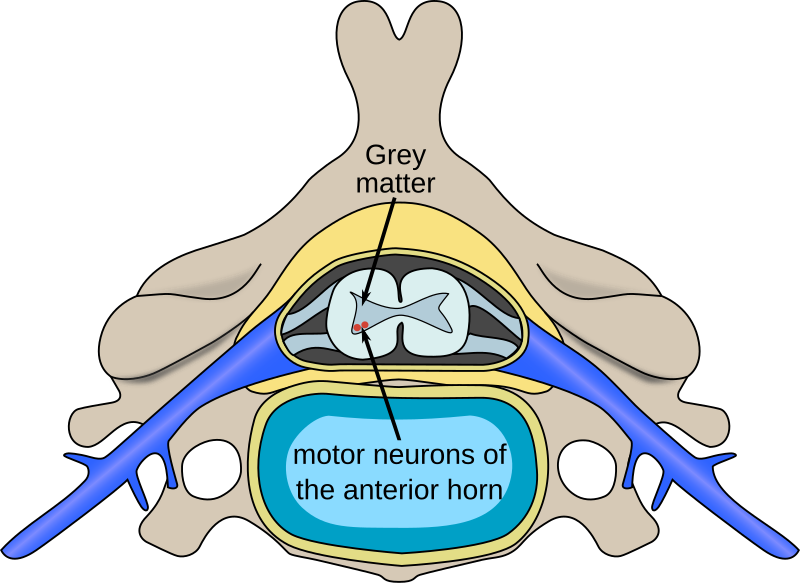
spinal muscular atrophy
rare congenital neuromuscular disorder
motor neuron disease
group of neurological disorders affecting motor neurons
Friedreich ataxia
Human disease
spinocerebellar ataxia
group of dominantly inherited, predominately late-onset, cerebellar ataxias. Neuro-developmental outcome and brain-derived neurotrophic factor level in relation to feeding practice in early infancy.

ataxia telangiectasia
Ataxia–telangiectasia (AT or A–T), also referred to as ataxia–telangiectasia syndrome or Louis–Bar syndrome, is a rare, neurodegenerative disease causing severe disability. Ataxia refers to poor coordination and telangiectasia to small dilated blood vessels, both of which are hallmarks of the disease. A–T affects many parts of the body:
It impairs certain areas of the brain including the cerebellum, causing difficulty with movement and coordination.
It weakens the immune system, causing a predisposition to infection.
It prevents the repair of broken DNA, increasing the risk of cancer.
hereditary spastic paraplegia
genetically and clinically heterogeneous group of neurodegenerative disorders characterized by progressive spasticity and hyperreflexia of the lower limbs

neuroacanthocytosis
Neuroacanthocytosis is a label applied to several genetic neurological conditions in which the blood contains misshapen, spiculated red blood cells called acanthocytes.

Machado-Joseph disease
autosomal dominant cerebellar ataxia that is characterized by slow degeneration of the hindbrain and has material basis in expansion of CAG triplet repeats (glutamine) in the ATXN3 gene
lateral sclerosis
motor neuron disease characterized by painless but progressive weakness and stiffness of the muscles of the legs
cerebellar ataxia
cerebellar disease characterized by ataxia originating in the cerebellum.

progressive bulbar palsy
human disease
cerebellar hypoplasia
rare disorder in which the cerebellum is either missing entirely or is smaller than usual
spinal muscular atrophies
group of diseases