Category
page 1Taxa named by Alexander Zahlbruckner

Teloschistaceae
The Teloschistaceae are a large family of mostly lichen-forming fungi belonging to the class Lecanoromycetes in the division Ascomycota. The family has a cosmopolitan distribution, although its members occur predominantly in temperate regions. Most members are lichens that either live on rock or on bark, but about 40 species are lichenicolousmeaning they are non-lichenised fungi that live on other lichens. Many members of the Teloschistaceae are readily identifiable by their vibrant orange to yellow hue, a result of their frequent anthraquinone content. The presence of these anthraquinone pigm
.jpg)
Physciaceae
The Physciaceae are a family of mostly lichen-forming fungi belonging to the class Lecanoromycetes in the division Ascomycota. A 2016 estimate placed 19 genera and 601 species in the family.
Psoraceae
The Psoraceae are a family of lichen-forming fungi in the order Lecanorales. The Austrian lichenologist Alexander Zahlbruckner first described the family in 1898. Species of this family have a widespread distribution.
Acarosporales
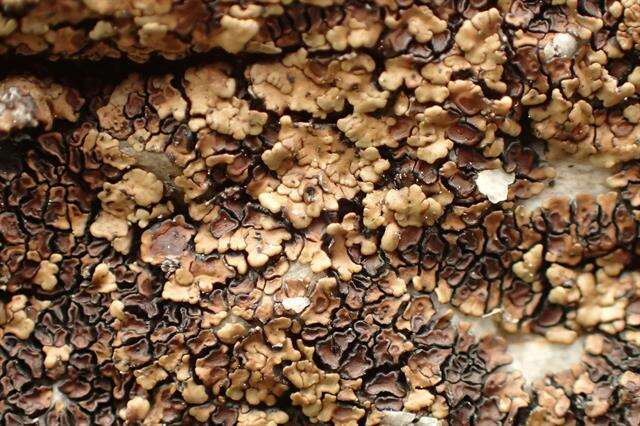
The Acarosporales are an order of fungi in the class Lecanoromycetes. Phylogenetic analyses conducted using the sequences of both the protein-coding gene RPB2 as well as nuclear ribosomal genes place this order within the subclass Acarosporomycetidae.
Melanohalea elegantula
species of fungus
Agonimia
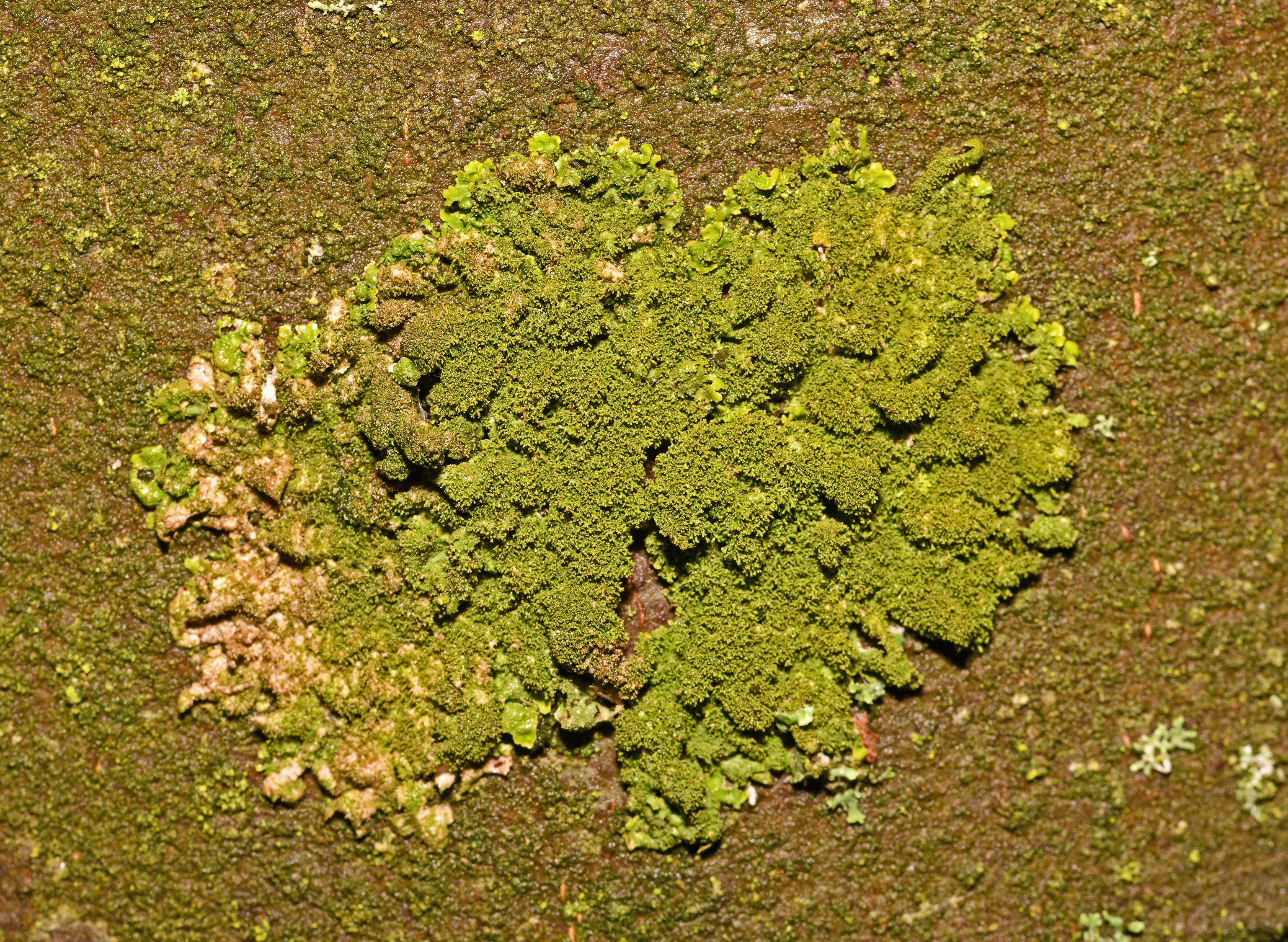
Agonimia is a genus of lichen-forming fungi in the family Verrucariaceae. These lichens typically form crusts made of tiny grain-like clumps or small scale-like fragments on tree bark and rocks, with some species developing delicate leaf-like structures up to 5 mm across. The genus includes about 22 species found worldwide, characterized by their black flask-shaped reproductive structures and distinctive brick-patterned ascospores.
Protoblastenia
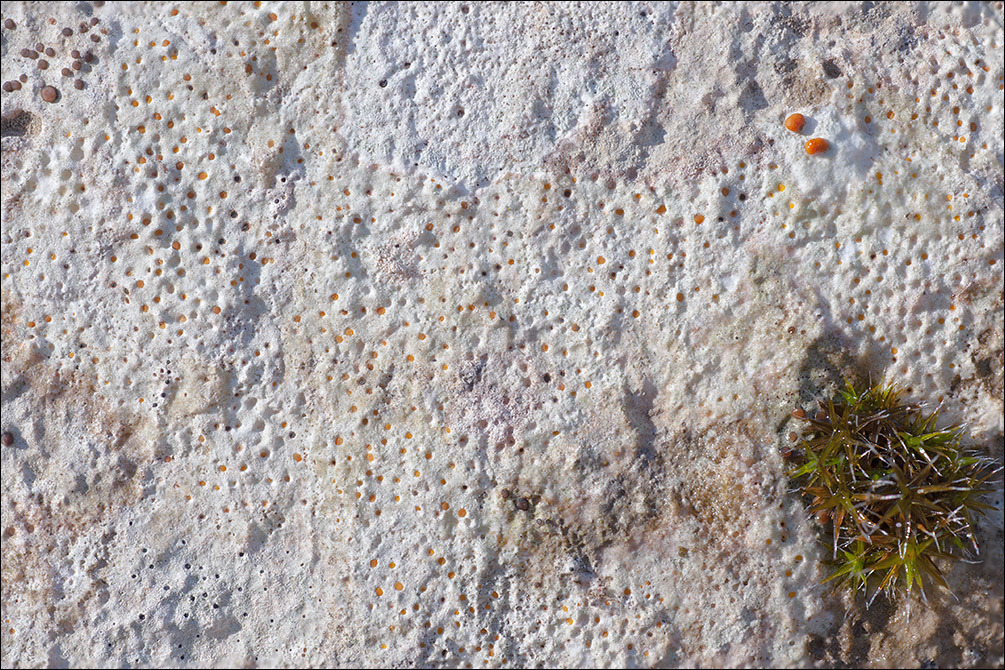
Protoblastenia is a genus of lichens in the family Psoraceae. It was originally circumscribed by Alexander Zahlbruckner in 1908 as a section of genus Blastenia. J. Steiner promoted it to generic status in 1911.
Xanthopyreniaceae
The Xanthopyreniaceae are a family of lichen-forming fungi in the order Collemopsidiales. Members of this family are found worldwide on rocks in various climates, from temperate to polar regions, where they form inconspicuous crusty growths or live hidden within the rock surface. Where lichenised, species partner with cyanobacteria, and several lineages are parasitic (lichenicolous) on other lichens. The family is characterized by small, dark fruiting bodies that release spores through a single opening at the top.
Umbilicaria nylanderiana
species of fungus
Melanohalea ushuaiensis
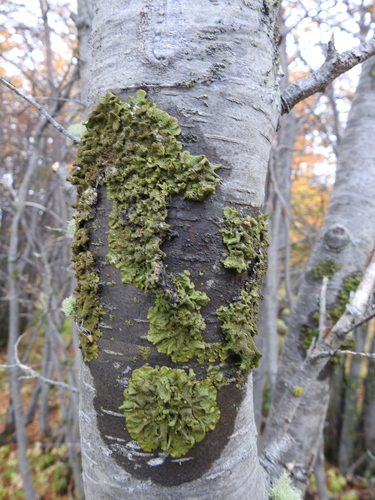
species of fungus
Strigulaceae
Strigulaceae is a family of mostly lichen-forming fungi, one of two families in the order Strigulales (class Dothideomycetes). A molecular analysis of the type genus, Strigula, has led to a reallocation of the foliicolous species into six genera that correspond to well-delimited clades with diagnostic phenotype features. These lichens live almost exclusively in tropical rainforests, where they grow as thin films on the surface of living leaves rather than on bark or rock like many other lichens. The family includes around 140 species distributed across multiple continents, making them one of t
Caloplaca durietzii
species of fungus
Heppia conchiloba
species of fungus
Parmotrema amaniense
species of fungus
Verrucaria aucklandica
species of fungus
Parmotrema araucariarum
species of fungus
Trypetheliopsis gigas
species of fungus
Centropogon parviflorus
species of plant
Menegazzia nothofagi
species of fungus

Parmotrema austrosinense
species of fungus
Gloeoheppia squamulosa
species of fungus
Parmelia shinanoana
species of fungus
Heteroplacidium acarosporoides
species of fungus
Bogoriella
Bogoriella is a genus of crustose lichens in the family Trypetheliaceae.
Haplodina
Haplodina is a lichenized genus of fungi in the family Roccellaceae.
Lecidea hassei
species of fungus