Category
page 1Turkic peoples of Asia

Altai Republic
republic of Russia, federal subject of Russia

Uyghurs
The Uyghurs, alternatively spelled Uighurs, Uygurs or Uigurs, are a Turkic ethnic group originating from and culturally affiliated with the general region of Central Asia and East Asia. They speak the Uyghur language, which is a Karluk Turkic language sharing the same origin with the Uzbek language, descended from the Karakhanid language and Chagatai language. The Uyghurs are recognized as the titular nationality of the Xinjiang Uyghur Autonomous Region in Northwest China. They are one of China's 55 officially recognized ethnic minorities.

Kazakhs
The Kazakhs are a Turkic ethnic group native to Central Asia and Eastern Europe. They share a common culture, language and history that is closely related to those of other Turkic peoples. The majority of ethnic Kazakhs live in their transcontinental nation state of Kazakhstan.
.jpg)
Uzbeks
The Uzbeks () are a Turkic ethnic group native to Central Asia, being the largest Turkic ethnic group in the area. They comprise the majority population of Uzbekistan, next to Tajiks and Karakalpak minorities, and also form minority groups in Afghanistan, Tajikistan, Kyrgyzstan, Kazakhstan, Turkmenistan, Russia, and China. Uzbek diaspora communities also exist in Turkey, Saudi Arabia, United States, Ukraine, Pakistan, and other countries.

Kyrgyz people
Turkic ethnic group native to Central Asia, primarily Kyrgyzstan

Bashkir people
The Bashkirs ( , ) or Bashkorts (, ; , ) are a Turkic ethnic group indigenous to Russia. They are concentrated in Bashkortostan, a republic of the Russian Federation and in the broader historical region of Badzhgard, which spans both sides of the Ural Mountains, where Eastern Europe meets North Asia. Smaller communities of Bashkirs also live in the Republic of Tatarstan, Perm Krai the oblasts of Chelyabinsk, Orenburg, Tyumen, Sverdlovsk, Kurgan and other regions in Russia; sizeable minorities exist in Kazakhstan.

Yakuts
The Yakuts or Sakha (, ; , ) are a Turkic ethnic group native to North Siberia, primarily the Republic of Sakha (Yakutia) in the Russian Federation. They also inhabit some districts of the Krasnoyarsk Krai. They speak Yakut, which belongs to the Siberian branch of the Turkic languages.

Nogais
[[File:Carte répartition nogaïs.png|thumb|The map shows the Nogai population.

Balkars
Balkars ( or аланла, romanized: alanla or таулула, , 'mountaineers') are a Turkic ethnic group in the North Caucasus region, one of the titular populations of Kabardino-Balkaria.

Kumyks
Kumyks (, ) are a Turkic ethnic group living in Dagestan, Chechnya and North Ossetia. They are the largest Turkic people in the North Caucasus.

Tuvans
The Tuvans (from Russian ) or Tyvans (from Tuvan ) are a Turkic ethnic group indigenous to Siberia that live in Tuva, Mongolia, and China. They speak the Tuvan language, a Siberian Turkic language. In Mongolia, they are regarded as one of the Uriankhai peoples. In China, they are considered Mongols, even though Tuvans are Turkic, not Mongolic.

Karachays
The Karachays or Karachais ( or ) are a North Caucasian-Turkic ethnic group primarily located in their ancestral lands in Karachay–Cherkess Republic, a republic of Russia in the North Caucasus. They and the Balkars share a common origin, culture, and language.
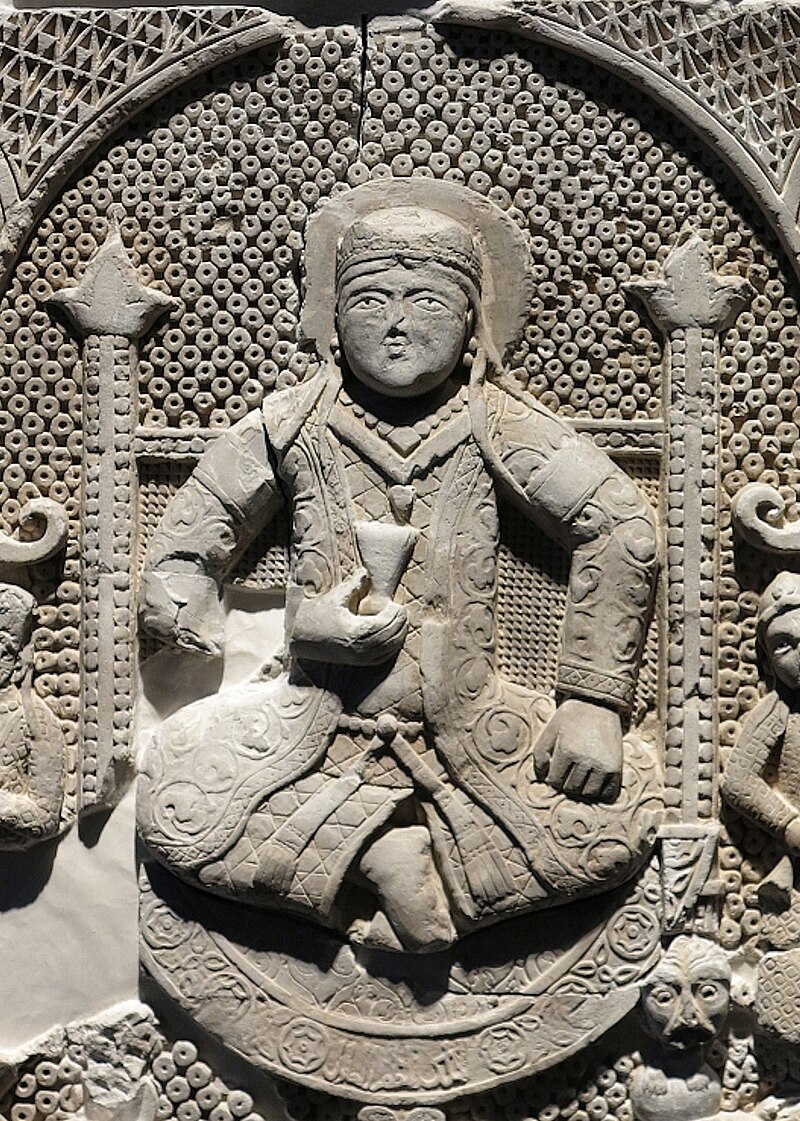
Oghuz Turks
Western Turkic people

Göktürks
The Göktürks (; ), also known as Türks, Celestial Turks or Blue Turks, were a Turkic people in medieval Inner Asia. The Göktürks, under the leadership of Bumin Qaghan (d. 552) and his sons, succeeded the Rouran Khaganate as the main power in the region and established the First Turkic Khaganate, one of several nomadic dynasties that would shape the future geolocation, culture, and dominant beliefs of Turkic peoples.
%20(6859416536).jpg)
Karakalpaks
The Karakalpaks, or Qaraqalpaqs (; ), are a Turkic ethnic group native to Karakalpakstan in Northwestern Uzbekistan. During the 18th century, they settled in the lower reaches of the Amu Darya and in the (former) delta of Amu Darya on the southern shore of the Aral Sea. The name Karakalpak comes from two words: qara meaning 'black' and qalpaq meaning 'hat'. The Karakalpaks number nearly 871,970 worldwide, out of which about 726,000 live in the Karakalpakstan region of Uzbekistan.

Khakass people
The Khakas or Khakass are a Turkic indigenous people of Siberia, who live in the republic of Khakassia, Russia. They speak the Khakas language.
%20of%20Dast-i%20Qipchaq%22.%20Tabriz%20or%20Qavin%2C%20circa%201550.%20British%20Museum%2C%201948-10-9-056.jpg)
Kipchaks
thumb|A Safavid Iran|Safavid depiction of the [[Padishah (Emperor) of Dast-i Qipchaq ("Steppe of the Kipchaks"). Tabriz or Qavin, circa 1550. British Museum, Padishah (Emperor) of Dast-i Qipchaq, (1550). Possible portrait of Kazakh khan]]
thumb|The Cumania in Eurasia, 1200|alt=The Desht-i Kipchak in Eurasia, 1200

Salar people
Ethnic group in China

Dolgans
thumb|right|283px|A Dolgan man

Karluks
The Karluks (also Qarluqs, Qarluks, Karluqs, , Qarluq, Para-Mongol: Harluut, Géluólù ; customary phonetic: Gelu, Khololo, Khorlo, , Khallokh, Qarluq) were a prominent nomadic Turkic tribal confederacy residing in the regions of Kara-Irtysh (Black Irtysh) and the Tarbagatai Mountains west of the Altay Mountains in Central Asia around the 5th-8th centuries, CE.

Yugurs
The Yugurs, Yughurs, Yugu (; Western Yugur: Sarığ yoğır; Eastern Yugur: Shera yogor), traditionally known as Yellow Uyghurs or Yellow Uygurs, are a Turko-Mongol ethnic group and one of China's 56 officially recognized ethnic groups, consisting of 14,706 persons, according to the 2020 census. The Yugur live primarily in Sunan Yugur Autonomous County in Gansu. They are mostly Tibetan Buddhists. The majority of Yugurs speak a Turkic language, while Mongolic and Chinese are also used in eastern provinces.

Tofalar
The Tofalar (also Karagas or Tofa; Тофалары, тофа (tofa) in Russian) people are a Turkic people who live in Tofalariya, in the southwestern part of Nizhneudinsky District, Irkutsk Oblast of Russia. The Tofalar population is highly mixed with Russians due to the presence of Russian settlers and high rates of intermarriage.

Shors
thumb|500px|Resettlement of the Shors in the Siberian Federal District by urban and rural settlements in %, 2010 census

Naimans
The Naiman (; Karakalpak: Nayman; , ; Kyrgyz: Найман; ; Nogai: Найман; Uzbek: Nayman), meaning The Eight, was a medieval tribe originating in the territory of modern Western Mongolia (possibly during the time of the Uyghur Khaganate), and is one of the 92 tribes of Uzbeks, modern Mongols, in the middle juz of the Kazakhs, Karakalpaks, Kyrgyzs and Nogais.
Sybyrs
indigenous Turkic-speaking ethnic group of South Siberia

Chulyms
thumb|Distribution of Chulyms in 16th, 19th and 20th centuries
The Chulyms, also Chulym Tatars or Tom Karagas (self-designation: Татарлар, Tatarlar), are a Turkic people in the Tomsk Oblast and Krasnoyarsk Krai in Russia. In 2021, there were 382 Chulyms in Russia.
.png)
Kumandins
thumb|Primarily region of the Kumandins in Siberia.
Yenisei Kirghiz
ancient Turkic people who dwelled along the upper Yenisei River in the southern portion of the Minusinsk Depression from the 3rd century BCE to the 13th century CE

Urums
Urums (, ; , Urúm; Turkish and Crimean Tatar: Urum, ) are several groups of Turkic-speaking Greek Orthodox people native to Crimea, northeastern Turkey and Transcaucasia. The emergence and development of the Urum identity took place from 13th to the 17th centuries. Bringing together the Crimean Greeks along with Greek-speaking Crimean Alans and Crimean Goths, with other indigenous groups that had long inhabited the region, resulting in a gradual transformation of their collective identity.
Teleuts
Teleuts () are a Turkic Indigenous people of Siberia living in Kemerovo Oblast, Russia. According to the 2010 census, there were 2,643 Teleuts in Russia. They speak the Teleut language/dialect of Southern Altai language.

Soyot
The Soyot are an ethnic group who mainly live in the Oka region in the Okinsky District in Buryatia, Russia. They share much of their history with the Tofalar, Tozhu Tuvans, Dukha, and Buryat; the Soyot have taken on a great deal of Buryat cultural influence and were grouped together with them under Soviet policy. Due to intermarriage between Soyots and Buryats, the Soyot population is heavily mixed with the Buryat. In 2000, they were reinstated as a distinct ethnic group.

Türgesh
The Türgesh or Türgish (; ; Old Tibetan: Du-rgyas) were a Turkic tribal confederation. Once belonging to the Duolu wing of the Western Turkic On Oq elites, Türgeshes emerged as an independent power after the demise of the Western Turks and established a khaganate in 699. The Türgesh Khaganate lasted until 766 when the Karluks defeated them. Türgesh and Göktürks were related through marriage.
Telengits
Telengits or Telengut () are a Turkic ethnic group native to Central Asia that are recognized as one of the minor indigenous peoples of Russia. They mainly live in the Kosh-Agachsky District of the federal Altai Republic.
Chelkans
The Chelkans (native name—Chalkandu, Shalkandu) are a small group of Turkic Indigenous people of Siberia. They speak the Northern Altai Chelkan language. Those residing in Altai Republic are sometimes grouped together with the Altai ethnic group and those in Kemerovo Oblast are grouped with the Shors; however, they are recognized as a separate ethnic group within the list of Indigenous small-numbered peoples of the North, Siberia and the Far East by ethnographers and the Resolution of the Government of the Russian Federation No. 255 dated March 24, 2000, and Russian Census (2002). But, during
Khalaj people
Turkic ethnic group
Tiele
confederation of Turkic peoples

Sart
thumb|right|Two Sart men and two Sart boys in the early 20th century
Dukha
community of reindeer herders living in northern Khövsgöl Aimag of Mongolia
Kimek tribe
The Yemek or Kimek were a Turkic tribe constituting the Kimek-Kipchak confederation, whose other six constituent tribes, according to Abu Said Gardizi (d. 1061), were the Imur (or Imi), Tatars, Bayandur, Kipchaks, Lanikaz, and Ajlad.

Xueyantuo
The Xueyantuo or Sir Tardush were an ancient Turkic tribe from the Tiele confederation and a khaganate in Northeast Asia who were at one point vassals of the Göktürks, later aligning with the Tang dynasty against the Eastern Turkic Khaganate.

Kankalis
The Kangly (康曷利; pinyin: Kānghélì; Middle Chinese (ZS): /kʰɑŋ-ɦɑt̚-liɪH/ or 康里 pinyin: Kānglĭ X/; or قنكلى romanised: Kaŋlï, also spelled Qaŋlï, Qanglı, Kanly, Kangly, Qangli, Kangli or Kankali) were a Turkic people of Eurasia who were active from the Tang dynasty up to the Mongol Empire and Yuan dynasty.

Ongud
thumb|Mongol Empire c.1207, Ongud and their neighbours
The Ongud (also spelled Ongut or Öngüt; Mongolian: Онгуд, Онход; Chinese: 汪古, Wanggu; from Old Turkic öng "desolate, uninhabited; desert" plus güt "class marker") were a Turkic tribe that later became part of various Turkic and Mongolic peoples. They were active in what is now Inner Mongolia in northern China around the time of Genghis Khan (1162–1227). Many Ongud were members of the Church of the East. They lived in an area lining the Great Wall in the northern part of the Ordos Plateau and territories to the northeast of it. They appear

Shatuo Turk
The Shatuo, or the Shatuo Turks (; also transcribed as '''Sha-t'o, Sanskrit Sart''') were a Turkic tribe that heavily influenced northern Chinese politics from the late ninth century through the tenth century. They are noted for founding three, Later Tang, Later Jin, and Later Han, of the five dynasties and one, Northern Han, of the ten kingdoms during the Five Dynasties and Ten Kingdoms period. The Northern Han would later be conquered by the Song dynasty. Sometime before the 12th century, the Shatuo disappeared as a distinct ethnic group, many of them having become acculturated and assimilat
Äynu people
Turkic ethnic group in Xinjiang
Khotons
The Khoton or Qotung people () are a Mongolian-speaking ethnic group in (Outer) Mongolia and Inner Mongolia. Most Mongolian Khotons live in Uvs Province in western Mongolia. In China, the Khotons (often called Qotungs) live in Inner Mongolia, concentrated in Alxa League and are classified as ethnic Mongols. They speak the Dörbet or Alasha dialect of the Oirat language. According to the Great Russian Encyclopedia, modern Khoton people are a part of the "Mongols — a group of peoples who speak Mongolian languages".
Turks in Kazakhstan
ethnic group in Kazakhstan
Khorasani Turks
Turkic ethnic group living in Khorasan region of Iran
Argyn
The Argyn () is a Turkic tribe (or clan) that constituents of the Kazakh ethnicity. The Argyn are a component of the Orta jüz (Орта жүз; "Middle Horde"). The most numerous tribe of the Middle Zhuz, which migrated from the Golden Horde to the Timurid Empire during the reign of Abu Sa'id Mirza, the great-grandson of Timur. The Argyns were one of the four most powerful bey clans (karachi-beks) of the Crimean Khanate, who had the authority to confirm the khans on the throne and were members of the Divan (Crimean Khanate state council) of the khanate, significantly influencing the foreign policy of
Basmyl
The Basmyls (Basmyl; Basmals, Basmils, , , Middle Chinese ZS: *bˠɛt̚-siɪt̚-miɪt̚/mˠiɪt̚/miᴇ; or as 弊剌 Bìlà, MC *bjiejH-lat) were a 7th- to 8th-century Turkic nomadic tribe who mostly inhabited the Dzungaria region in the northwest of modern-day China.
Dokuz Oğuz
Early Medieval Turkic confederation of Inner Asia

Khamseh
thumb|Khamseh "chicken" rug ca. 1880
The Khamseh () is a tribal confederation in the province of Fars in southwestern Iran. It consists of five tribes, hence its name Khamseh, "the five". The tribes are partly nomadic, Some are Persian speaking Basseri, some are Arabic speaking Arabs, and some are Azerbaijani speaking Turks (Inallu, Baharlu and Nafar).
.jpg)
Begdili
Begdili (also spelled Bekdili or Bigdeli; Middle Turkic: بَكْتِلى Begtili; ; Turkish: Beğdili boyu; Azerbaijani: Bəydili boyu) were an Oghuz Turkic people and a sub-branch of the Bozok tribal federation. Currently, the descendants of Begdili tribe and those who identify themselves as such are part of the Geklen Turkmens living in the Balkan velayat of Turkmenistan. They also can be found among Ersari Turkmens, who live predominantly in the Lebap velayat (region) of Turkmenistan and northern provinces of Afghanistan. Turkish Begdili Turkomans live in Tarsus, Aleppo, and in many parts of Anatoli

Nushibi
Nushibi (Nu-shibi, ; Middle Chinese: *nuoXɕiɪt̚piɪt̚) was a Chinese collective name for five tribes of the right (western) wing in the Western Turkic Khaganate, and members of the "ten arrows" confederation found in Chinese literature (十箭 shíjiàn; ). The references to Nushibi appeared in Chinese sources in 651 and disappeared after 766. The Nushibi tribes occupied the lands of the Western Turkic Khaganate west of the Ili River of modern Kazakhstan.
Kurykans
The Kurykans ( pinyin: Gǔlìgān H-kɑn) were a Turkic Tiele tribe, that inhabited the Lake Baikal area in the 6th century CE. Early Kurykans migrated from the area of the Yenisey river.

Dughlats
The Dughlat clan (Mongolian: Dolood/sevens, Doloo/seven; Middle Mongolian: Doluga, Dolugad; Dulğat; ) was a Mongol (later Turko-Mongol) clan that served the Chagatai khans as hereditary vassal rulers of several cities in western Tarim Basin, in modern Xinjiang, from the 14th century until the 16th century. The most famous member of the clan, Mirza Muhammad Haidar, was a military adventurer, historian, and the ruler of Kashmir (1541–1551). His historical work, the Tarikh-i Rashidi, provides much of the information known about the family.
Kang-chü
The Kang-chü, Kao-che, Gaoche or Kao-chü Ting-ling (chin. 高車, „high chariot/cart“) were an ancient Turkic people in East Asia in the 3rd century AD. Only known under the Chinese name Kao-che, they are usually equated with the ancient Dingling (丁零) and Kang and medieval Kipchaks. The semantic association of "carts" with Turkic nomads appears in the Gaoche ("high cart"), one of the Chinese names used for the Tiele(鐵勒) and later the Uyghurs. In Georgian and Latin sources Cumans, Kipchaks, and Qanglï are seen identical or at least “related”, while also perhaps being connected with the Kengeres/Kan
Barsils
Barsils ~ Barsilts (Greek: Βαρσὴλτ Barsilt; Old Turkic 𐰋𐰼𐰾𐰠 *Bersel or Bärsil/Barsïl; Old Tibetan: Par-sil), were an Oghur Turkic semi-nomadic Eurasian tribe. Barsils might be identified with Bagrasik. Barsils are included in the list of steppe people living north of Derbend in the Late Antique Syrian compilation of Zacharias Rhetor, and are also mentioned in documents from the second half of the 6th century in connection with the westward migration of the Eurasian Avars. When the Avars arrived, according to Theophylact Simocatta, "the Barsilt (Barsilians), Onogurs, and Sabirs were struck
Ili Turks
ethnic group
Baharlu
turkic ethnic group living primarily in Iran
Duolu
thumb|right|The lands of the Duolu were in the Ili River Basin
Duolu (Wade–Giles: To-lu; 603–651 as a minimum) was a tribal confederation in the Western Turkic Khaganate (c. 581–659). The Türgesh Khaganate (699–766) may have been founded by Duolu remnants.