Category
page 1Women in 19th-century warfare

Paraguayan War
large-scale conflict in South America (1864–1870)

Ching Shih
influential female Chinese pirate
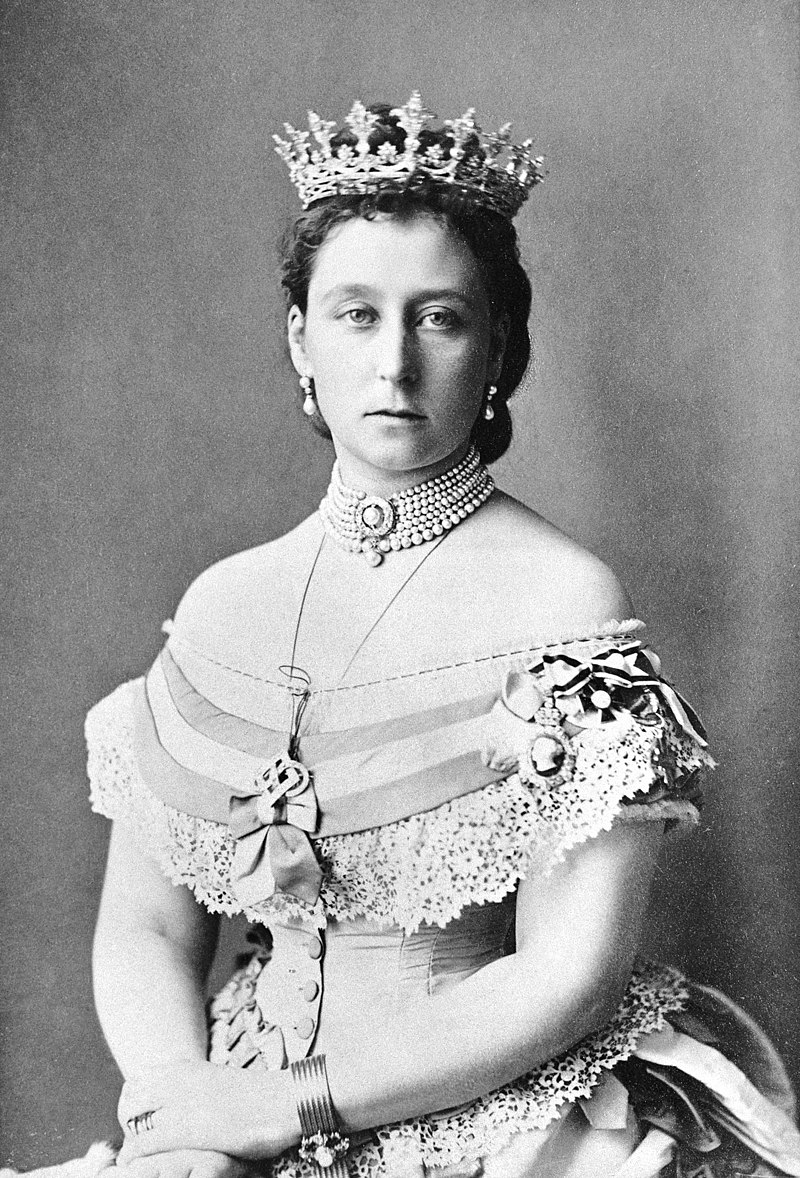
Princess Alice of the United Kingdom
Grand Duchess of Hesse and by Rhine from 1877 to 1878
Dahomey Amazons
Fon all-female military regiment of the historical Kingdom of Dahomey
Manuela Sáenz
Ecuadorian revolutionary heroine (1797-1856)
Anita Garibaldi
Italian-Brazilian revolutionary, wife of Garibaldi (1821-1849)
Policarpa Salavarrieta
heroine of the Colombian Independence Movement (1795–1817)
Princess Louise Margaret, Duchess of Connaught and Strathearn
Prussian and British Royal
Cut Nyak Dhien
Indonesian guerrilla leader against the Dutch (1850–1908)
Lalla Fatma N'Soumer
Algerian anticolonial leader (1830–1863)
Kittur Chennamma
Indian freedom fighter, warrior queen
Taytu Betul
Ethiopian Empress Consort (1851-1918)
Maria Quitéria
Brazilian lieutenant and national heroine (1792–1853)
Eliza Lynch
First Lady of Paraguay
Begum Samru
ruler of Sardhana, Meerut (c. 1753–1836)
Nakano Takeko
Japanese warrior
Malalai of Maiwand
national folk hero of Afghanistan who rallied local Pashtun fighters against the British troops (1861–1880)
Sarah Forbes Bonetta
West African princess
Martha Christina Tiahahu
Moluccan freedom fighter and National Heroine of Indonesia
Mariana de Pineda Muñoz
Spanish heroine (1804–1831)
Nene Hatun
Turkish military officer (1857–1955)
Cut Nyak Meutia
National Hero of Indonesia (1870–1910)

Niijima Yae
Japanese former soldier and nurse
Sarraounia
Sarraounia Mangou was a chief/priestess of the animist Azna subgroup of the Hausa, who fought French colonial troops of the Voulet–Chanoine Mission at the Battle of Lougou (in present-day Niger) in 1899.
Lozen
Lozen (c. 1840 – June 17, 1889) was a warrior and prophet of the Chihenne Chiricahua Apache. She was the sister of Victorio, a prominent chief. Born into the Chihenne band during the 1840s, Lozen was, according to legends, able to use her powers in battle to learn the movements of the enemy. According to James Kaywaykla, Victorio introduced her to Nana, "Lozen is my right hand ... strong as a man, braver than most, and cunning in strategy. Lozen is a shield to her people".
Čučuk Stana
Serbian historical figure
Dance of Zalongo
1803 mass suicide in the Greek War of Independence
Nyai Ageng Serang
National Heroine of Indonesia
Irene Morales Infante
Chilean soldier

vivandière
thumb|right|A French cantinière in the Crimea during the Crimean War in 1855, photographed by [[Roger Fenton]]
Jovita Feitosa
Military heroine (1848-1867)
Nehanda Charwe Nyakasikana
Zimbabwean rebel (1840–1898)

Bui Thi Xuan
18th century Vietnamese female general during the Tây Sơn Rebellion
Antonia Moreno Leyva
former first lady of Peru (1848–1916)
Candelaria Pérez
Chilean soldier
Marietta de Veintemila
Ecuadorian writer, feminist and politician (1855-1907)

Thao Suranari
Thai hero
Friederike Krüger
Prussian Army soldier

Jeanne Merkus
Dutch guerilla fighter and activist (1839–1897)

Pancha Carrasco
Costa Rican soldier (1816–1890)
Woman Chief
Crow Indian Chief (1806-1854)
Toby Riddle
Modoc interpreter (c. 1848–1920)
Antonia Santos
Colombian soldier

Teriitaria II
Queen of Tahiti
Marie Simon
German-Sorbian nurse (1824–1877)
Pétroleuses
thumb|325px|Pétroleuses arrested in Versailles
Pétroleuses were, according to popular rumours at the time, female supporters of the Paris Commune, accused of burning down much of Paris during the last days of the Commune in May 1871. During May, when Paris was being recaptured by loyalist Versaillais troops, rumours circulated that lower-class women were committing arson against private property and public buildings, using bottles full of petroleum or paraffin (similar to modern-day Molotov cocktails) which they threw into cellar windows, in a deliberate act of spite against the government. Ma
Sirma Vojvoda
Bulgarian rebel soldier
Carlota
Cuban slave, rebel leader

Mariquita Sánchez
Argentine Salon-holder (1786-1868)
Seh-Dong-Hong-Beh
Seh-Dong-Hong-Beh (meaning, "God Speaks true") was a leader of the Dahomey Amazons. In 1851, she led an all-female army consisting of 6,000 warriors against the Egba fortress of Abeokuta, to obtain slaves from the Egba people for the Dahomey slave trade.
Victorine Gorget
French laundress and activist

Ghaliyya al-Wahhabiyya
Saudi woman who led military resistance against Ottoman invasion
Mary Faber
African slave trader
Eliza Allen
American memoirist
Ann Hasseltine Judson
American missionary
Mmanthatisi
Mmanthatisi (also spelled Manthatisi or MmaNthatisi and erroneously spelled as 'Mantatee’, 'Ma Nthisi, Mantatise; c. 1784 – 1847) was the leader of the Tlokwa people during her son's minority from 1813 until 1824. She came to power as the regent for her son, Sekonyela, (Lentsha) following the death of her husband Kgosi Mokotjo (the previous kgosi). Mmanthatisi was known as a strong, brave and capable leader, both in times of peace and war. She was referred to by her followers as Mosesanyane (the tiny one) because of her slender body.

Katherine Ellice
diarist and artist
Ehyophsta
Ehyophsta (, 1826 – 1915) was a Cheyenne woman warrior. She was the daughter of a chief, Stands-in-the-Timber, who died in 1849, and the niece of Bad Faced Bull. She fought in the Battle of Beecher Island in 1868, and also fought the Shoshone that same year, where she counted coup against one enemy and killed another. She fought the Shoshone again in 1869, and during battle she stabbed and killed an enemy, saving a member of her own people.
Bùi Thị Nhạn
Vietnamese female general of the Tây Sơn dynasty
Filomena Valenzuela Goyenechea
Chilean vivandière