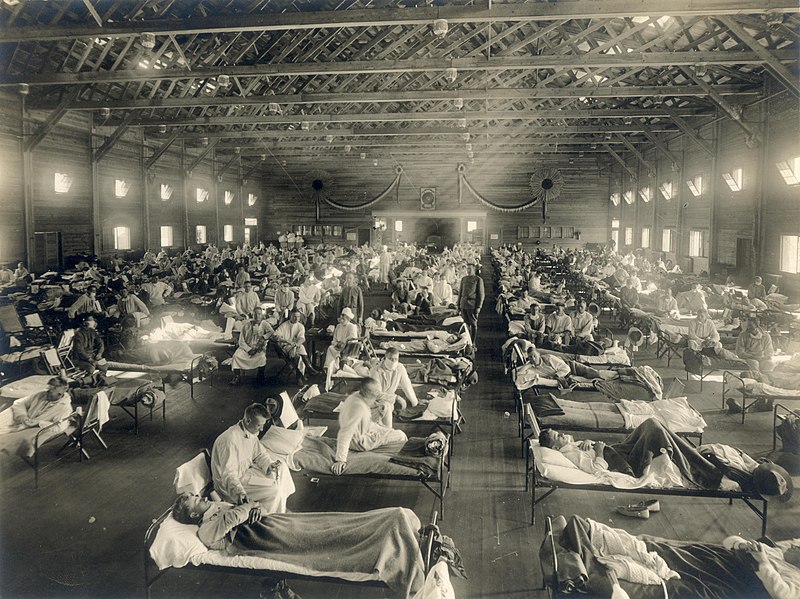
1918–1920 flu pandemic
Also known as The 1918 flu, 1918 flu pandemic spread, influenza pandemic of 1918–19, influenza pandemic of 1918–1919, Flu Epidemic of 1918, 1918 influenza pandemic, 1918 Spanish flu pandemic, Spanish flu pandemic
1918–1920 global influenza pandemic caused by the H1N1 influenza A virus
AI overview
The 1918–1920 flu pandemic was a global outbreak of influenza caused by the H1N1 virus that spread around the world and killed millions of people. It remains one of the deadliest disease outbreaks in human history and continues to inform how scientists and public health officials prepare for and respond to future pandemics.
AI-generated from the Wikipedia summary — may contain errors.
Research
53 papers- Basic Virology.ReviewAdvances in experimental medicine and biology · 2026Veenstra TDDOI: 10.1007/978-3-032-22340-1_2
- Are Lockdowns Effective in Managing Pandemics?ReviewInternational journal of environmental research and public health · 2022Yanovskiy M, Socol YDOI: 10.3390/ijerph19159295
- [Public health measures during the flu pandemic in the period 1918-1920 in Spain.].ReviewRevista espanola de salud publica · 2020Almudéver Campo L, Camaño Puig RE
- A dissection of SARS‑CoV2 with clinical implications (Review).ReviewInternational journal of molecular medicine · 2020Stancioiu F, Papadakis GZ, Kteniadakis S et al.
Article
The 1918–1920 flu pandemic, also known as the Great Influenza epidemic or by the misleading name Spanish flu, was an exceptionally deadly global influenza pandemic caused by the H1N1 subtype of the influenza A virus. The earliest probable cases were documented in March 1918 in Haskell County, Kansas, United States, with further cases recorded in France, Germany and the United Kingdom in April. Two years later, nearly a third of the global population, or an estimated 500 million people, had been infected. Estimates of deaths range from 17 million to 50 million, and possibly as high as 100 million, making it one of the deadliest pandemics in history.
The pandemic broke out near the end of World War I, when wartime censors in the belligerent countries suppressed bad news to maintain morale, but newspapers freely reported the outbreak in neutral Spain, creating a misleading impression of Spain as the epicenter and leading to the disease being known as Spanish flu. Limited historical epidemiological data make the pandemic's geographic origin indeterminate, with competing hypotheses on the initial spread.