Category
page 11945 in military history

Atomic bombings of Hiroshima and Nagasaki
On 6 and 9 August 1945, the United States detonated two atomic bombs over the Japanese cities of Hiroshima and Nagasaki, respectively, during the final days of World War II. The aerial bombings killed 150,000 to 246,000 people, most of whom were civilians, and remain the first and only uses of nuclear weapons in an armed conflict.
In the final year of World War II, the Allies prepared for a costly invasion of the Japanese mainland. This undertaking was preceded by a conventional bombing and firebombing campaign that devastated 64 Japanese cities, including an operation on Tokyo. The war in Europe concluded when Germany surrendered on 8 May 1945, and the Allies turned their full attention to the Pacific War. By July 1945, the Allies' Manhattan Project had produced two types of atomic bombs: "Little Boy", an enriched uranium gun-type fission weapon, and "Fat Man", a plutonium implosion-type nuclear weapon. The 509th Composite Group of the U.S. Army Air Forces was trained and equipped with the specialized Silverplate version of the Boeing B-29 Superfortress, and deployed to Tinian in the Mariana Islands. The Allies called for the unconditional surrender of the Imperial Japanese Armed Forces in the Potsdam Declaration on 26 July 1945, the alternative being "prompt and utter destruction". The Japanese government ignored the ultimatum. Japan announced its surrender to the Allies on 15 August, six days after the bombing of Nagasaki and the Soviet Union's declaration of war against Japan and invasion of Manchuria. The Japanese government signed an instrument of surrender on 2 September, ending the war.

Kamikaze
thumb|254x254px|A kamikaze attack aircraft crashes into a US naval warship, May 1945.
, officially , were a part of the Japanese Special Attack Units of military aviators who flew suicide attacks for the Empire of Japan against Allied naval vessels in the closing stages of the Pacific campaign of World War II, intending to destroy warships more effectively than with conventional air attacks. About 3,800 kamikaze pilots died during the war in attacks that killed more than 7,000 Allied naval personnel, sank several dozen warships, and damaged scores more. The term is used generically in modern w

Battle of Berlin
1945 last major offensive of the European theatre of World War Il
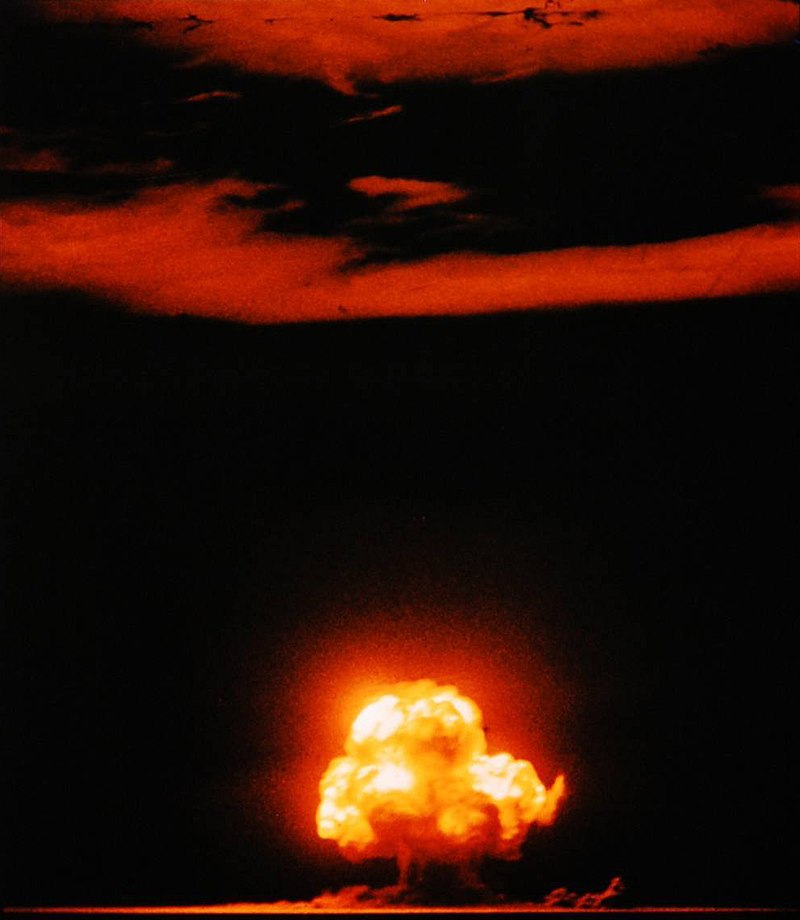
Trinity
1945 first detonation of a nuclear weapon
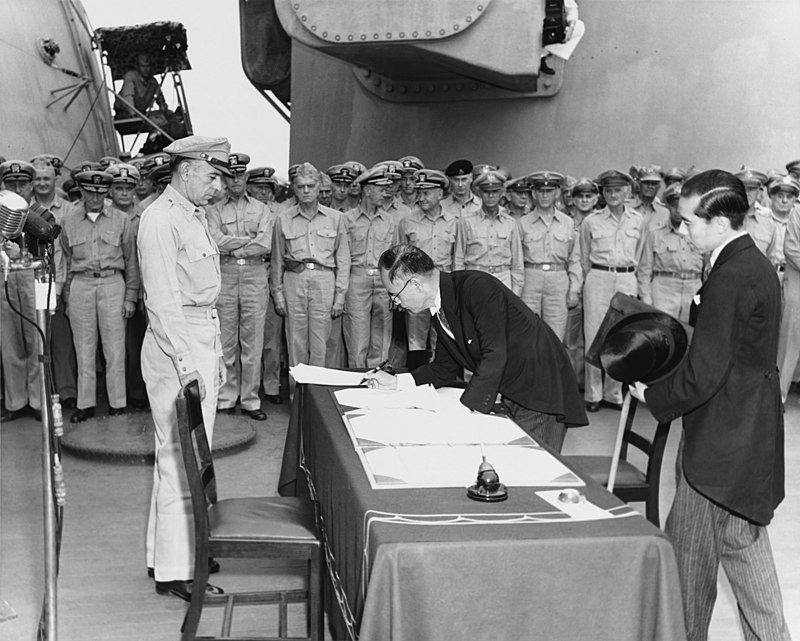
surrender of Japan
end of World War II, 2 September 1945
Hirohito surrender broadcast
radio broadcast in which Emperor Hirohito announced the Japanese surrender in World War II
Moscow Victory Parade of 1945
Military Triumph Parade in 1945
end of World War II in Europe
final battles as well as the German surrender to the Allies
death of Benito Mussolini
circumstances of Mussolini's death
Nazi gold train
legend of Nazi train containing gold buried underground in Poland
Berlin Declaration
1945 historical document
Operation Pluto
undersea oil pipeline operation in World War II (1939-1945)
Operation Grenade
1945 World War II military operation
Liberation of Auschwitz concentration camp
World War II action
Berlin Victory Parade of 1945
Military Triumph Parade in 1945
Operation Tiderace
British reclamation of Singapore from Japanese occupation
debate over the atomic bombings of Hiroshima and Nagasaki
controversies surrounding nuclear attacks
British Military Administration
postwar administration of Malaya before its independence
timeline of World War II from 1945
list of significant events occurring during World War II from 1945 onwards
Operation Blacklist Forty
US occupation of Korea from 1945-1948
end of World War II in Asia
aspect of Asian history
British Military Administration of Borneo
Interim administrator of British Borneo, 1945–1946
Operation Undertone
1945 U.S. military operation in World War II
Rhineland Offensive
series of allied offensive operations by 21st Army Group commanded by Bernard Montgomery from 8 February 1945 to 25 March 1945