Category
page 13rd-century BC establishments in the Roman Republic

gladiator
thumb|350px|Part of the Zliten mosaic from [[Libya (Leptis Magna), about 2nd century AD. It shows (left to right) a thraex fighting a murmillo, a hoplomachus standing with another murmillo (who is signaling his defeat to the referee), and one of a matched pair.]]
%20081%20(cropped).jpg)
Foligno
Foligno (; Southern Umbrian: Fuligno) is an ancient town of Italy in the province of Perugia in east central Umbria, on the Topino river where it leaves the Apennines and enters the wide plain of the Clitunno river system. It is located south-east of Perugia, north-north-west of Trevi and south of Spello.
%2002.jpg)
Hispania
Hispania was the Roman name for the Iberian Peninsula. Under the Roman Republic, it was divided into two provinces: Hispania Citerior and Hispania Ulterior. During the Roman Empire, under the Principate, Hispania Ulterior was subdivided into Baetica and Lusitania, while Hispania Citerior was reorganized as Hispania Tarraconensis.
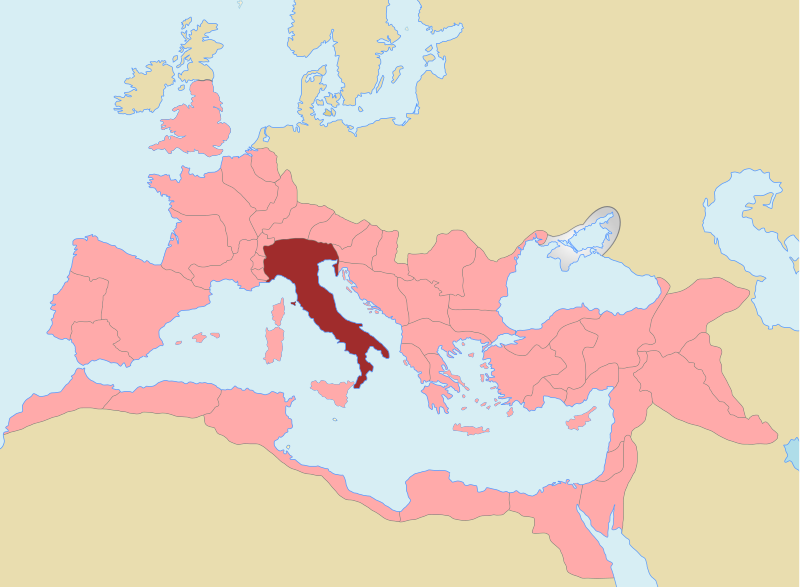
Roman Italy
Italy under ancient Roman rule
-Segunda%20Edad%20del%20Hierro.jpg)
arma de ponce
Gladius () is a Latin word properly referring to the type of sword that was used by ancient Roman foot soldiers starting from the 3rd century BC and until the 3rd century AD. Linguistically, within Latin, the word also came to mean "sword", regardless of the type used.
Corsica and Sardinia
Roman province
Sicilia
Roman province
Via Aurelia
Roman road in Italy
via del Corso
thoroughfare in Rome, Italy
Tomb of the Scipios
common tomb of the Cornelii Scipiones family during the Roman Republic
Temple of Bellona
archaeological site in Rome, Italy
palla
draped, rectangular mantle worn by women of Ancient Rome, fastened with fibulae or brooches
Sanctuary of Fortuna Primigenia
Roman sanctuary in Palestrina
Temple of Flora in Rome
ancient temple of Flora located on the Quirinal Hill in Rome