Category
page 14th-century BC Greek politicians

Demosthenes
Demosthenes (; ; ; 384 – 12 October 322 BC) was a Greek statesman and orator in ancient Athens. His orations constitute a significant expression of contemporary Athenian intellectual prowess and provide insight into the politics and culture of ancient Greece during the 4th century BC. Demosthenes learned rhetoric by studying the speeches of previous great orators. He delivered his first judicial speeches at the age of 20, in which he successfully argued that he should gain from his guardians what was left of his inheritance. For a time, Demosthenes made his living as a professional s
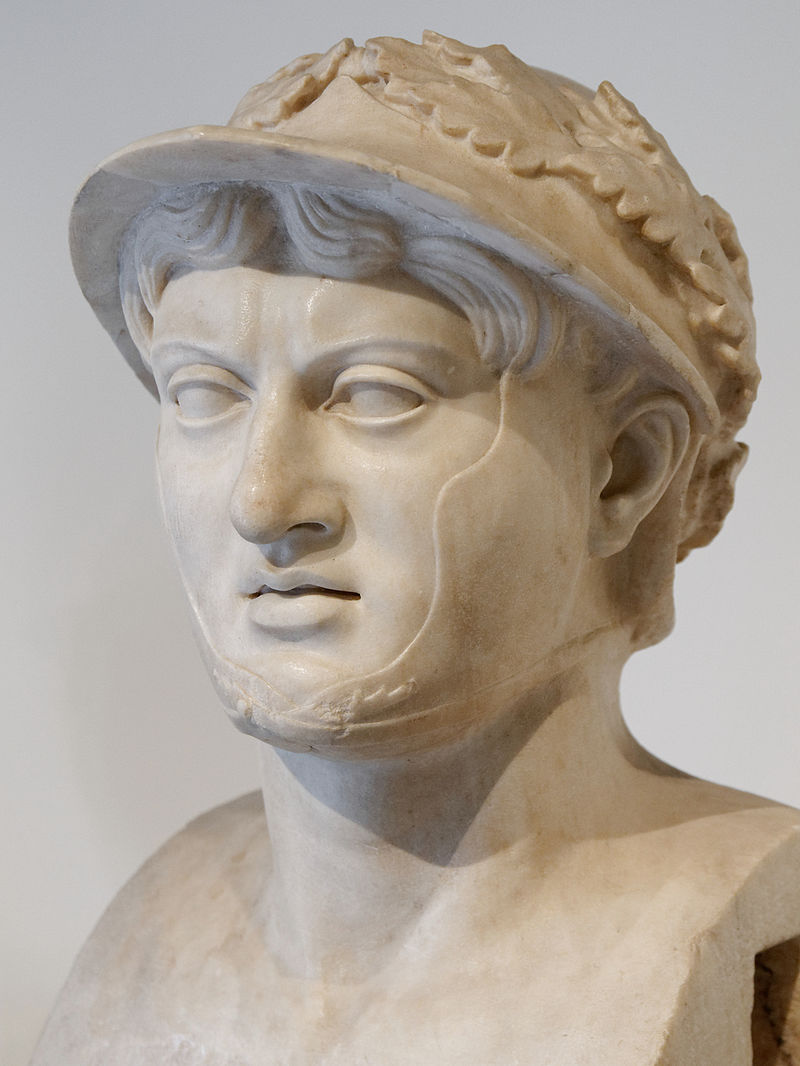
Pyrrhus
king of Epirus from 307 to 302 and 297 to 272 BC

Epaminondas
thumb|Stater of the Boeotian League minted 364–362 BC by Epaminondas, whose name EΠ-AMI is inscribed on the reverse
Epaminondas (; ; 419/411–362 BC) was a Greek general and statesman of the 4th century BC who transformed the Ancient Greek city-state of Thebes, leading it out of Spartan subjugation into a pre-eminent position in Greek politics called the Theban Hegemony. In the process, he broke Spartan military power with his victory at Leuctra and liberated the Messenian helots, a group of Peloponnesian Greeks who had been enslaved under Spartan rule for some 230 years following their defeat
%20-%20BEIC%206353776.jpg)
Aeschines
Aeschines (; Greek: ; 389314 BC) was a Greek statesman and one of the ten Attic orators.
Callistratus of Aphidnae
Athenian orator and general
Eubulus
4th-century BC Athenian politician and orator
Lachares
Lachares () was a demagogue and tyrant of Athens at the turn from the 4th to the 3rd century BC.
Hegesippus
Athenian politician
Philocrates
Philocrates (Greek: Φιλοκράτης; floruit: 340s BC) was an ancient Greek politician from the Athenian deme Hagnous who first negotiated the Peace of Philocrates with Philip II of Macedonia after Philip devastated the city of Olynthos in 348 BC. The unpopularity of the treaty resulted in Philocrates being prosecuted in 343 BC by Hyperides for corruption (i.e. accepting bribes and favors from Philip II). Philocrates ultimately fled into exile and was condemned to death during his absence.

Python of Byzantium
ancient Greek statesman and former student of Isocrates
Polydamas of Pharsalus
4th century BC Thessalian statesman