Category
page 1Cacti of North America
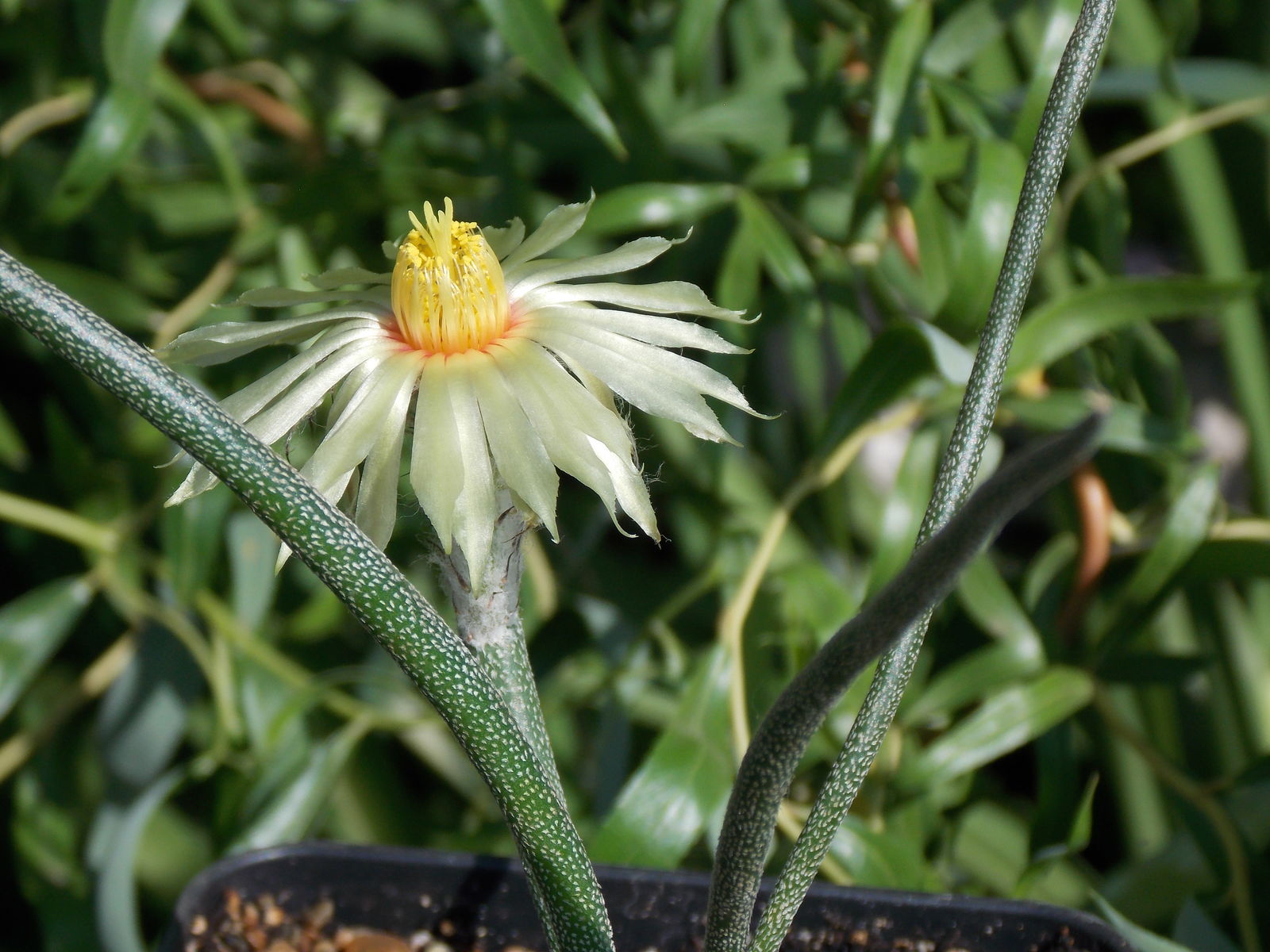
Astrophytum
Astrophytum is a genus of six species of cacti, native to North America.
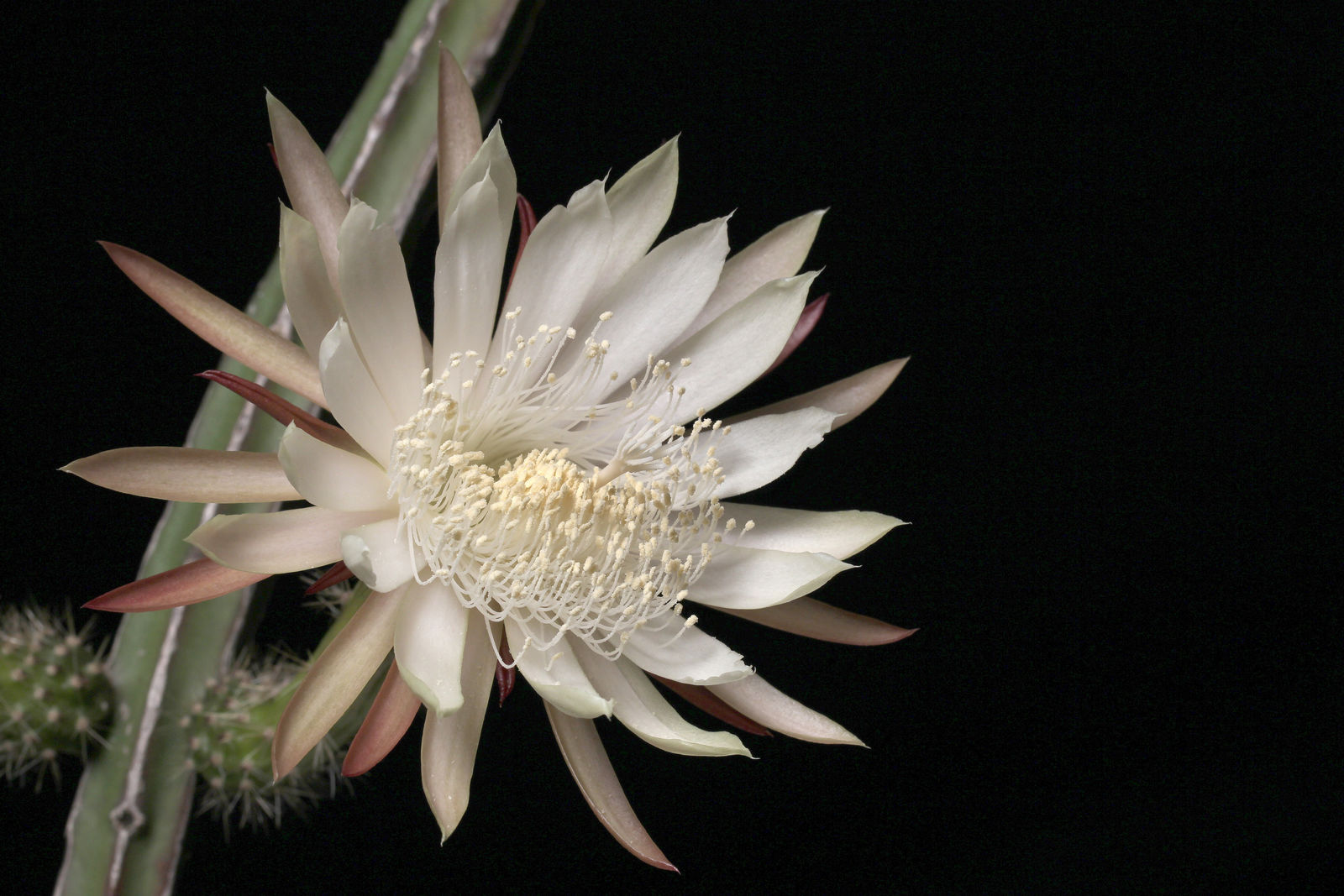
Selenicereus
Selenicereus, from Ancient Greek σελήνη (selḗnē), meaning "moon", and Latin cēreus, meaning "candle", sometimes known as moonlight cactus, is a genus of epiphytic, lithophytic, and terrestrial cacti, found in Mexico, Central America, the Caribbean and northern South America. The term night-blooming cereus is also sometimes used, but this is also used for many night-blooming cacti, including Epiphyllum and Peniocereus. In 2017, the genus Hylocereus was brought into synonymy with Selenicereus. A number of species of Selenicereus produce fruit that is eaten. The fruit, known as pitaya or pitahaya
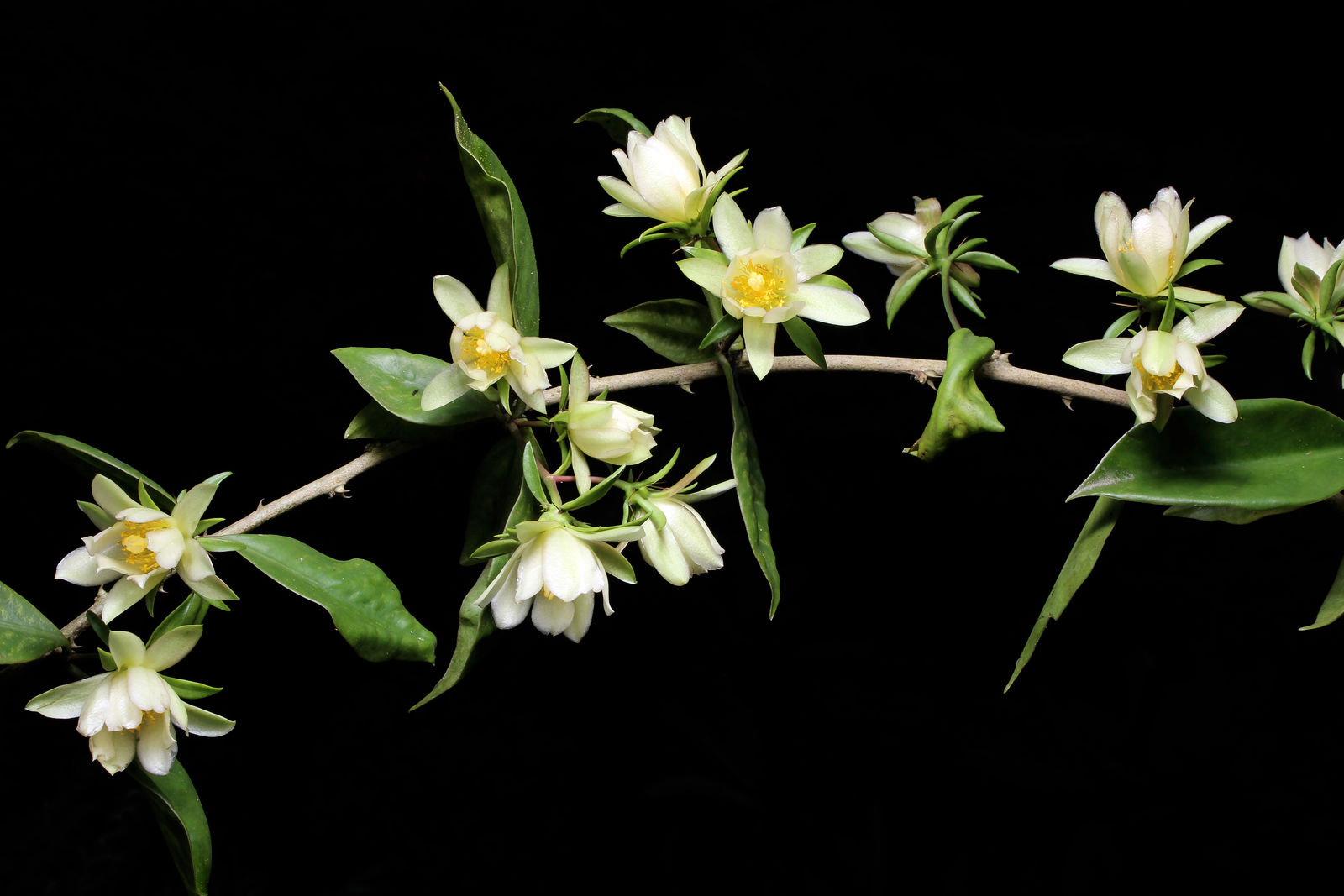
Pereskia
Pereskia is a small genus of about four species of cacti that do not look much like other types of cacti, having substantial leaves and non-succulent stems. The genus is named after Nicolas-Claude Fabri de Peiresc, a 16th-century French botanist. The genus was more widely circumscribed until molecular phylogenetic studies showed that it was paraphyletic. The majority of species have since been transferred to Leuenbergeria and Rhodocactus. Although Pereskia does not resemble other cacti in its overall morphology, close examination shows spines developing from areoles, and the distinctive floral

Rhipsalis
Rhipsalis ( ) is a genus of epiphytic flowering plants in the cactus family, typically known as mistletoe cacti. They are found in parts of Central America, the Caribbean and northern regions of South America. One species, Rhipsalis baccifera also inhabits locations in Africa and Asia, and is the only cactus species naturally occurring in the Old World. This is the largest and most widely distributed genus of epiphytic cacti (those which live on other plants without damaging them).
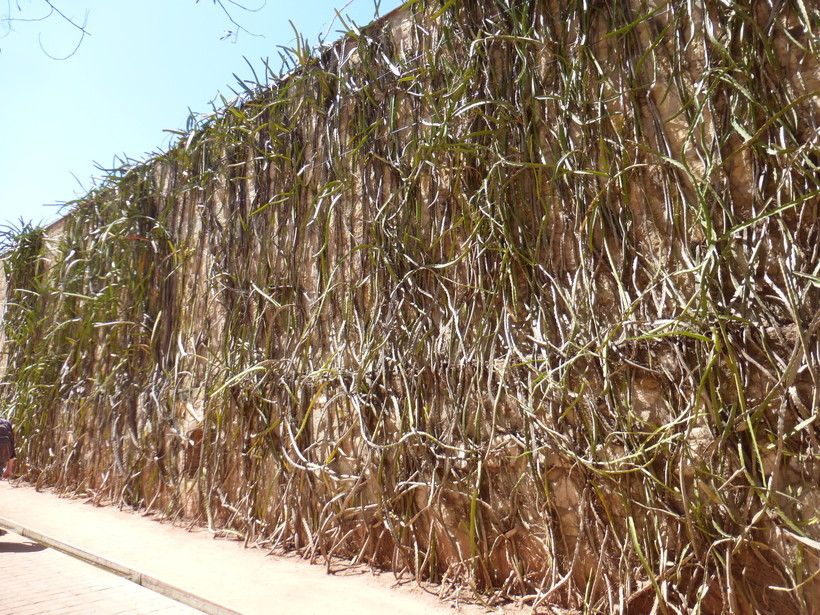
Hylocereus
thumb|Selenicereus monacanthus, formerly Hylocereus monacanthus
Hylocereus is a former genus of epiphytic cacti, often referred to as night-blooming cactus (though the term is also used for many other cacti). Several species previously placed in the genus have large edible fruits, which are known as pitayas, pitahayas or dragonfruits. In 2017, a molecular phylogenetic study confirmed an earlier finding that the genus Hylocereus was nested within Selenicereus, so all the species of Hylocereus were transferred to Selenicereus.

Echinocereus
Echinocereus is a genus of ribbed, usually small to medium-sized, cylindrical shaped cacti, comprising about 70 species native to the southern United States and Mexico in very sunny, rocky places. Usually the flowers are large and the fruit edible.
%20-%E6%B1%9F%E9%83%BD%E8%8A%B1%E5%8D%89%E7%AF%80%20Jiangdu%2C%20China-%20(9204820253).jpg)
Disocactus
Disocactus is a genus of epiphytic cacti in the tribe Hylocereeae found in Central America, the Caribbean and northern South America. It should not be confused with Discocactus, which is a different genus.
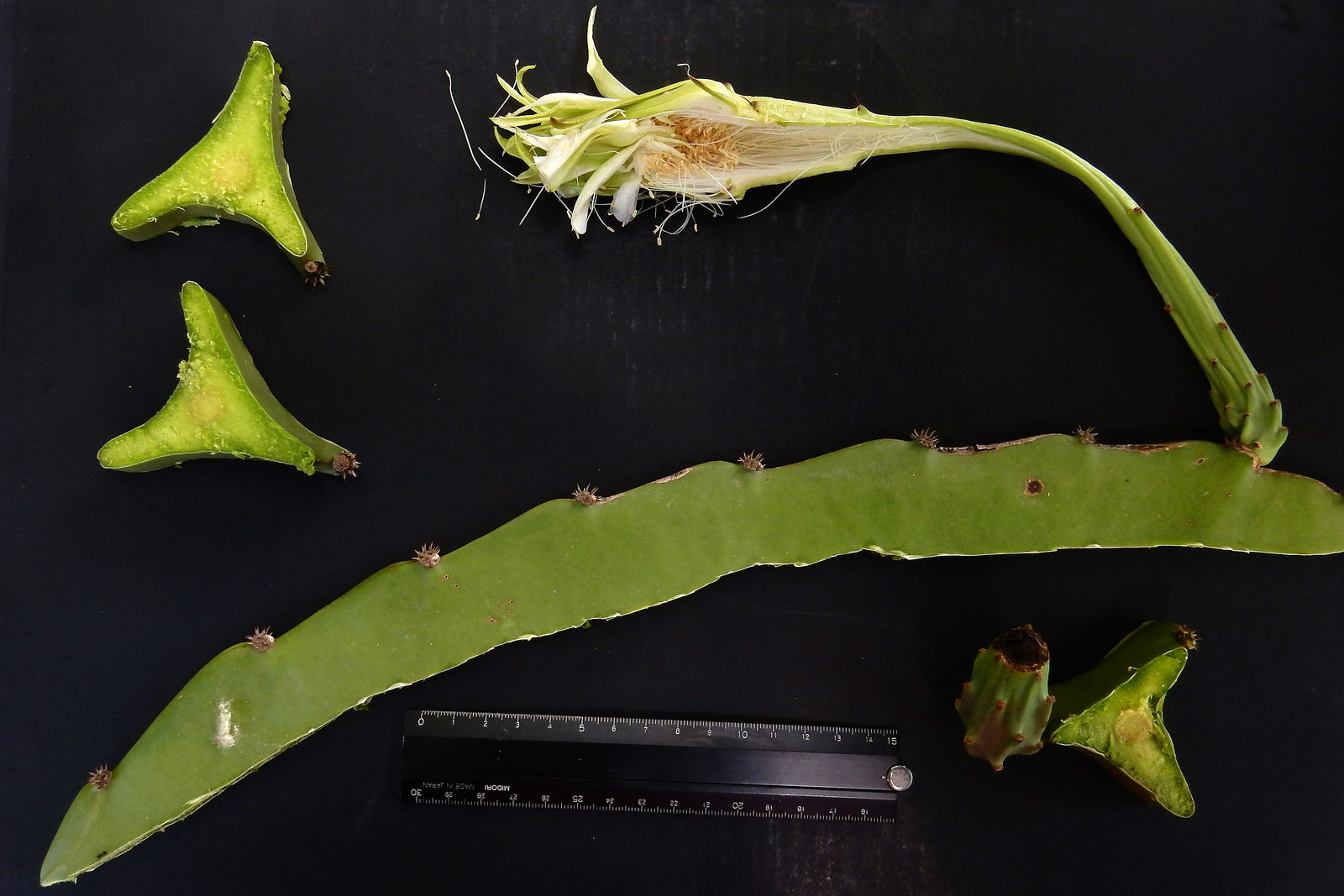
Acanthocereus
Acanthocereus is a genus of cacti. Its species take the form of shrubs with arching or climbing stems up to several meters in height. The generic name is derived from the Greek word άκανθα (acantha), meaning spine, and the Latin word cereus, meaning candle. The genus is native to the mostly tropical Americas from Texas and the southern tip of Florida to the northern part of South America (Colombia and Venezuela), including islands of the Caribbean.
.jpg)
Stenocereus
Stenocereus, from Ancient Greek στενός (stenós), meaning "narrow", and Latin cēreus, meaning "candle", is a genus of columnar or tree-like cacti from the Baja California Peninsula and other parts of Mexico, Arizona in the United States, Colombia, Costa Rica, Guatemala, Venezuela and the West Indies. The genus has been enlarged by the addition of species from several other genera. A close relative is the peculiar chinoa or chende cactus, Polaskia chende.
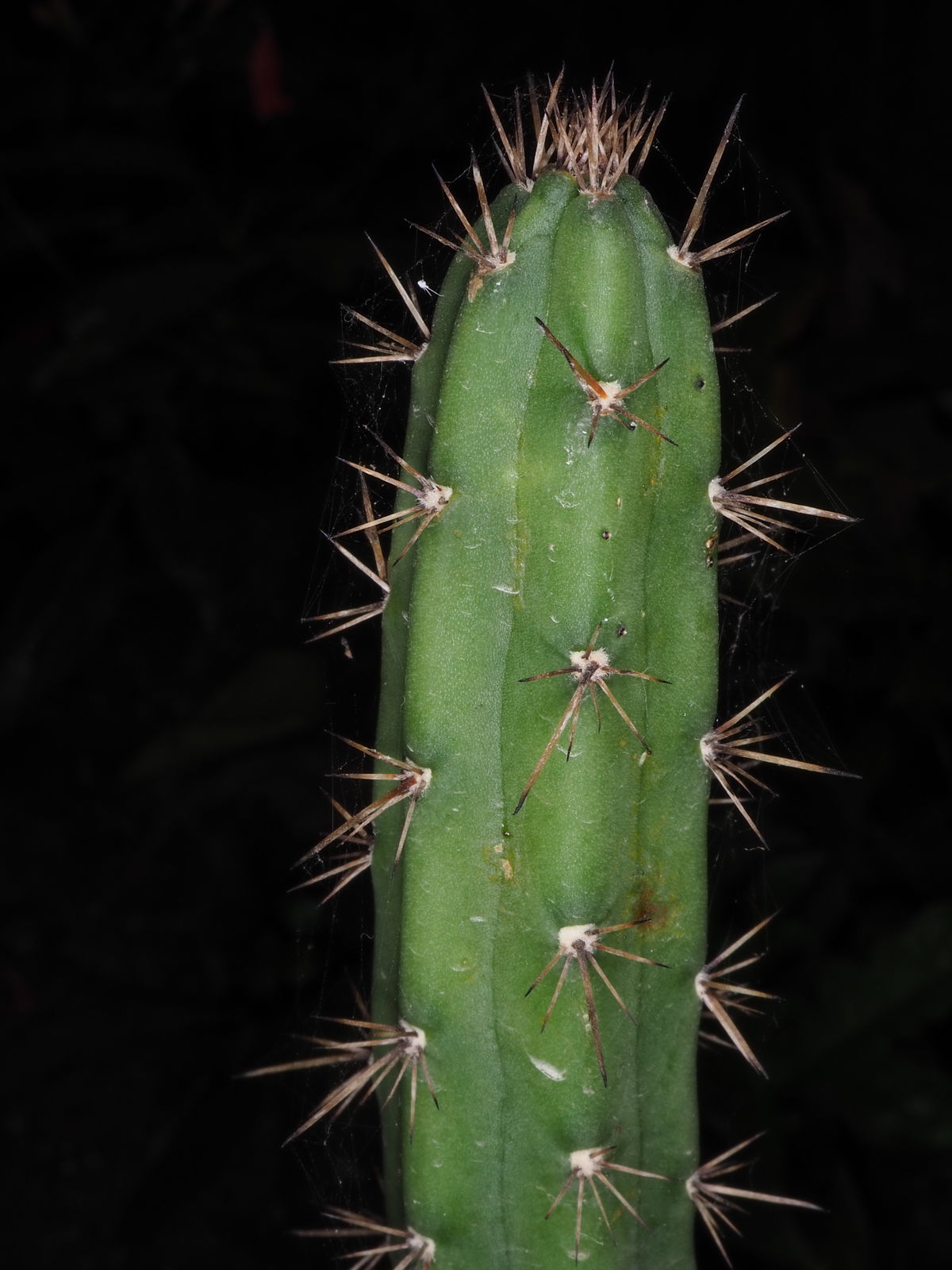
Harrisia
genus of plants

Pilosocereus
Pilosocereus (from Latin, "hairy cereus") is a genus of cactus native to the Neotropics. Tree cactus is a common name for Pilosocereus species. The genus Pseudopilocereus is a synonym of this genus. For many years, the illegitimate name Pilocereus was used for this genus, although properly a synonym for Cephalocereus. The subdivision of the genus has varied very widely, resulting in very different numbers of species being accepted.

Leptocereus
Leptocereus is a genus of cacti that are native to the Greater Antilles. It has been placed in the tribe Leptocereeae or in a broadly defined Echinocereeae.
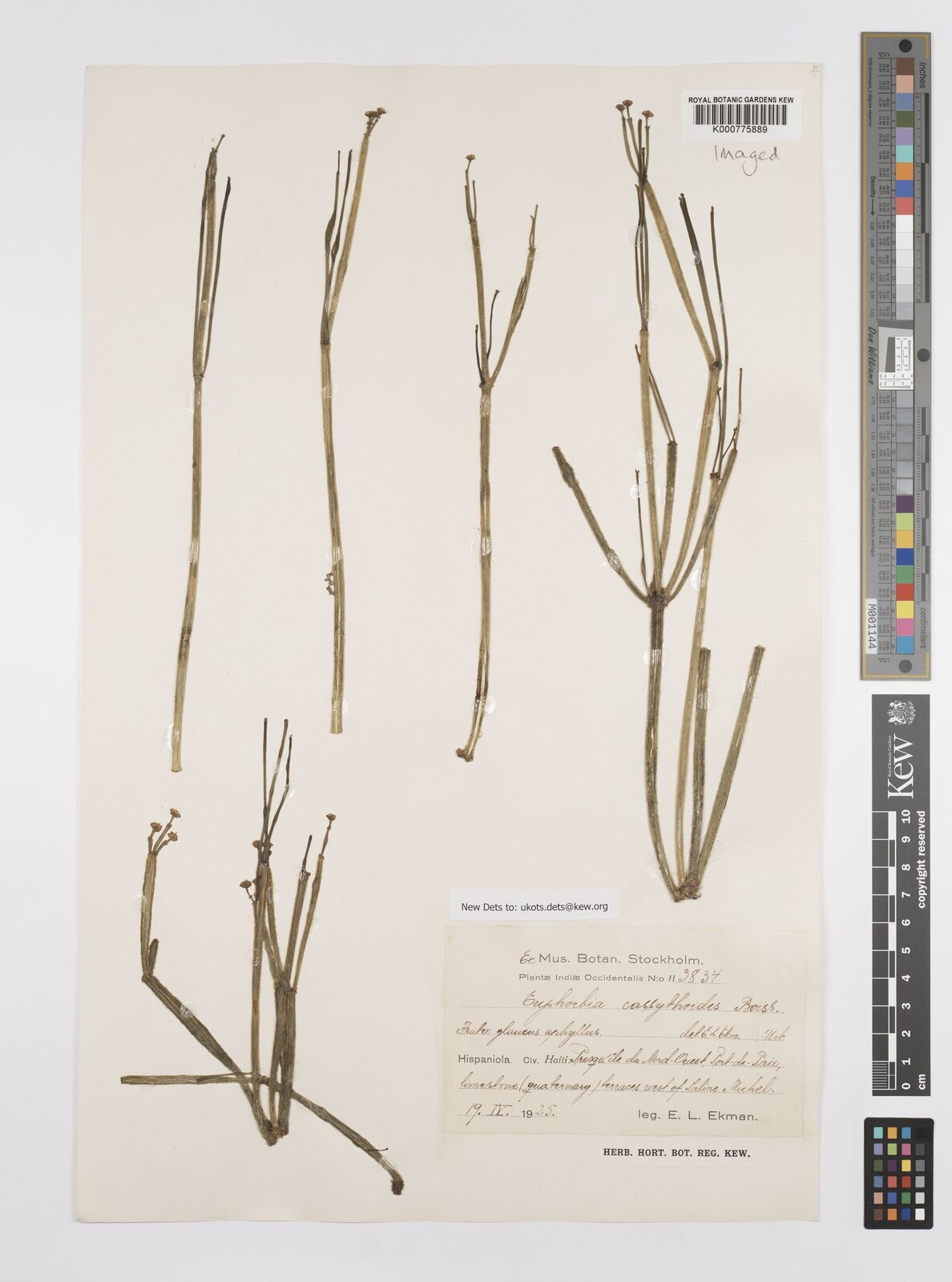
Rhipsalis baccifera
species of plant
Pereskia aculeata
species of plant
Acanthocereus tetragonus
species of plant
Escobaria sneedii
species of plant
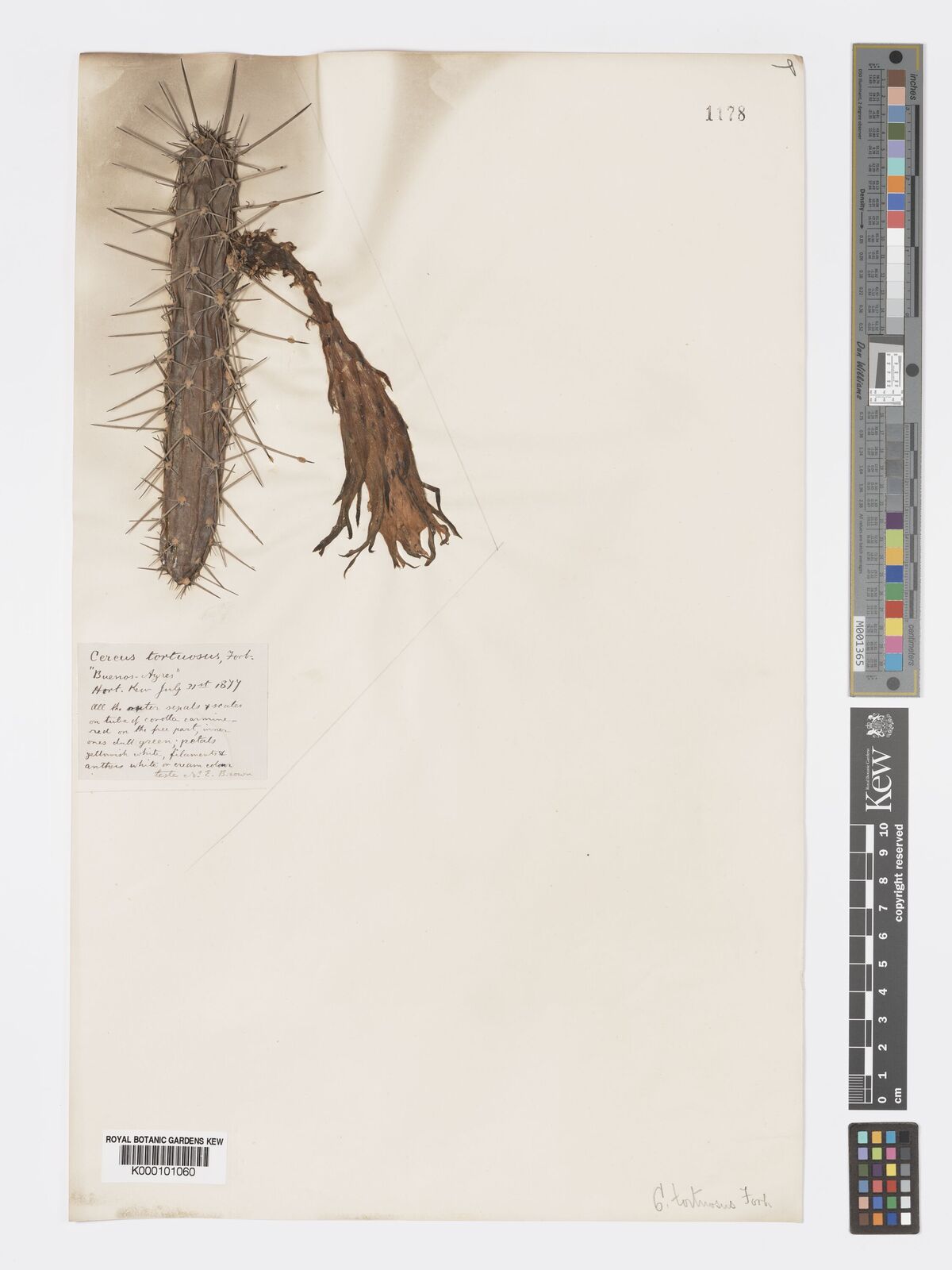
Harrisia tortuosa
species of plant

Opuntia triacantha
species of plant
Harrisia pomanensis
species of plant
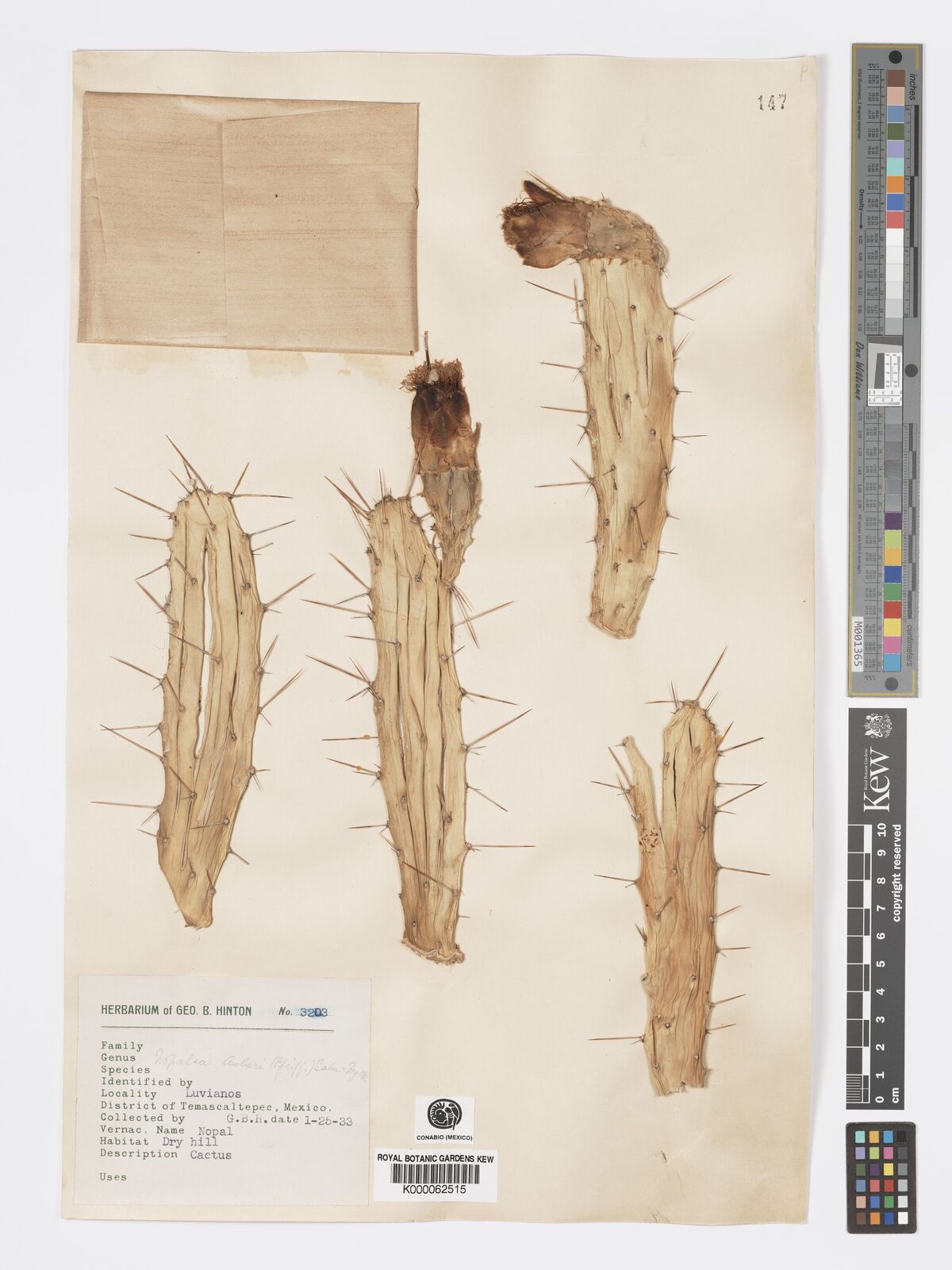
Opuntia auberi
species of plant

Harrisia gracilis
species of plant
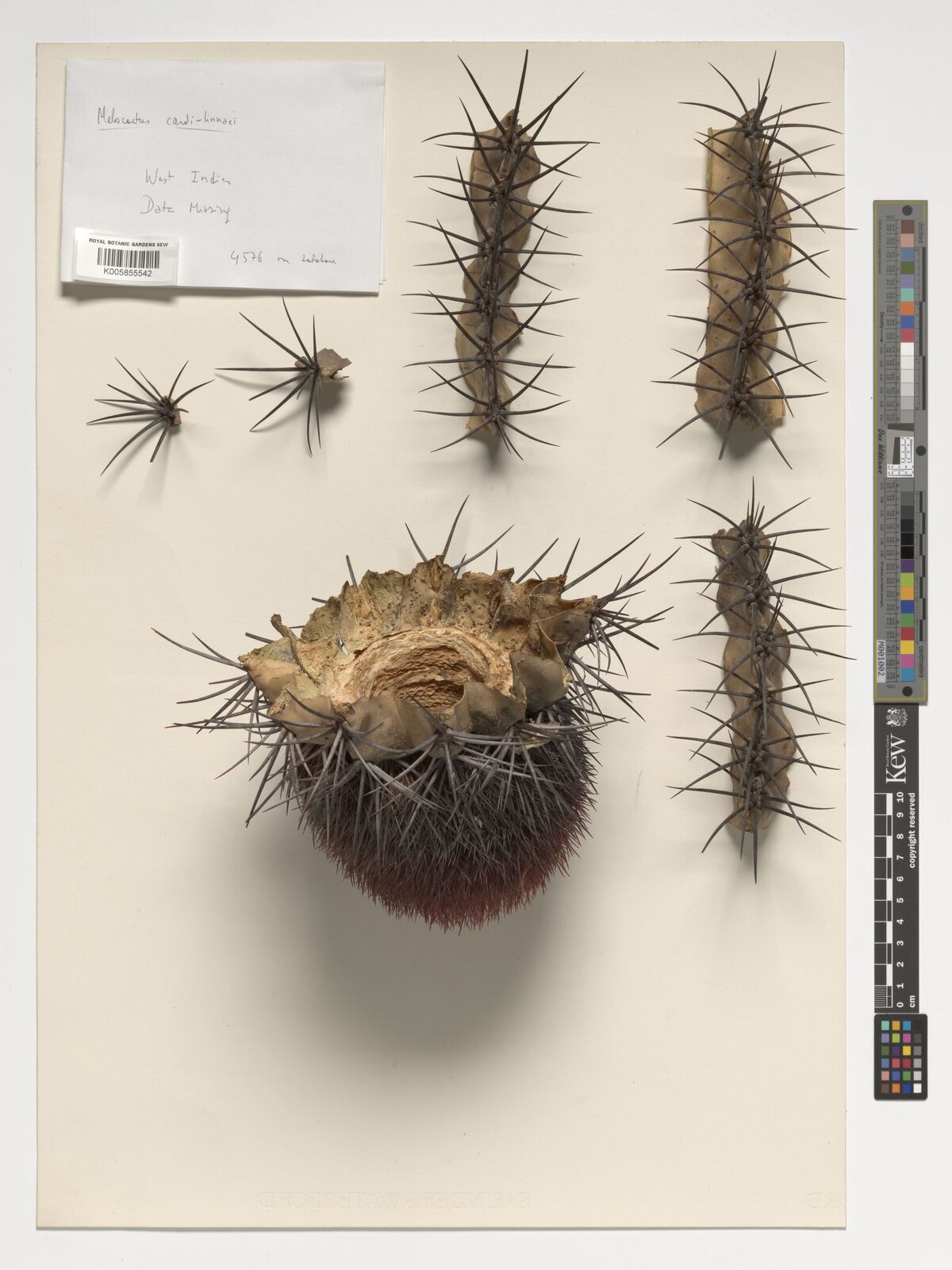
Melocactus caroli-linnaei
species of plant
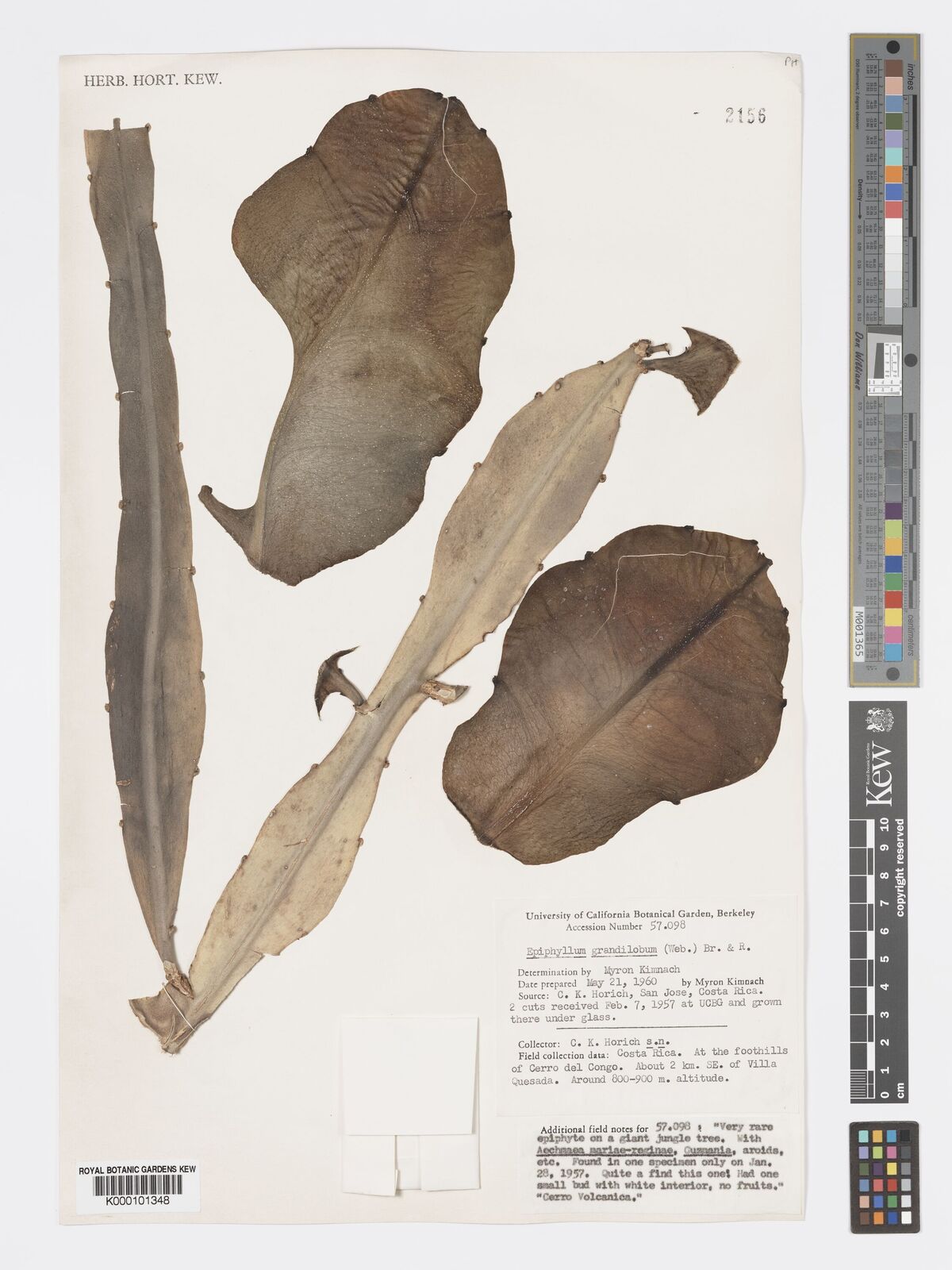
Epiphyllum grandilobum
species of plant

Leptocereus nudiflorus
species of cactus
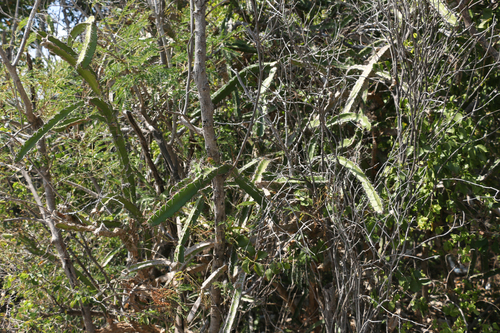
Leptocereus quadricostatus
species of plant