Category
page 1Concepts in the philosophy of science

time
Time is the continuous progression of existence that occurs in an apparently irreversible succession from the past, through the present, and into the future. Time dictates all forms of action, age, and causality, being a component quantity of various measurements used to sequence events, to compare the duration of events (or the intervals between them), and to quantify rates of change of quantities in material reality or in the conscious experience. Time is often referred to as a fourth dimension, along with three spatial dimensions.

reality
Reality is the state of everything that exists, not how they might be imagined. Different cultures and academic disciplines conceptualize it in various ways.

consciousness
thumb|17th-century representation of consciousness by Robert Fludd, an English Paracelsian physician

reason
Reason is the capacity to consciously apply logic by drawing valid conclusions from new or existing information, with the aim of seeking truth. It is associated with activities considered characteristic of humans, including philosophy, religion, science, language, and mathematics, and is generally considered a distinguishing ability possessed by humans. The term "reason" is sometimes used to refer to rationality, although the latter is more about its application.

meditation
Meditation is a practice in which an individual uses a technique to train attention and awareness and detach from reflexive, "discursive thinking", achieving a mentally clear and emotionally calm and stable state, while not judging the meditation process itself.

fact
A fact is a true datum about one or more aspects of a circumstance, or an occurrence in the real world. Standard reference works are often used to check facts. Scientific facts are verified by careful, repeatable observation or measurement by experiments or other means. Generally speaking, facts are independent of belief, knowledge and opinion.
Facts are different from inferences, theories, values, and objects.

Occam's razor
philosophical principle used to judge credibility of statements

meme
A meme (; ) is an idea, behavior, or style that spreads by means of imitation from person to person within a culture and often carries symbolic meaning representing a particular phenomenon or theme. A meme acts as a unit for carrying cultural ideas, symbols, or practices, that can be transmitted from one mind to another through writing, speech, gestures, rituals, or other imitable phenomena with a mimicked theme. Supporters of the concept regard memes as cultural analogues to genes in that they self-replicate, mutate, and respond to selective pressures. In popular language, a meme may refer to
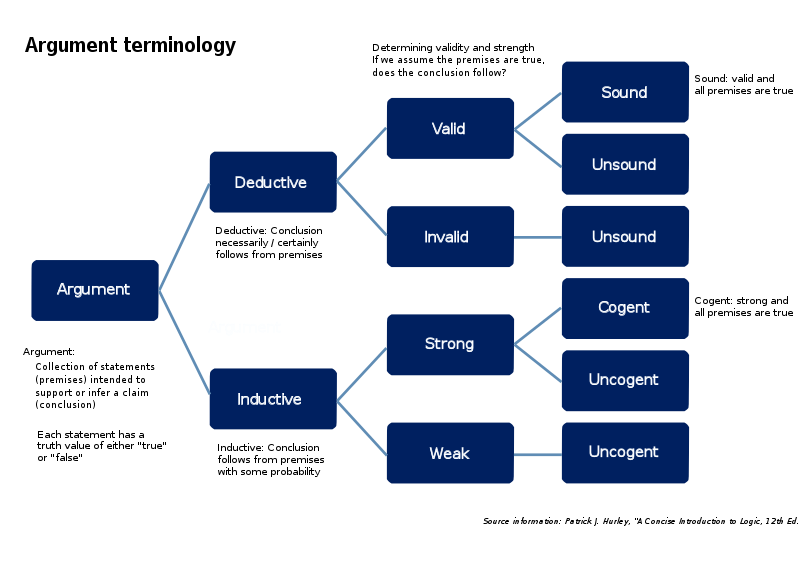
inductive reasoning
method of reasoning in which a body of observations is synthesized to hypothesize a general principle

principle
thumb|170px|The Blind justice (concept)|concept of blind justice is a moral principle.

Sapir-Whorf hypothesis
claim that the structure of a language affects its speakers' world view or cognition

supersymmetry
Supersymmetry is a theoretical framework in physics that suggests the existence of a symmetry between particles with integer spin (bosons) and particles with half-integer spin (fermions). It proposes that for every known particle, there exists a partner particle with different spin properties. There have been multiple experiments on supersymmetry that have failed to provide evidence that it exists in nature. If evidence is found, supersymmetry could help explain certain phenomena, such as the nature of dark matter and the hierarchy problem in particle physics.
introspection
Introspection is the examination of one's own conscious thoughts and feelings. In psychology, the process of introspection relies on the observation of one's mental state, while in a spiritual context it may refer to the examination of one's soul. Introspection is closely related to human self-reflection and self-discovery and is contrasted with external observation.

conjecture
thumb|350px|The real part (red) and imaginary part (blue) of the Riemann zeta function along the critical line Re(s) = 1/2. The first non-trivial zeros can be seen at Im(s) = ±14.135, ±21.022 and ±25.011. The Riemann hypothesis, a famous conjecture, says that all non-trivial zeros of the zeta function lie along the critical line.

rationality
Rationality is the quality of being guided by or based on reason. In this regard, a person acts rationally if they have a good reason for what they do, or a belief is rational if it is based on strong evidence. This quality can apply to an ability, as in a rational animal, to a psychological process, like reasoning, to mental states, such as beliefs and intentions, or to persons who possess these other forms of rationality. A thing that lacks rationality is either arational, if it is outside the domain of rational evaluation, or irrational, if it belongs to this domain but does not fulfill its
.jpg)
pattern
A pattern is a regularity in the world, in human-made design, or in abstract ideas. As such, the elements of a pattern repeat in a predictable and logical manner. There exists countless kinds of unclassified patterns, present in everyday nature, fashion, many artistic areas, as well as a connection with mathematics. A geometric pattern is a type of pattern formed of repeating geometric shapes and typically repeated like a wallpaper design.
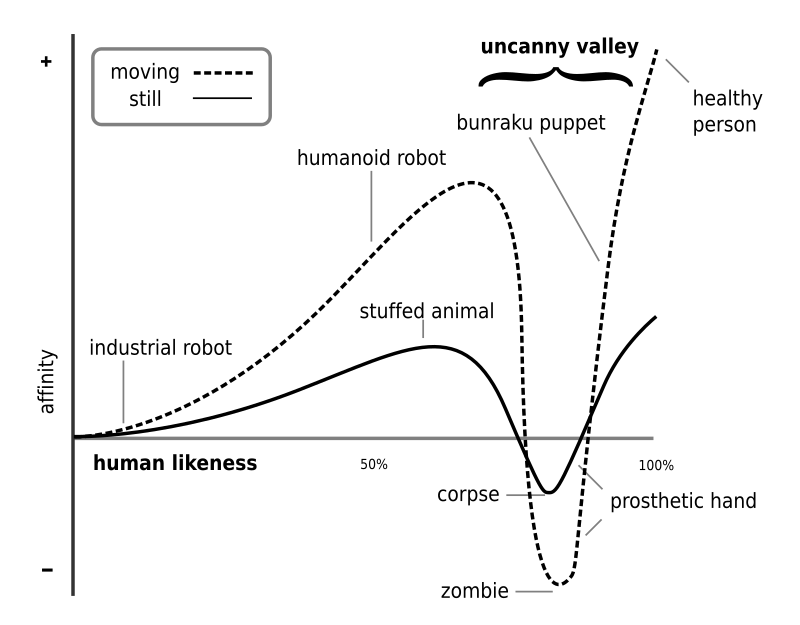
uncanny valley
hypothesis that human replicas which appear almost like real human beings elicit revulsion

qualia
upright=0.65|thumb|The "redness" of red is an example of a quale.
paradigm shift
fundamental change in the basic concepts and experimental practices of a scientific discipline.
memetics
Memetics, or the study of memes, is an emerging discipline in cultural evolution, based on the idea that culture can be reduced to the study of cultural units, called memes: ideas, behaviors, beliefs, and expressions that spread from person to person in a culture through imitation. The term "meme" was coined by biologist Richard Dawkins in his 1976 book The Selfish Gene, to illustrate the principle that he later called "Universal Darwinism". All evolutionary processes depend on information being copied, varied, and selected, a process also known as variation with selective retention. The conve
musica universalis
ancient philosophical concept that regards proportions in the movements of celestial bodies as a form of music
first principle
concept
consilience
In science and history, consilience (also convergence of evidence or concordance of evidence) is the principle that evidence from independent, unrelated sources can "converge" on strong conclusions. That is, when multiple sources of evidence are in agreement, the conclusion can be very strong even when none of the individual sources of evidence is significantly so on its own. Most established scientific knowledge is supported by a convergence of evidence: if not, the evidence is comparatively weak, and there will probably not be a strong scientific consensus.
Archimedean point
point in space assumed to be completely fixed relative to space

supervenience
thumb|right|The upper levels on this chart can be considered to supervene on the lower levels.
ad hoc hypothesis
hypothesis added to a theory in order to save it from being falsified
universal law
universal principle
verisimilitude
In philosophy, verisimilitude (or truthlikeness) is the notion that some propositions are closer to being true than other propositions. The problem of verisimilitude is the problem of articulating what it takes for one false theory to be closer to the truth than another false theory.
underdetermination
In the philosophy of science, underdetermination or the underdetermination of theory by data (sometimes abbreviated UTD) is the idea that evidence available to us at a given time may be insufficient to determine what beliefs we should hold in response to it. The underdetermination thesis states that all evidence necessarily underdetermines any scientific theory.
continuum
gradual quantitative transition without abrupt change
construct
ideal object, whose existence depends upon a subject's mind
explanatory power
ability of a hypothesis or theory to effectively explain the subject matter it pertains to
.jpg)
impermanence
alt=impermanence|thumb|A Buddhist painting displaying Impermanence
objectivism
basic distinction in philosophy
research program
professional network of scientists conducting basic research
epistemological rupture
knowledge
turtles all the way down
expression of the problem of infinite regress
overdetermination
Overdetermination occurs when a single observed effect is determined by multiple causes, any one of which alone would be conceivably sufficient to account for ("determine") the effect. The term "overdetermination" () was used by Sigmund Freud as a key concept in his psychoanalysis, and later by Louis Althusser.
Constructive empiricism
form of empiricism in philosophy of science
cognitive closure
the proposition that human minds are constitutionally incapable of solving certain perennial philosophical problems
B-theory of time
philosophical theory in which the flow of time is only a subjective illusion of human consciousness and that the past, present and future are equally real, without ontological privileging of the present
Gestell
thumb|right|alt=Image of Martin Heidegger|Martin Heidegger
' (or Ge-stell, translated as "Enframing" or "positioning'") is a German word used by twentieth-century German philosopher Martin Heidegger to describe what lies behind or beneath modern technology. Heidegger introduced the term in 1954 in The Question Concerning Technology, a text based on the lecture "The Framework" ("Das Gestell") first presented on December 1, 1949, in Bremen. It was derived from the root word stellen, which means "to put" or "to place" and combined with the German prefix Ge-, which denotes a form of "gathering" or