Category
page 1Culture of Iran

Persian
Western Iranian language

Persepolis
Persepolis was the ceremonial capital of the Achaemenid Empire (). It is situated in the plains of Marvdasht, encircled by the southern Zagros Mountains, Fars province of Iran. It is one of the key Iranian cultural heritage sites and a UNESCO World Heritage Site.

Nowruz
Nowruz (, , ) is New Year's Day on the Iranian calendars, including the currently used Solar Hijri calendar. Historically, it has been observed by Iranian peoples, but is now celebrated by many Persianate cultures worldwide. It is a festival based on the Northern Hemisphere spring equinox, and thus usually coincides with a date between 19 March and 22 March on the Gregorian calendar.
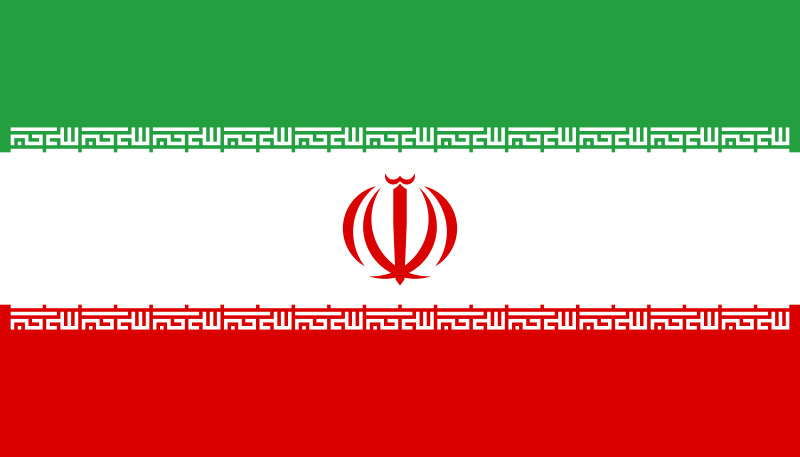
flag of Iran
flag of the Islamic Republic of Iran

Sogdia
Sogdia () or Sogdiana was an ancient Iranian civilization between the Amu Darya and the Syr Darya rivers, and in present-day Uzbekistan, Turkmenistan, Tajikistan, Kazakhstan, and Kyrgyzstan. Sogdiana was also a province of the Achaemenid Empire, and listed on the Behistun Inscription of Darius the Great. Sogdiana was first conquered by Cyrus the Great, the founder of the Achaemenid Empire, and then was annexed by the Macedonian ruler Alexander the Great in 328 BC. It would continue to change hands under the Seleucid Empire, the Greco-Bactrian Kingdom, the Kushan Empire, the Sasanian Empire, th

hookah
thumb|A Rajput man smoking through a hookah, [[Rajasthan, India.]]

samovar
282x282px|thumb|Samovar in Tula, Russia|Tula, Russia|alt=

Emblem of Iran
National emblem of the Islamic Republic of Iran
Iranian calendar
calendars used in Iran
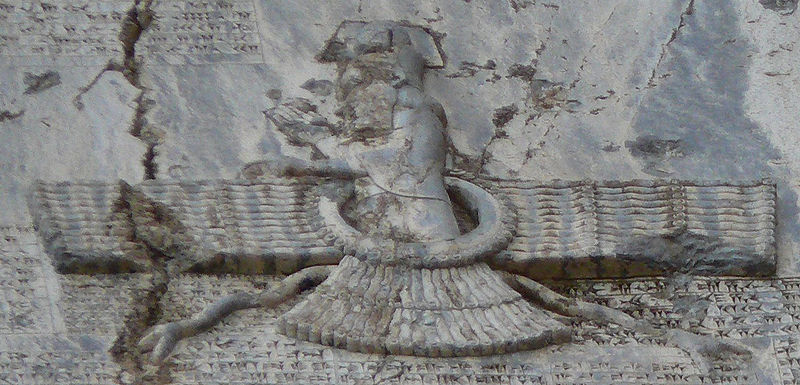
Greater Iran
Denotes a wide socio-cultural region comprising parts of West Asia, the South Caucasus, Central Asia, South Asia, and East Asia, all of which have been affected, to some degree, by the Iranian peoples and the Iranian languages
Encyclopædia Iranica
encyclopedia about the history, culture, and civilization of Iranian peoples

culture of Iran
pattern of human activity and symbolism associated with Iran and its people

architecture of Iran
architecture associated with Iran
%20at%20a%20wedding%20in%20India%2001.jpg)
mehndi
thumb|Henna stains on a bride's hand
thumb|Mehndi applied on the palms
thumb|Mehndi applied on the backs of the hand

Pan-Iranism
Pan-Iranism () is a nationalist ideology that espouses the necessity of socio-cultural intimacy between all Iranian peoples.
sex segregation
separation of people according to their sex

Bishapur
Bishapur (Middle Persian: Vēh-Šābuhr or Bēšābūr; in Middle Persian inscriptions: 𐭡𐭩𐭱𐭧𐭯𐭥𐭧𐭥𐭩 Byšḥpwḥry or 𐭡𐭩𐭱𐭧𐭯𐭥𐭧𐭫𐭩 Byšḥpwḥly; in Parthian: 𐭅𐭉𐭇𐭔𐭇𐭐𐭅𐭇𐭓 Wyhšhypwhr; in Sogdian: ܘܝݎܫܦܘܪ Wyxšpwr; in Syriac: ܒܝܫܗܒܘܪ; Arabic: بیشابور) was an ancient city in Iran and one of the capitals of the Sasanian Empire, near the city of Kazerun.

gusan
thumb|250px|Medieval gusan Barbad playing before [[Khosrow II]]
thumb|250px|A statue of two gusans in Gyumri, depicting [[Sheram and Jivani]]
music of Iran
music and musical traditions of Iran

Khatam
thumb|upright=1|Detail of an Iranian jewel box decorated by khatam
Khātam () is an ancient Persian technique of inlaying. It is a version of marquetry where art forms are made by decorating the surface of wooden articles with delicate pieces of wood, bone and metal precisely-cut intricate geometric patterns. Khatam-kari (خاتمکاری) or khatam-bandi (خاتمبندی) refers to the art of crafting a khatam. Common materials used in the construction of inlaid articles are gold, silver, brass, aluminum and twisted wire.
Iranian religions
Wikimedia list article

Marlik
thumb|right|230px|Golden Cup depicting Griffin-like figures and winged bulls. Excavated at Marlik, Gilan, Iran. First half of first millennium BC.
thumb|Golden necklace of three Swastikas found in Marlik, dates back to first millennium B.C.
Marlik is an ancient site near Roudbar in Gilan, in northern Iran. Marlik, also known as Cheragh-Ali Tepe is located in the valley of Gohar Rud (gem river), a tributary of Sepid Rud in Gilan Province in Northern Iran, Marlik. Marlik is the site of a royal cemetery, and artifacts found at this site date back to 3,000 years ago. Some of the artifacts contain

Taarof
alt=A man bows and holds his hand on the chest, expressing deference and respect|thumb|A Taarof gesture, where a man is bowing and holding his hand on the chest as a sign of respect and humbleness.
Taarof or tarof () is a Persian word that refers to an Iranian form of civility or art of etiquette that emphasizes both deference and social rank.
.jpg)
korsi
thumb|An Iranian family gathered around a korsi, 1982
A korsi (), also referred to as a sandal (; ; ) in Central Asia, is a type of heated table traditionally found in Iran, Afghanistan and Central Asia (particularly Tajikistan and Uzbekistan). A korsi is the traditional centre of a home in Central Asian and Iranian architecture, particularly during winter months, where it historically served as the main location for families to gather, sleep, and (in some regions) eat.
public holidays in Iran
Wikimedia list article
list of UNESCO Intangible Cultural Heritage elements in Iran
Wikimedia List Article

Persophilia
Persophilia (, pârsi dusti) is the feeling or expression of interest in, respect for, and appreciation of Persians on the part of a non-Persian. More specifically, a Persophile is someone who has a strongly positive predisposition or sympathy towards Persia and the Persian people, with an admiration for their language and literature, culture (art, music, cuisine, etc.), history, or government. The earliest use of the word may have been by the Royal Numismatic Society of the United Kingdom in 1838, referring to the pro-Persian policy of a Cypriot king of Marion. The opposite sentiment is known

meyhane
thumb|right|upright=1.3|People dancing in a Bulgarian mehana
Naneh Sarma
mythical character in Iranian folklore
Āftābeh
thumb|upright=0.6|Plastic aftabeh
thumb|upright=0.6|Aftabeh from the Erivan Khanate in the Museum of the History of Azerbaijan
Maddahi
thumb|An Iranian Maddah (religious singer)|Maddah
Gisuboran
thumb|Hair cutting - Solidarity with Iranian Protests in Australia
Gisuborān meaning haircutting (Persian: گیسوبران) is one of the mourning rituals in Iranian culture. This ritual gives a sad and emotional state to mourning. In 2022 women in Iran and later internationally used haircutting as a protest against the treatment of women in Iran. The BBC included an unknown woman cutting her hair as one of their 100 Women in 2022.
Varamin rug
type of Persian carpet
Shamakhi dancers
Lion and Sun flag
historical and opposition flag of Iran
astronomy in Iran
astronomy in ancient Persian history
Persian studies
interdisciplinary university studies program
Sepandārmazgān
Sepandārmazgān () or Espandegān (), is an ancient Iranian day of women with Zoroastrian roots.
This day is dedicated to Spənta Ārmaiti (Avestan for "Holy Devotion", ' in Middle Persian, ' or ''''), the Amesha Spenta who is given the domain of "earth". The date of the festival as observed in the Sassanid era was on the 5th day of the month Spandarmad. When the name of the day and the month of the day were the same, a "name-feast" celebration was always done.
According to the testimony of al-Biruni, in the 11th century CE there was a festival when the names of the day and the month were the same
The Persian Encyclopedia
book by Gholamhossein Mosaheb
Assyrian culture
pattern of human activity and symbolism associated with the Assyrian people
Horses in Iran
equine culture in Iran
First generation of intellectual movements in Iran
period of intellectual movements in Iran from the late 19th century to the early 20th
imperial standard of Iran
official flags of the Iranian crown
Spilling water for luck
eurasiatic folk custom
Firdeusi Institute