Category
page 1Dishes involving the consumption of live animals

oyster
thumb|Mixed seafood in Dubai; oysters are at the edge of the tray
Oyster is the common name for a number of different families of salt-water bivalve molluscs that live in marine or brackish habitats. In some species, the valves are highly calcified, and many are somewhat irregular in shape. Many, but not all oysters, are in the superfamily Ostreoidea.
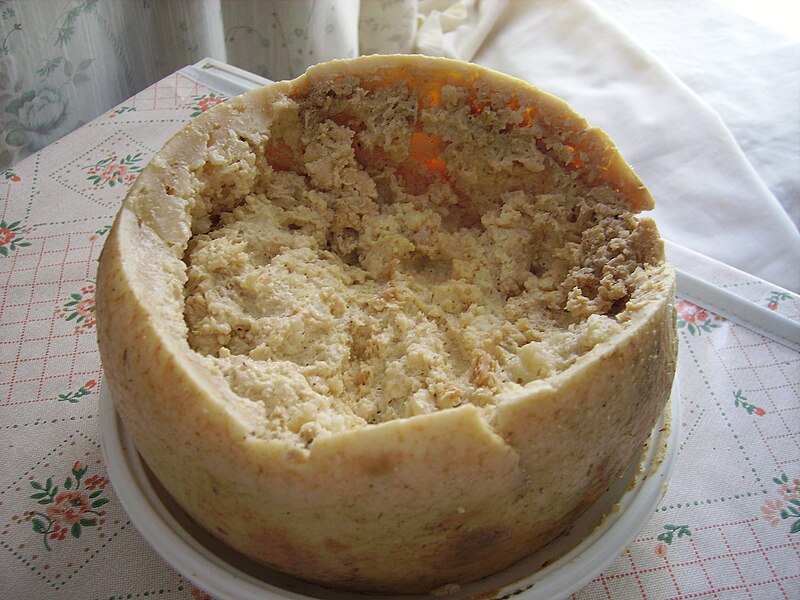
casu martzu
Sardinian and Corsican cheese containing live maggots
san-nakji
thumb|right|Video of San-nakji
San-nakji () is a variety of hoe (raw dish) made with long arm octopus (Octopus minor), a small octopus species called nakji in Korean and is sometimes translated into "baby octopus" due to its relatively small size compared to the giant octopus (Enteroctopus dofleini). The octopus is most commonly killed before being cut into small pieces and served, with the nerve activity in the octopus's tentacles making the pieces move posthumously on the plate while served. The octopus's highly complex nervous system, with two-thirds of its neurons localised in the nerve co

ikizukuri
thumb|right|240px|Fish served as ikizukuri.
, also known as , (roughly translated as "prepared alive") is the preparing of sashimi (raw fish) from live seafood. In this Japanese culinary technique, the most popular sea animal used is fish, but octopus, shrimp, and lobster may also be used. The practice is controversial owing to concerns about the animal's suffering, as it is seemingly alive when served.
thumb|240px|Freshly served Ikizukuri.

Milbenkäse
Milbenkäse ("mite cheese"), called Mellnkase in the local dialect and often known as Spinnenkäse ("spider cheese"), is a German speciality cheese. It is made by flavouring balls of quark (a type of soft cheese) with caraway and salt, allowing them to dry, and then leaving them in a wooden box containing rye flour and cheese mites for about three months. An enzyme in the digestive juices excreted by the mites causes the cheese to ripen. Milbenkäse tastes similar to Harzer cheese, but with a bitter note (increasing with age) and a zesty aftertaste. Mites clinging to the cheese rind are consumed
drunken shrimp
Chinese shrimp dish
Odori ebi
Japanese sushi delicacy

live food for humans
practice of eating animals that are stll alive
odorigui
thumb|Odorigui of Leucopsarion petersii|ice gobies in [[Japan in April 2013]]
Odorigui (踊り食い, literally "dancing eating") is a mode of seafood consumption in Japanese cuisine.