Category
page 1Historical regions of Asia

Tibet
thumb|Greater Tibet regions and claims

Kurdistan
Kurdistan (; ), or Greater Kurdistan, is a roughly defined geo-cultural region in West Asia wherein the Kurds form a prominent majority population and the Kurdish culture, languages, and national identity have historically been based. Geographically, Kurdistan roughly encompasses the northwestern Zagros and the eastern Taurus mountain ranges.

Palestine
geographic region in West Asia
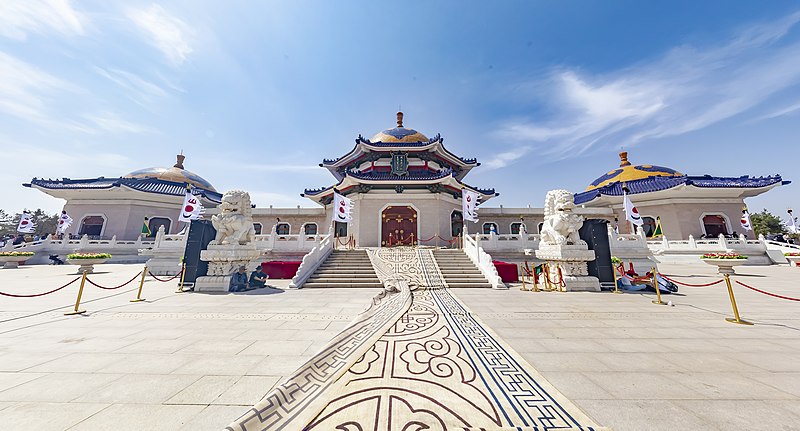
Inner Mongolia
autonomous region of China

Kashmir
thumb|268x268px|Political map of the Kashmir region, showing the Pir Panjal Range and the [[Kashmir Valley or Vale of Kashmir]]
Kashmir ( or ) is the northernmost geographical region of the Indian subcontinent. Until the mid-19th century, the term Kashmir denoted only the Kashmir Valley between the Great Himalayas and the Pir Panjal Range. The term has since also come to encompass a larger area that formerly comprised the princely state of Jammu and Kashmir, and includes the Indian-administered territories of Jammu and Kashmir and Ladakh, the Pakistani-administered territories of Azad Kashmir
.png)
Levant
The Levant is a subregion of West Asia along the Eastern Mediterranean that forms part of the Middle East. The term is often used in conjunction with historical or cultural references.

Galilee
thumb|300px|Map showing the Lower and Upper Galilee. The narrow "Galilee Panhandle" to the east may be seen geologically and geographically as a separate area (as part of the Jordan Rift Valley), or as part of historical Galilee. The same applies to the western shore of the [[Sea of Galilee and the Jordan Valley down to Beit She'an, as well as the Jezreel Valley in the south and the coastal strip bordering the Galilee to the west.]]

Elam
Elam () was an ancient civilization centered in the far west and southwest of what is today Iran, stretching from the lowlands of Ilam and Khuzestan as well as a small part of modern-day southern Iraq. The modern name Elam stems from the Sumerian transliteration elam(a), along with the later Akkadian elamtu, and the Elamite haltamti. Elamite states were among the leading political forces of the Ancient Near East. In classical literature, Elam was also known as Susiana ( ; Sousiānḗ), a name derived from its capital Susa.
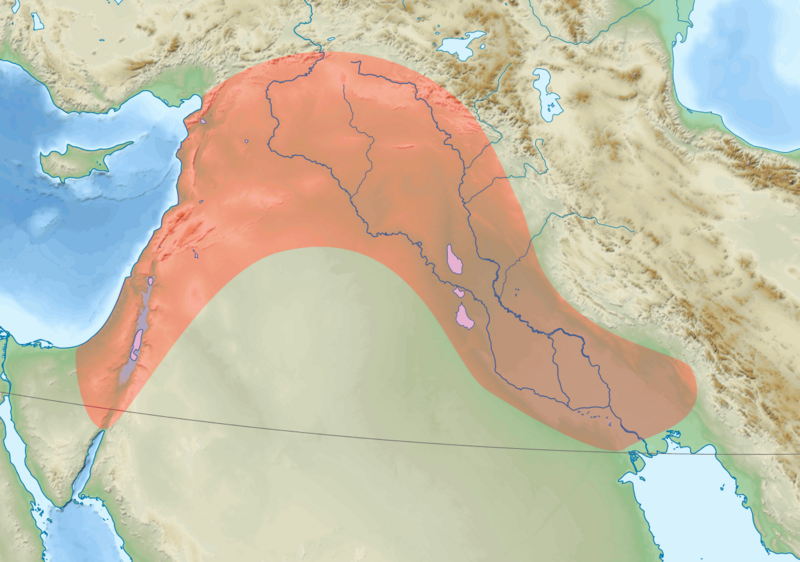
Fertile Crescent
crescent-shaped geographic region of the Middle-East, containing the moist and fertile land of Western Asia, and the Nile Valley and Nile Delta of northeast Africa

Turkestan
thumb|right|The West Turkestan region is noted on this 1914 map as simply "Turkestan"
Turkestan, also spelled Turkistan, is a historical name for the region of Asia lying between the Caspian Sea to the west, Siberia to the north, the Gobi Desert to the east, and Iran, Afghanistan, Pakistan, and Tibet to the south. Turkestan is primarily inhabited by Turkic peoples, as well as Russian and Tajik-Persian minorities. It is subdivided into West Turkestan, which historically belonged to the Russian Empire and the Soviet Union, and East Turkestan (identified either with the Tarim Basin/Southern Xinji

Transoxiana
thumb|right|340px|Watershed of the Amu Darya|Oxus River in the 8th century, showing Transoxiana and its principal localities to the northeast.
thumb|right|340px|Transoxiana and the neighbouring regions of Greater Khorasan and [[Khwarazm in Central Asia]]

Colchis
In classical antiquity and Greco-Roman geography, Colchis (; ) was an exonym for the Georgian polity of Egrisi () located on the eastern coast of the Black Sea, centered in present-day western Georgia also including the region of Abkhazia.
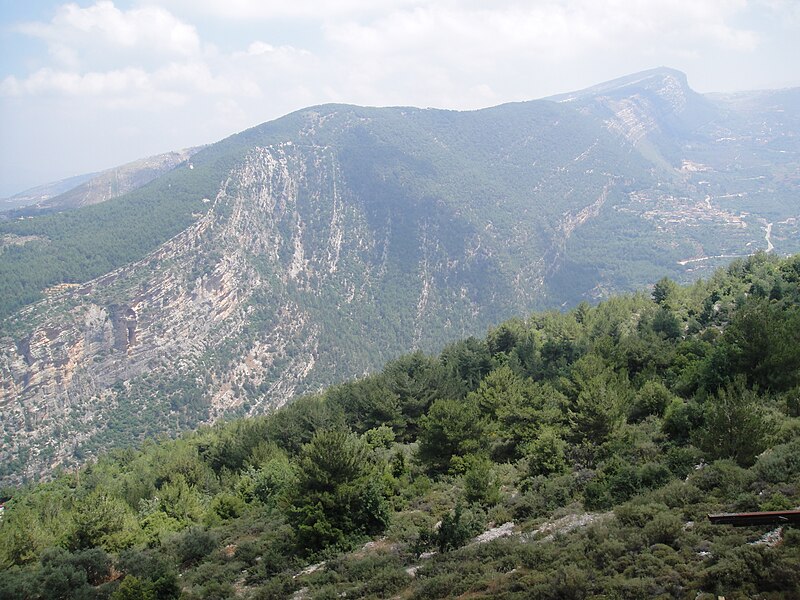
Mount Lebanon
mountain range in Lebanon

East Indies
region encompassing South (Em(Indian subcontinent) and Southeast Asia

Ossetia
thumb|right|Map showing North Ossetia–Alania|North and [[South Ossetia]]
Ossetia ( , ; Iron Ossetian: Ирыстон, , ; Digor Ossetian: Иристон, ; or Ир Ir) is an ethnolinguistic region on both sides of the Greater Caucasus Mountains, largely inhabited by the Ossetians. The Ossetian language is part of the Eastern Iranian branch of the family of Indo-European languages. Most countries recognize the Ossetian-speaking area south of the main Caucasus ridge as lying within the borders of Georgia, but it has come under the control of the de facto government of the Russian-backed State of Alania. The nor

Orient
thumb|Ancient Orient of the Roman Empire and its ecclesiastical order after the [[Council of Chalcedon, 451|300x300px]]
The Orient is a term referring to the East in relation to Europe, traditionally comprising anything belonging to the Eastern world. It is the antonym of the term Occident, which refers to the Western world.
.svg)
Mashriq
The Mashriq (; ), also known as the Arab Mashriq (), sometimes spelled Mashreq or Mashrek, is the eastern part of the Arab world, as opposed to the Maghreb (western region), located in West Asia and eastern North Africa. It is the Arabic equivalent for the term Middle East. Poetically the "Place of Sunrise", the name is derived from the verb sharaqa (, "to shine, illuminate, radiate" and "to rise"), from the sh-r-q root (), referring to the east, where the sun rises.

Arabia Petraea
Roman province (106–630s)

Tartary
thumb|300px| Cary's Map of independent Tartary (in yellow) and Chinese Tartary (in violet), in 1808.
Tartary (Latin: Tartaria; ; ; ) or Tatary () was a blanket term used in Western European literature and cartography for a vast part of Asia bounded by the Caspian Sea, the Ural Mountains, the Pacific Ocean, and the northern borders of China, India, and Persia, at a time when this region was largely unknown to European geographers.

Turan
Turan (; ; , , ) is a historical region in Central Asia. The term is of Iranian origin and may refer to a particular prehistoric human settlement, a historic geographical region, or a culture. The original Turanians were an Iranian tribe of the Avestan age.

Syria
an area located east of the Mediterranean sea

Hadhramaut
Hadhramaut ( ; ) is a geographic region in the southern part of the Arabian Peninsula which includes the Yemeni governorates of Hadhramaut, Shabwah and Mahrah, Dhofar in southwestern Oman, and Sharurah in the Najran Province of Saudi Arabia, and sometimes the Aden, Abyan and Lahij governorates of Yemen at a more stretched historical definition. The region's people are known as the Hadharem. They formerly spoke Hadramautic, an old South Arabian language, but they now predominantly speak the Hadhrami dialect of Arabic.

Amdo
thumb|right|270px|Amdo region of Tibet
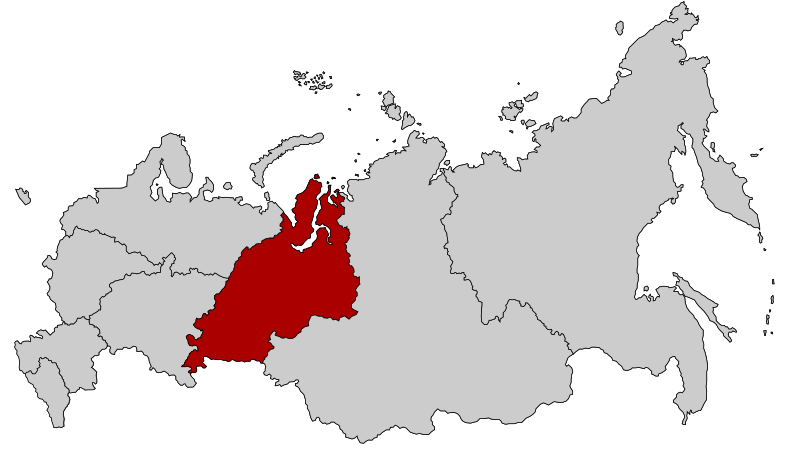
Ural
region of Russia

Lycaonia
thumb|320px|Heinrich Kiepert. Asia citerior. Lycaonia, 1903
Lycaonia (; , Lykaonia; ) was a large region in the interior of Asia Minor (modern-day Turkey), north of the Taurus Mountains. It was bounded on the east by Cappadocia, on the north by Galatia, on the west by Phrygia and Pisidia, while to the south it extended to the chain of Mount Taurus, where it bordered on the country popularly called in earlier times Cilicia and in the Byzantine period Isauria; but its boundaries varied greatly at different times. The name is not found in Herodotus, but Lycaonia is mentioned by Xenophon as traver
Greater China
China plus places with cultural/commercial ties: PRC + Taiwan, sometimes Singapore

Kham
thumb|right|270px|Kham province in Tibet

Pashtunistan
Pashtunistan () or Pakhtunistan is a historical region on the crossroads of Central and South Asia, located on the Iranian Plateau, inhabited by the Pashtun people of southern and eastern Afghanistan and northwestern Pakistan, wherein Pashtun culture, the Pashto language, and identity have been based. Alternative names historically used for the region include Pashtūnkhwā or Pakhtūnkhwā (), or simply the Pashtun Belt.
Syria Palaestina
Province of the Roman Empire (132–390 CE)

Coele-Syria
Coele-Syria () was a region of Syria in classical antiquity. The term originally referred to the "hollow" Beqaa Valley between the Lebanon and the Anti-Lebanon mountain ranges, but sometimes it was applied to a broader area of the region of Syria. The area is now part of modern-day Syria and Lebanon.

Ü-Tsang
thumb|right|350px|Map showing the locations of Ü-Tsang, Ngari, [[Kham, and Amdo]]
Lazica
The Kingdom of Lazica (; ; ), sometimes called Lazian Empire, was a state in the territory of west Georgia in the Roman period, from about the 1st century BC. Created as a result of the collapse of the kingdom of Colchis and the gaining of independence by the tribal-territorial units included in it in 131 AD.
Nusantara
Old Javanese term for the archipelagic Majapahit territory
Inner Asia
historical region over time
Greater India
historical extent of the culture of India beyond the Indian subcontinent

Ophir
Ophir (; ) is a port or region mentioned in the Bible, famous for its wealth. Its existence is attested to by an inscribed pottery shard found at Tell Qasile (in modern-day Tel Aviv) in 1946, dating to the eighth century BC, which reads "gold of Ophir to/for Beth-Horon [...] 30 shekels". The location of Ophir is unknown, though the find confirms it as a real place which exported gold.
Bilad al-Sham
provincial region of the Rashidun, Umayyad, Abbasid and Fatimid Islamic caliphates

Langkasuka
Langkasuka was an ancient Malay Hindu-Buddhist kingdom located in the Malay Peninsula. Langkasuka is generally believed to have existed from the 2nd to 15th century, and to have been established by descendants of Ashoka the Great.

Seres
thumb|400px|A mid-15th century Republic of Florence|Florentine world map based on the 1st (modified conic) projection in [[Jacobus Angelus's 1406 Latin translation of Maximus Planudes's late-13th century rediscovered Greek manuscripts of Ptolemy's 2nd-century Geography. Serica is shown in the far northeast of the world.]]
Eastern Arabia
historical region encompassing the entire coastal strip of Eastern Arabian Peninsula
Aram
historical region including several Aramean kingdoms covering much of the present-day Syria, southeastern Turkey, and parts of Lebanon and Iraq.

Jand
medieval town in Transoxiana in modern-day Kazakhstan

Kutai
thumb|The former Special Region of Kutai as part of Indonesian Borneo.
Assyrian homeland
geographic and cultural region in Northern Mesopotamia, traditionally inhabited by the Assyrian people

Zangezur
Zangezur (, ) is a historical and geographical region in Eastern Armenia on the slopes of the Zangezur Mountains which largely corresponds to the Syunik Province of Armenia and East Zangezur Economic Region of Azerbaijan. It was ceded to Russia by Qajar Iran according to the Treaty of Gulistan in 1813. In Soviet times, the territory of Zangezur comprised the Goris, Kapan, Meghri, and Sisian districts of the Armenian SSR and the Lachin, Qubadli, and Zangilan districts of the Azerbaijani SSR. In 1995, the Armenian districts within historical Zangezur were merged to form the Syunik Province. In A
Aram-Naharaim
Aram-Naharaim ( ʾĂram Nahărayim, literally "Aram of the two rivers") is the biblical term for an ancient land along the great bend of the Euphrates River.

Khandesh
Khandesh, also spelt Qhandesh, is a historical and geographical region located in northwestern Maharashtra, India. It broadly covers the valley of the Tapi (Tapti) River, bounded by the Satpura ranges to the north, the Ajanta hills to the south, and the Western Ghats to the west and southwest. The region includes the present-day districts of Jalgaon, Dhule and Nandurbar, along with the northern parts of present-day Nashik district. The Burhanpur district of Madhya Pradesh also formed an integral part of Khandesh and served as the capital of the Khandesh Sultanate (1382–1601).

Dardistan
thumb|Dardic languages by Georg Morgenstierne(Note: [[Nuristani languages such as Kamkata-vari (Kati), Kalasha-ala (Waigali), etc. are now separated)]]

Geshur
thumb|250px|Location of biblical Geshur (top right area, east of the Sea of Galilee)

Osrūshana
Osrušana () or Ustrushana was a former Iranian region in Transoxiana, home to the Principality of Ushrusana, an important pre-Islamic polity of Central Asia. Oshrusana lay to the south of the great, southernmost bend of the Syr Darya and extended roughly from Samarkand to Khujand. The capital city of Oshrusana was Bunjikat. The exact form of the Iranian name Osrušana is not clear from the sources, but the forms given in Hudud al-'alam, indicate an original *Sorušna.
Patani
historical region
Nanyang
Chinese name for the region of Southeast Asia, literally meaning Southern Ocean

Waq-Waq

Mongol heartland
Geographical area term
Maynila
major historical polity in Luzon, on the southern part of the Pasig River delta, at the location of present-day Intramuros, Manila

Guzgan
thumb|270px|Zhulād of Gōzgān was an Iranian ruler of the region of Guzgan, and a vassal of the [[Yabghus of Tokharistan. Coinage date 688 CE.]]
Guzgan (, also known as Gozgan, Guzganan or Quzghan) was a historical region and early medieval principality in what is now northern Afghanistan.
Diyar Rabi'a
medieval Arabic name of the easternmost and largest of the three provinces of the Jazira
Ü
historical region of Tibet
Dhundhar
{| class="infobox" cellpadding="2" cellspacing="2" style="width:250px; border-collapse:collapse; font-size:95%;"
|-
| colspan="2" style="margin-left:inherit; background:pink; text-align:center; font-size:medium;"|Historical Region of North IndiaDhundhar
|- style="text-align:center;"
| colspan="2" |
250px|Hawa Mahal
|- style="vertical-align: top;"
| Location
| Rajasthan
|- style="vertical-align: top;"
| 19th-century flag
| 50px
|- style="vertical-align: top;"
| State established:
| 10th century
|- style="vertical-align: top;"
| Language
| Dhundhari
|- style="vertical-align: top;"
| Dynasties
|
Butuan (historical polity)
Indic polity centered on present Mindanao island that existed from late 10th to early 16th century